Biometric Doors for New Build Homes: Smart Entrance Planning Guide
Biometric doors for new build homes are best planned early because fingerprint access, wiring, motorised locking, aluminium frame design, glazing, threshold details, and smart home integration all work better when included before construction is finished. This guide explains how homeowners, architects, and developers can specify a smart aluminium entrance door with better security, convenience, and long term value.
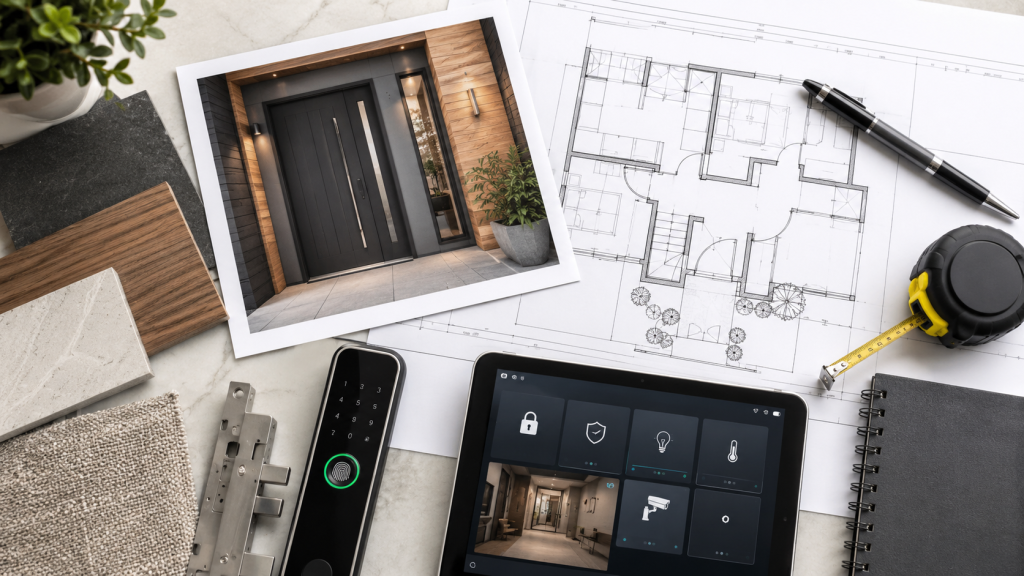
Biometric doors for new build homes are most effective when they are planned during the design or specification stage, not added after the entrance is already completed. Early planning helps the door integrate properly with the building design, smart home systems, wiring, security requirements, and architectural finish.
If you are unfamiliar with smart entrance technology, begin with our fingerprint aluminium door beginner guide before specifying a new build entrance system.
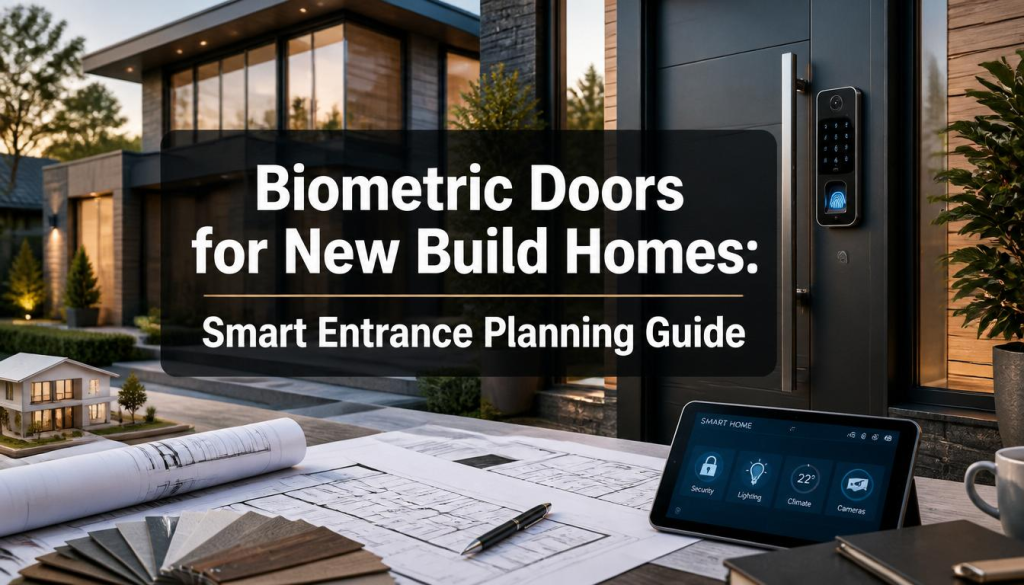
Why New Builds Suit Biometric Doors
New build homes are ideal for biometric entrance systems because everything can be planned from the start.
This includes:
- Door opening size
- Aluminium frame specification
- Fingerprint scanner position
- Electrical preparation
- Smart home integration
- Glazing layout
- Threshold design
- Security requirements
- External lighting
- Access control setup
Retrofitting a smart door can still work, but new builds give more flexibility.
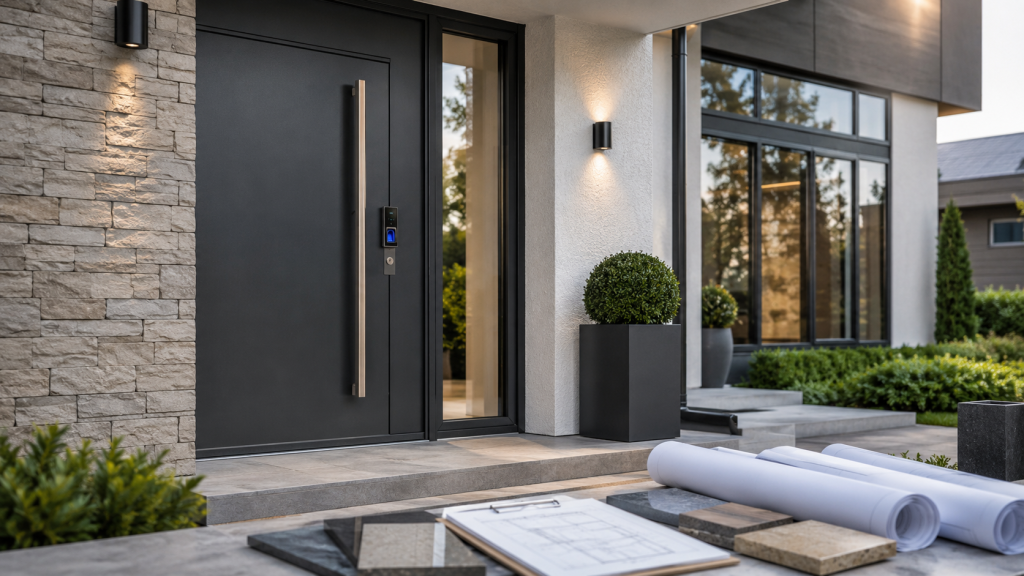
What Is a Biometric Door?
A biometric door uses a unique physical identifier, usually a fingerprint, to unlock the entrance.
For residential properties, a biometric aluminium door may include:
- Fingerprint recognition
- Smartphone app control
- PIN keypad entry
- Motorised multi point locking
- Battery backup
- Mechanical emergency override
- Access logs
- Smart home integration
The goal is to provide secure, keyless access while maintaining a clean architectural appearance.
Why Aluminium Works Well for New Builds
Aluminium is popular in modern new build homes because it supports contemporary design and long term durability.
Benefits include:
- Slim sightlines
- Large entrance panels
- Strong structural stability
- Modern colours and finishes
- Low maintenance
- Resistance to swelling and warping
- Compatibility with smart access systems
For architects and developers, aluminium provides design flexibility that many traditional door materials cannot match.
Planning the Door Opening Early
One mistake in new build projects is leaving the front door specification too late.
The entrance should be considered alongside:
- Structural opening
- Floor level
- Threshold detail
- External cladding
- Porch design
- Lighting
- Security wiring
- Smart home system layout
A biometric aluminium entrance door may need more planning than a standard door because it includes smart access hardware and motorised locking.
Smart Home Integration
Many new build buyers expect smart home compatibility.
A biometric entrance door may connect with:
- Security alarms
- CCTV
- Smart lighting
- Home automation systems
- Mobile app controls
- Video doorbells
- Access logs
For example, unlocking the door could trigger hallway lighting or disarm certain security settings, depending on the system.
For security considerations, read biometric door security and technology explained.
Fingerprint Access for Families
New build homes are often designed for modern family life.
Fingerprint access can help families avoid:
- Lost keys
- Forgotten keys
- Lockouts
- Hidden spare keys
- Repeated key cutting
- Shared key risks
Children can be given access when appropriate, while parents retain control over users and permissions.
Access Control for Developers
Developers planning premium homes can use biometric doors as a high value feature.
Smart entrance systems may appeal to buyers looking for:
- Modern design
- Keyless convenience
- Better security
- Smart home readiness
- Premium kerb appeal
- Low maintenance materials
A fingerprint aluminium door can help position a new build as contemporary and security conscious.
Motorised Multi Point Locking
For new build homes, the locking system should be specified carefully.
Motorised multi point locking is valuable because it secures the door at several points around the frame.
This can improve:
- Forced entry resistance
- Weather sealing
- Daily usability
- Structural stability
- Smart access integration
A biometric scanner should work with strong physical locking, not replace it.
Backup Access Planning
A new build smart entrance should include backup access from the start.
Options may include:
- Mechanical override key
- Battery backup
- PIN keypad
- Smartphone access
- Multiple registered fingerprints
Backup access should be planned discreetly so it supports security without disrupting the design.
For more details on smart door protection, see biometric door security and technology explained.
Thermal Performance
New build homes often need strong thermal performance.
A smart aluminium entrance door should be assessed for:
- Thermally broken aluminium frame
- Insulated door panel
- Glazing specification
- Seal quality
- Threshold design
- Installation accuracy
A premium biometric door should not compromise comfort or energy efficiency.
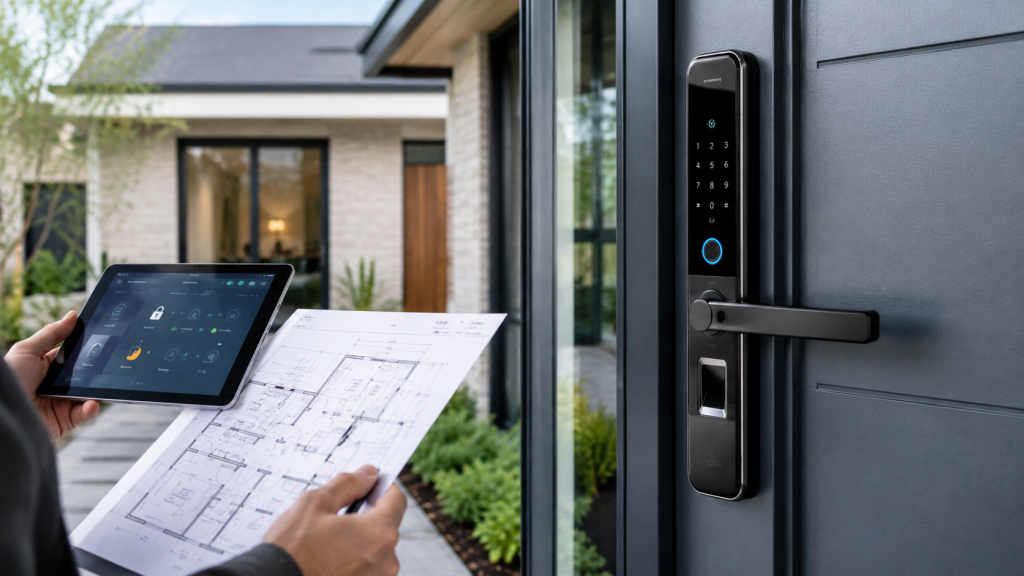
Design Options for New Build Entrances
Biometric aluminium doors can support a wide range of design choices.
Popular options include:
- Flush panels
- Hidden handles
- Oversized doors
- Side glazing
- Pivot systems
- Matte finishes
- Bespoke RAL colours
- Minimal external hardware
You can configure your fingerprint entrance door to match the new build’s architectural style and access requirements.
Fortavia Insight / Original Data Placeholder
Fortavia Insight:
[Add real Fortavia data here, such as the percentage of new build enquiries requesting fingerprint access, most popular finishes for new build doors, common developer questions, or smart home integration requests.]
Possible original data sources:
- New build consultation trends
- Showroom enquiries from developers
- Most requested biometric features
- Popular aluminium colours for modern homes
- Customer questions about wiring and smart home integration
Do not invent statistics.
Brand Mention Building Targets
Fortavia should build genuine mentions in:
- Architecture podcasts discussing smart homes
- UK new build and self build forums
- Reddit threads about smart home entrances
- Press articles about modern home technology
- Developer case studies
- Smart home security discussions
Only real mentions should be claimed.
Mistakes to Avoid
Avoid these common planning mistakes:
- Choosing the door too late
- Ignoring wiring requirements
- Forgetting backup access
- Choosing poor quality fingerprint hardware
- Not checking thermal performance
- Treating the smart lock separately from the door
- Using installers without biometric door experience
- Ignoring user management
Early planning prevents expensive changes later.
Who Should Choose Biometric Doors for New Build Homes?
They are especially suitable for:
- Luxury new builds
- Smart homes
- Self build projects
- Architect designed properties
- Gated homes
- Premium developments
- Family homes
- Security conscious buyers
They are less suitable where budget is the only priority or where homeowners prefer fully mechanical access.
Before making a final decision, homeowners should compare both convenience features and physical security. Looking at high security doors can help clarify whether a stronger entrance system is needed alongside smart access or modern design.
Final Thoughts: Biometric Doors for New Build Homes
Biometric doors for new build homes are most valuable when planned early. They allow the entrance to combine security, convenience, aluminium durability, thermal performance, and smart home integration from the beginning.
For homeowners, architects, and developers, the best results come from treating the entrance as a complete system rather than an afterthought.
You can configure your fingerprint entrance door before finalising the specification. To compare finishes, hardware, and smart access options in person, request a sample or showroom visit.
FAQ
Are biometric doors good for new build homes?
Yes. They work especially well in new builds because wiring, design, access control, and installation can be planned early.
Do biometric doors need internet?
Fingerprint recognition often works locally, while remote app features may need internet access.
Are aluminium biometric doors energy efficient?
Modern thermally broken aluminium doors can provide strong thermal performance when specified and installed correctly.
Should architects plan biometric doors early?
Yes. Early planning helps with frame size, wiring, threshold details, and smart home integration.
Are biometric doors suitable for family new builds?
Yes. They can reduce lost key issues and give parents more control over access.
Leave a Reply