What Makes a Front Door Truly Secure in 2026? UK Home Security Guide
What Makes a Front Door Truly Secure in 2026? A secure front door in 2026 is not defined by one lock alone. It needs a strong door structure, quality frame, multi point locking, secure glazing, professional installation, weather resistant hardware, and where appropriate, smart or biometric access with reliable backup entry. This guide explains the features UK homeowners should check before choosing a new secure entrance door.
A secure front door in 2026 should combine strong physical construction, tested locking hardware, proper installation, secure glazing, and practical access control. A good lock matters, but the full door system matters more because burglars usually look for the weakest point in the entrance.
Why Front Door Security Still Matters
The front door is one of the most visible and frequently used parts of the home. It creates the first impression, but it also protects the property every day.
Many homeowners assume that a door is secure if it has a strong looking handle or a modern lock. In reality, front door security depends on the full system:
- Door slab strength
- Frame quality
- Locking mechanism
- Cylinder protection
- Hinges
- Glazing
- Threshold
- Installation
- Access control
- Backup entry
A secure entrance should not rely on one component only.
Door Material: The Foundation of Security
The material of the door affects strength, durability, and long term performance.
Common options include:
- Timber doors
- Composite doors
- uPVC doors
- Steel security doors
- Aluminium entrance doors
For homeowners comparing stronger options, high security doors are usually designed with reinforced construction, stronger locking systems, and more resistance against forced entry than standard residential doors.
Aluminium is also becoming popular in modern homes because it offers strength, slim sightlines, and compatibility with smart access technology.
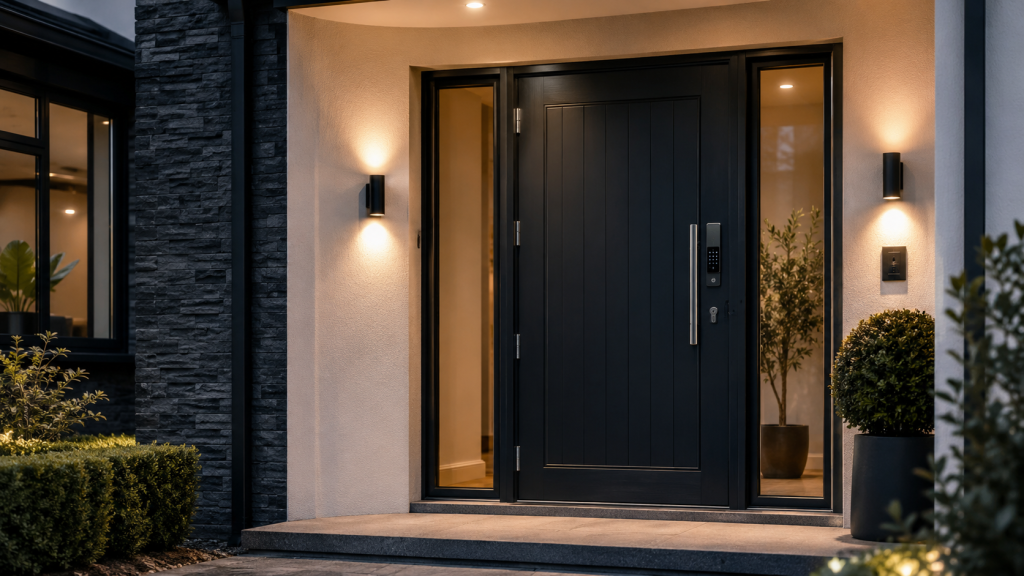
Locking System: More Than One Lock Point
A single lock point is rarely the strongest option for a modern secure entrance.
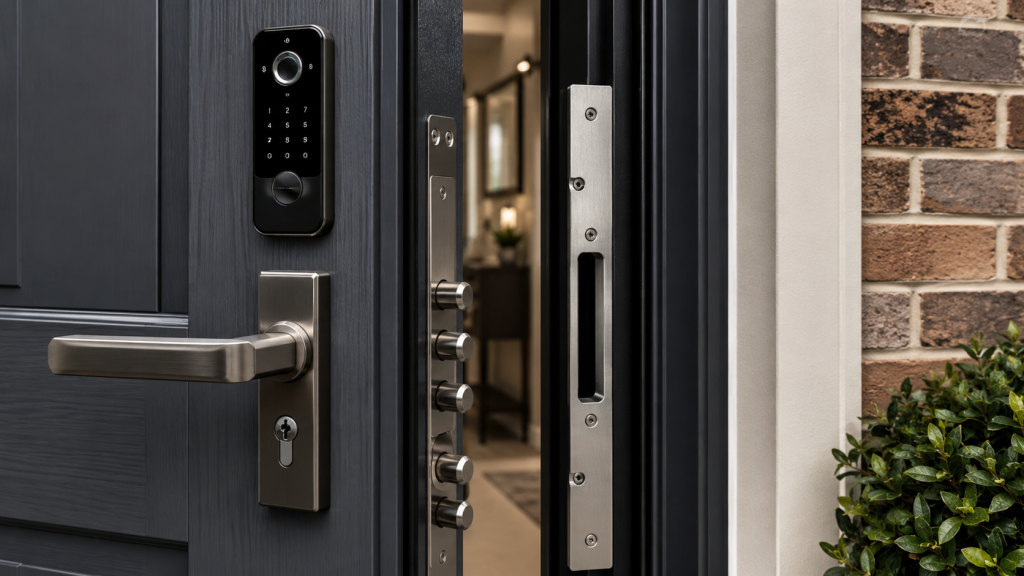
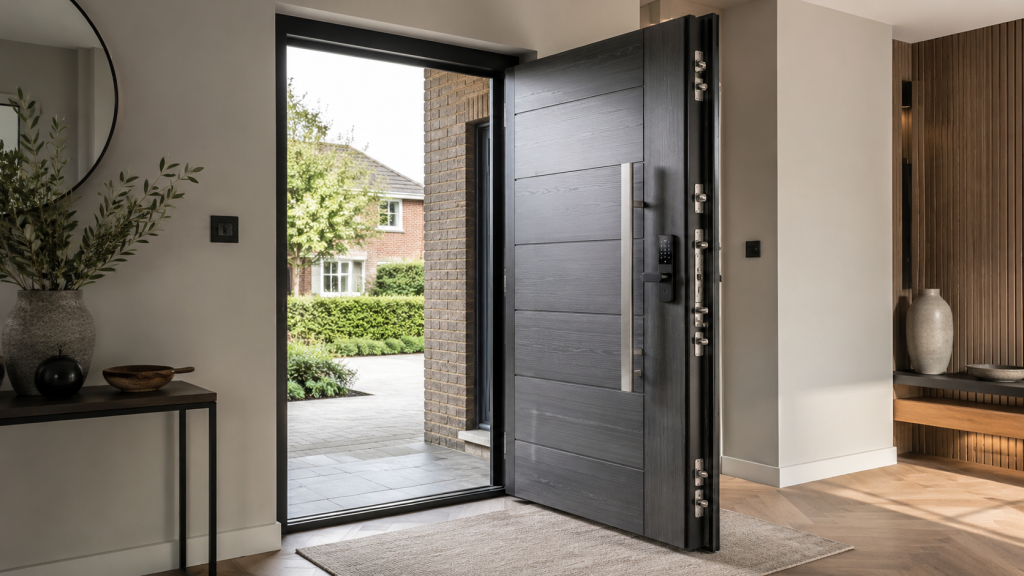
Many premium security doors use multi point locking. This means the door secures at several points around the frame instead of relying on one central lock.
Benefits include:
- Stronger resistance to forced entry
- Better frame compression
- Improved weather sealing
- More stable door closure
- Better long term reliability
For smart doors, motorised multi point locking can combine physical security with keyless access.
Cylinder Protection and Anti Snap Security
For traditional key based doors, the lock cylinder is often targeted.
A secure front door should consider:
- Anti snap cylinders
- Anti drill protection
- Anti pick features
- Reinforced escutcheons
- Cylinder guards
- Hidden or protected key access
Even a strong door can become vulnerable if the cylinder is weak or exposed.
Smart Access and Biometric Security
Smart access is becoming more common in premium homes.
Modern systems may include:
- Fingerprint access
- App control
- PIN keypad entry
- Temporary user permissions
- Entry logs
- Backup mechanical access
- Battery backup
For homeowners considering keyless entry, fingerprint aluminium doors can combine biometric access with strong aluminium construction and modern entrance design.
However, smart access should support physical security, not replace it. A fingerprint scanner on a weak door is not enough.
When comparing different door types, it helps to separate access features from physical protection. A smart lock, keypad, or biometric scanner can improve usability, but high security doors are designed to strengthen the entrance itself.
Secure Glazing
Many front doors include glass panels, side lights, or top lights.
Glazing can improve natural light and design, but it must be specified carefully.
Secure glazing options may include:
- Laminated glass
- Toughened glass
- Double or triple glazing
- Internal beading
- Reinforced side panels
- Privacy glass
If glass is positioned near locks or handles, security planning becomes even more important.
Frame and Installation Quality
A secure door is only as strong as the frame around it.
Poor installation can create problems such as:
- Gaps around the frame
- Weak fixing points
- Lock misalignment
- Poor weather sealing
- Reduced forced entry resistance
- Long term movement
Professional installation is essential. Even premium hardware can underperform if the door is badly fitted.
Backup Access
Smart and biometric systems should include backup access.
Useful backup options include:
- Mechanical override key
- PIN keypad
- App access
- Battery backup
- Multiple registered users
- Emergency access method
Backup entry makes the door more reliable during power cuts, scanner issues, or lost phone situations.
Fortavia / Secure Doors Original Data Placeholder
Original Data Placeholder:
[Add securedoors.co.uk or Fortavia internal data here, such as customer questions about front door security, most requested locking features, common concerns around smart access, or enquiry trends around high security entrance doors.]
Useful original data could include:
- Percentage of enquiries asking about anti snap locks
- Most requested door security feature
- Customer concerns about smart locks
- Popular secure door materials
- Most common installation questions
Do not publish invented statistics. Add only verified internal data.
Brand Mention Building Targets
To support entity trust, securedoors.co.uk and its backlink partners should aim for genuine brand mentions in:
- UK home security podcasts
- Renovation forums
- Reddit discussions about front door security
- Local press features
- Smart home security discussions
- Architecture and self build communities
Only real mentions should be claimed.
Final Thoughts
A secure front door in 2026 is a complete system. Door material, frame strength, locking hardware, glazing, installation, smart access, and backup entry all matter.
Homeowners should compare the whole entrance package rather than judging security by one feature.
For stronger physical protection, explore high security entrance doors. For modern biometric and smart aluminium options, smart aluminium entrance doors are also worth comparing.
FAQs On What Makes a Front Door Truly Secure
What makes a front door secure?
A secure front door combines strong construction, multi point locking, protected cylinders, secure glazing, professional installation, and reliable access control.
Are smart front doors secure?
Smart front doors can be secure when they combine encrypted access, strong physical locking, backup entry, and professional installation.
Are high security doors worth it?
They can be worth it for homeowners who want stronger protection, better hardware, and more resistance against forced entry.
Is glazing safe in a secure front door?
Yes, if the glazing is laminated, toughened, properly positioned, and installed with secure beading.
What is the weakest part of a front door?
Common weak points include poor cylinders, weak frames, exposed hinges, low quality glazing, and bad installation.
Leave a Reply