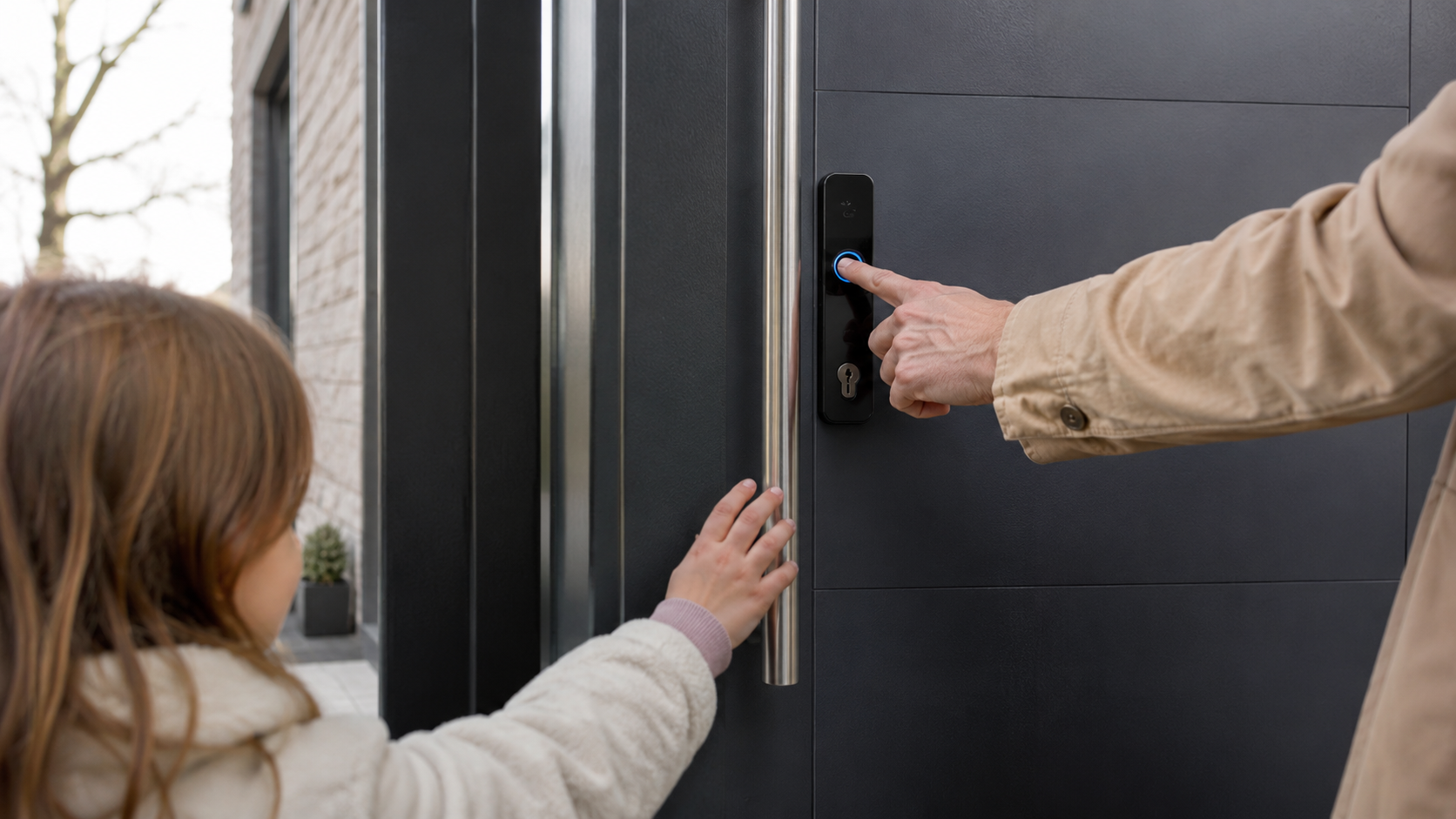
Smart Aluminium Entrance Doors vs Traditional Composite Doors: Which Is Better for Modern Homes?
Choosing a new front door used to be fairly simple. Most homeowners focused on colour, security, and price, then picked either a timber style composite door or a standard aluminium system.
But modern entrance doors have changed dramatically.
Smart locking technology, biometric access, minimalist architecture, and thermally advanced aluminium systems are now pushing homeowners toward a different category entirely: smart aluminium entrance doors.
If you are unfamiliar with biometric entrance technology, start with our fingerprint aluminium door beginner guide.
At the same time, traditional composite doors remain extremely popular across the UK because they are familiar, affordable, and widely available.
So which option actually makes more sense for a modern home in 2026?
The answer depends on what matters most to you: upfront budget, long term durability, architectural design, security, or smart home convenience.
Here’s a detailed comparison of both systems and where each one performs best.

What Is a Smart Aluminium Entrance Door?
A smart aluminium entrance door combines a thermally broken aluminium frame with advanced locking technology.
Most premium systems include:
- Fingerprint access
- Smartphone app control
- Motorised multi point locking
- Keypad entry
- Remote unlocking
- Smart home integration
- Entry activity logs
These systems are designed to offer both physical security and modern convenience while maintaining a clean architectural appearance.
Unlike traditional entrance doors, the technology is often integrated directly into the design.

What Is a Traditional Composite Door?
Composite doors are built from multiple materials layered together, usually including:
- Timber or insulating core materials
- Reinforced frames
- uPVC outer skins
- Glass reinforced plastic (GRP)
They became popular because they improved on older uPVC doors by offering:
- Better insulation
- Improved appearance
- More strength
- Lower maintenance than timber
Composite doors are still one of the most common residential front door choices in the UK.
Security Comparison
Security is one of the biggest deciding factors when choosing a front entrance system.
Composite Door Security
Modern composite doors are generally secure when fitted with:
- Quality multi point locks
- Anti snap cylinders
- Reinforced hinges
- Secure glazing
For standard residential needs, they perform well.
However, most still rely on traditional keys and external lock cylinders.
That creates familiar vulnerabilities:
- Lost keys
- Key copying
- Lock snapping
- Picking attacks
- Physical cylinder targeting
Smart Aluminium Entrance Door Security
Smart aluminium systems take a different approach.
Many eliminate exposed cylinders entirely by using:
- Fingerprint recognition
- Motorised locking systems
- Encrypted digital access
- Remote user management
Premium systems also include:
- Real time monitoring
- Access logs
- Temporary digital access permissions
- Automatic locking
The aluminium structure itself also contributes to strength because aluminium handles large door sizes without flexing or warping.
To better understand modern protection systems, see biometric door security and technology explained
Which Wins?
For basic residential protection, both systems can be secure.
But smart aluminium entrance doors offer:
- More advanced access control
- Better resistance to traditional lock attacks
- Greater user management flexibility
- Stronger premium hardware integration
For homeowners prioritising high end security and smart control, aluminium systems clearly lead.
Design & Appearance
This is where the difference becomes visually obvious.
Composite Door Appearance
Composite doors are available in:
- Traditional styles
- Cottage designs
- Heritage inspired finishes
- Woodgrain textures
- Decorative glass options
They work especially well for:
- Period homes
- Traditional properties
- Standard suburban houses
But they still tend to look more conventional.
Smart Aluminium Entrance Door Appearance
Aluminium doors are designed for contemporary architecture.
Benefits include:
- Slim sightlines
- Flush surfaces
- Oversized panels
- Minimalist styling
- Hidden hardware
- Larger glazing sections
They fit naturally into:
- Luxury homes
- Modern renovations
- Architect designed properties
- Smart home projects
Many homeowners choose aluminium simply because it creates a cleaner and more premium entrance aesthetic.
Explore options to configure your fingerprint entrance door for modern architectural projects.
Which Looks Better?
That depends on the property style.
Composite doors suit traditional homes well.
But for contemporary architecture, smart aluminium entrance doors usually deliver a far more sophisticated appearance.
Smart Features & Access Systems
This is one of the biggest differences between the two categories.
Composite Door Smart Options
Some composite doors can be upgraded with:
- Smart cylinders
- Bluetooth locks
- App controlled systems
But these are often retrofitted add ons rather than fully integrated systems.
Smart Aluminium Door Features
Premium aluminium systems are built around smart access from the start.
Common features include:
- Fingerprint entry
- Smartphone unlocking
- Keypad access
- Remote locking
- Scheduled permissions
- Smart home integration
- CCTV compatibility
- Voice assistant support
The technology feels far more seamless because it is integrated directly into the hardware and design.
Convenience in Daily Life
This becomes surprisingly important after installation.
Homeowners often appreciate:
- No lost keys
- Faster entry
- Easier visitor management
- Remote access control
- Cleaner everyday routines
For busy families or smart home users, this alone can justify the upgrade.
Durability & Weather Resistance
Both systems are designed to handle UK weather, but they age differently.
Composite Door Durability
Good quality composite doors can last many years.
However, over time some systems may experience:
- Surface fading
- Slight warping
- Seal deterioration
- Cosmetic wear
Lower end models vary significantly in quality.
Aluminium Door Durability
Aluminium is exceptionally stable structurally.
It:
- Does not rot
- Does not swell
- Does not warp
- Handles moisture well
- Resists corrosion with quality coatings
Powder coated finishes also retain colour well for long periods.
Which Lasts Longer?
High quality aluminium entrance systems generally have the advantage in long term structural durability.
That is one reason they are commonly used in commercial architecture and luxury residential projects.
Maintenance Requirements
Most homeowners prefer entrance doors that require very little attention.
Composite Door Maintenance
Composite doors are relatively low maintenance compared to timber.
But they may still require:
- Surface cleaning
- Seal maintenance
- Hardware adjustments
- Occasional cosmetic upkeep
Aluminium Door Maintenance
Smart aluminium entrance doors are extremely low maintenance.
Usually only requiring:
- Basic cleaning
- Sensor wiping
- Occasional hardware checks
- Backup battery replacement
The powder coated finish typically eliminates the need for repainting.
Which Is Easier to Maintain?
Aluminium systems generally require less long term upkeep.

Thermal Efficiency & Insulation
This category is closer than many people expect.
Composite Door Thermal Performance
Composite doors became popular largely because of their insulation performance.
Their insulated cores help reduce heat transfer effectively.
Modern Aluminium Thermal Performance
Older aluminium doors historically struggled with insulation.
But modern thermally broken aluminium systems have improved dramatically.
Premium systems now offer:
- Advanced thermal barriers
- Triple glazing options
- High weather sealing performance
- Competitive U values
Which Is Better for Energy Efficiency?
In many modern premium systems, the difference is now relatively small.
Installation quality often matters more than the material itself.
Poor fitting can reduce efficiency regardless of the door type.
Price Differences
Price is often where composite doors remain attractive.
Typical UK Pricing
| Door Type | Estimated Price |
| Standard composite door | £1,200–£2,500 |
| Premium composite smart door | £2,500–£4,000 |
| Smart aluminium entrance door | £4,000–£9,000+ |
The gap becomes larger when:
- Oversized doors are involved
- Fingerprint systems are included
- Architectural customization is required
Why Aluminium Costs More
You are paying for:
- Premium fabrication
- Advanced locking systems
- Smart technology
- Structural strength
- Bespoke manufacturing
- Architectural design quality
The higher price reflects both the materials and the engineering.
Lifespan & Long Term Value
This is where the conversation changes.
A cheaper entrance door is not always the better long term investment.
Composite Door Lifespan
A quality composite door may last:
- Around 20–30 years depending on usage and exposure
Smart Aluminium Door Lifespan
Premium aluminium systems can often exceed:
- 30+ years with minimal structural deterioration
The durability, lower maintenance, and modern appearance may also help support property value appeal.
For long term homeowners, this becomes important.
Architectural Appeal & Property Value
Modern architecture increasingly favours:
- Minimalist entrances
- Large format doors
- Flush finishes
- Smart access integration
Composite doors can still look attractive, but aluminium systems align more naturally with contemporary design trends.
For:
- Luxury builds
- High end renovations
- Smart homes
- Architectural projects
Smart aluminium entrance doors are usually viewed as the premium option.
Pros & Cons
Smart Aluminium Entrance Doors
Pros
- Premium modern appearance
- Advanced smart access systems
- Excellent structural durability
- Strong security integration
- Minimal maintenance
- Ideal for contemporary homes
Cons
- Higher upfront cost
- More complex installation
- Technology may feel unnecessary for some homeowners
Traditional Composite Doors
Pros
- Lower initial price
- Good insulation
- Traditional styling options
- Familiar operation
- Widely available
Cons
- Less architectural flexibility
- More limited smart integration
- Potentially shorter long term lifespan
- Traditional lock vulnerabilities remain
Which Option Is Better for Modern Homes?
If your priorities are:
- Budget
- Traditional appearance
- Simple functionality
A composite door may still make perfect sense.
But if you are investing in:
- Modern architecture
- Smart home systems
- Premium security
- Long term durability
- Contemporary aesthetics
Smart aluminium entrance doors are difficult to beat.
They combine technology, design, and structural performance in a way traditional doors increasingly struggle to match.
For many homeowners in 2026, they are no longer viewed as a luxury novelty. They are becoming the preferred entrance solution for modern living.
Explore available smart aluminium entrance door configurations or compare biometric access systems to understand which setup best suits your property and lifestyle.
Take the next step and request a sample or showroom visit to see modern fingerprint entrance systems in person.

FAQ
Are smart aluminium entrance doors more secure than composite doors?
Generally, yes. Premium aluminium systems often include advanced biometric or app based access control alongside motorised multi point locking systems.
Do smart aluminium doors require internet access?
Most systems continue working locally even if Wi Fi goes offline. Internet access is mainly needed for remote app functionality.
Which door type lasts longer?
High quality aluminium entrance doors usually have a longer structural lifespan than composite doors.
Are composite doors still good in 2026?
Absolutely. Composite doors remain a strong option for homeowners wanting affordability, good insulation, and traditional styling.
Do smart aluminium doors increase property value?
They may improve buyer appeal, especially in luxury homes, smart home projects, and architect designed properties.
Leave a Reply