Do Fingerprint Doors Work in Cold Weather? UK Homeowner Guide
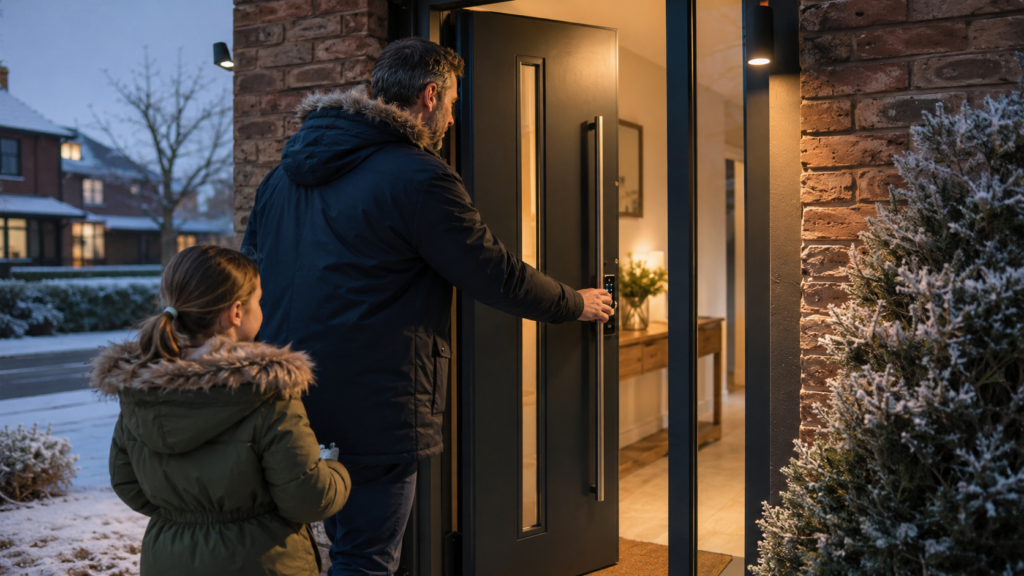
Cold weather is one of the first things UK homeowners think about when considering a smart biometric entrance door.
It is easy to understand why. A front door has to work in rain, frost, wind, low temperatures, and changing weather conditions. If a door uses fingerprint recognition, many buyers naturally ask:
Do Fingerprint Doors Work in Cold Weather still work reliably?
The answer is yes, quality fingerprint doors can work well in cold weather when the system is designed for outdoor use, installed correctly, and supported by reliable backup access methods.
However, not every system performs the same. Sensor quality, weather protection, aluminium construction, lock alignment, power supply, and installation standards all affect winter reliability.
If you are new to this type of entrance technology, start with our fingerprint aluminium door beginner guide before comparing winter performance features.
How Fingerprint Doors Work in Cold Weather
Fingerprint doors use a biometric sensor to recognise an authorised fingerprint. When the scanner confirms a match, the door unlocks through a smart access system, often connected to a motorised multi point lock.
In cold weather, the system still follows the same basic process:
- The user places a registered finger on the scanner
- The sensor reads the fingerprint pattern
- The system compares it with stored user data
- If authorised, the lock releases
- The door opens
The challenge is not the idea of fingerprint access itself. The challenge is whether the sensor, door hardware, and locking mechanism are designed to handle outdoor conditions.
Premium systems are built with weather exposure in mind. Cheaper or poorly installed systems may struggle more.
What Can Affect Fingerprint Recognition in Winter?
Cold weather can affect fingerprint recognition in a few practical ways.
The most common issues are usually not dramatic system failures. They are small everyday problems that can reduce recognition accuracy.
These may include:
- Very dry skin
- Wet fingers
- Snow, frost, or moisture on the sensor
- Dirt or residue on the scanner
- Poor quality sensor hardware
- Incorrect sensor positioning
- Lock alignment issues caused by poor installation
For most homeowners, the solution is simple: choose a high quality outdoor rated biometric system and keep the sensor clean.
Dry Skin and Fingerprint Recognition
During winter, skin can become dry or cracked. This may make fingerprints slightly harder for some sensors to read.
A premium fingerprint sensor should still perform well, but homeowners can improve reliability by registering more than one finger.
For example, each user can register:
- Right index finger
- Left index finger
- Thumb
- Backup finger
This gives the system more options if one finger is temporarily difficult to scan.
For families, this is especially useful because children may come home with wet, cold, or dirty hands after school.
Rain, Frost, and Moisture
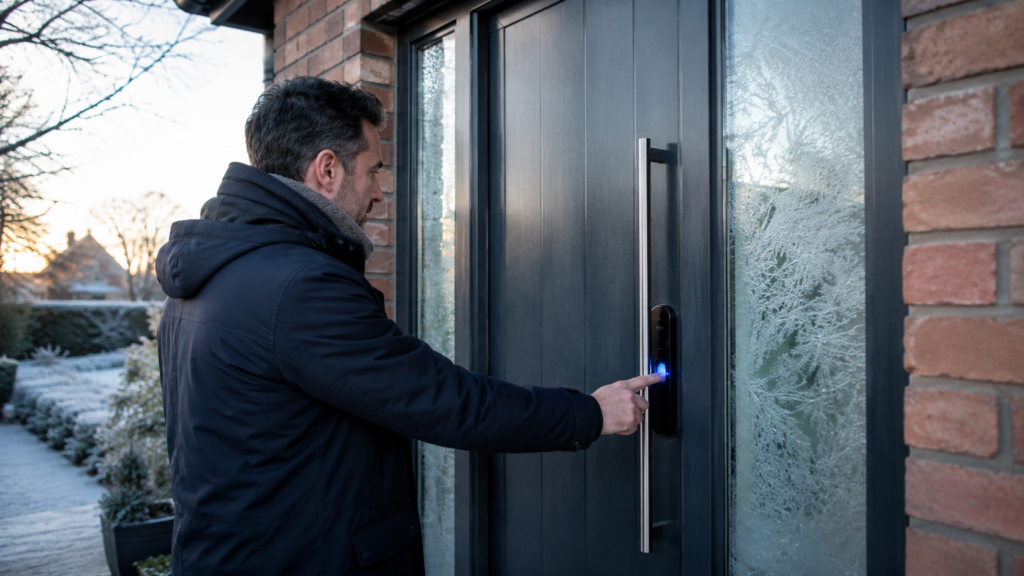
UK weather is often wet as well as cold. Rain, frost, and condensation can affect low quality fingerprint readers if they are not designed properly.
A good outdoor fingerprint scanner should be protected against normal weather exposure. It should also be positioned so that it is not constantly collecting standing water or dirt.
Homeowners should ask:
- Is the fingerprint reader suitable for external use?
- How does it perform in rain and frost?
- Is the scanner integrated into the door design?
- Does the system include alternative access methods?
- What maintenance does the sensor require?
These questions are important because winter reliability depends on product quality, not just marketing claims.
Why Aluminium Doors Perform Well in UK Weather
The door material matters just as much as the fingerprint reader.
Aluminium is commonly used for premium entrance systems because it is stable, strong, and well suited to changing weather conditions.
A quality aluminium entrance door:
- Does not rot
- Does not swell like timber
- Does not warp easily
- Resists moisture exposure
- Supports strong locking systems
- Works well with modern smart access hardware
This makes aluminium a strong choice for UK homes exposed to rain, wind, and seasonal temperature changes.
Modern thermally broken aluminium systems also improve insulation compared with older aluminium doors.
Thermal Performance in Winter
Older aluminium doors had a reputation for poor insulation. Modern premium systems are very different.
Thermally broken aluminium doors use an insulated barrier between internal and external aluminium sections. This helps reduce heat transfer and improves indoor comfort.
For winter performance, homeowners should consider:
- Thermal break quality
- Door panel insulation
- Glazing specification
- Weather seals
- Threshold design
- Installation quality
A smart door with excellent technology can still underperform if the frame or seals are poorly specified.
Smart Locks and Cold Weather Reliability
Fingerprint doors are not only about the scanner. The locking system also needs to work reliably in cold conditions.
Premium smart aluminium entrance doors often use motorised multi point locking. This means several locking points engage around the frame, improving security and sealing.
In winter, correct lock alignment becomes especially important. If a door is poorly installed, cold weather movement, pressure, or seal compression may make the lock feel stiff.
A well installed aluminium door should operate smoothly because aluminium is structurally stable.
For deeper security details, read biometric door security and technology explained.
What Happens If the Fingerprint Scanner Struggles?
A quality fingerprint door should never rely on fingerprint access alone.
Good systems usually include several backup methods, such as:
- Smartphone app access
- PIN keypad entry
- Mechanical override key
- Battery backup
- Multiple registered fingerprints
This matters in winter because hands may be wet, cold, or covered by gloves.
If a fingerprint scan does not work immediately, the homeowner should still have another way to enter.
Can You Use Fingerprint Doors With Gloves?
Fingerprint scanners normally need direct contact with the skin. Gloves usually prevent the scanner from reading the fingerprint.
This is not a fault. It is simply how fingerprint recognition works.
For winter use, homeowners can:
- Remove one glove briefly
- Use smartphone access
- Use PIN entry if available
- Use another registered finger
- Use mechanical backup access if needed
Many homeowners still find this easier than searching for keys in a bag or pocket.
Power Cuts During Winter
Winter weather can sometimes cause power interruptions.
Most premium smart entrance systems include battery backup to help the door continue operating during outages.
This backup can support fingerprint access and motorised locking for a period of time, depending on battery capacity and door usage.
A good system should also include emergency access if the backup battery eventually runs out.
When choosing a door, ask:
- Does the system include battery backup?
- How long can backup power last?
- Are low battery alerts available?
- Is there a concealed mechanical override?
- Can the door work locally without internet?
These features are essential for year round reliability.
Does Wi Fi Matter in Cold Weather?
Wi Fi is usually not required for basic fingerprint unlocking in quality systems.
Most fingerprint recognition happens locally through the door controller. Internet access is usually needed for app notifications, remote unlocking, and cloud connected features.
This means the door should still unlock with a registered fingerprint even if the home internet goes offline.
However, exact performance depends on the system. Always check how the product operates without Wi Fi.
Maintenance Tips for Winter Reliability
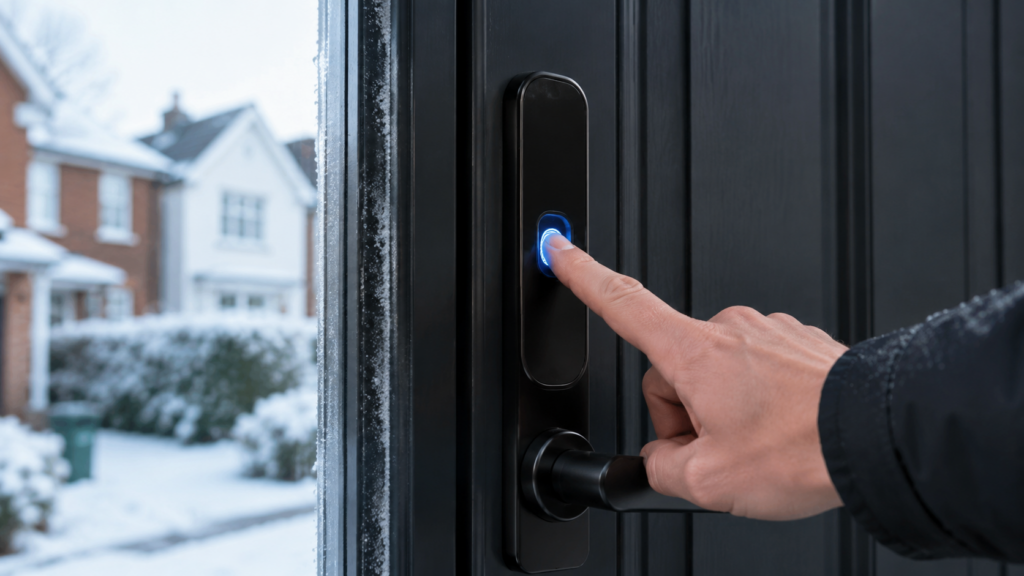
Fingerprint aluminium doors are usually low maintenance, but winter care helps preserve performance.
Useful maintenance steps include:
- Wipe the fingerprint scanner regularly
- Keep the threshold clear of dirt and debris
- Check for ice or moisture around the door
- Clean the aluminium frame with suitable products
- Test backup access before winter
- Replace backup batteries when recommended
- Keep user profiles updated
- Report stiff locking early
Small checks can prevent bigger problems later.
Common Myths About Fingerprint Doors in Cold Weather
Many concerns around fingerprint doors come from outdated smart lock experiences or poor quality devices.
Myth 1: Fingerprint doors stop working in winter
Quality outdoor systems are designed for normal UK weather. Problems are more likely with cheap sensors, poor installation, or lack of backup access.
Myth 2: Rain always stops fingerprint scanners
Good scanners are designed for external use. Moisture may occasionally affect scanning, but backup access should cover these situations.
Myth 3: Power cuts lock you out
Premium systems usually include battery backup and emergency access methods.
Myth 4: Aluminium doors are always cold
Modern thermally broken aluminium doors are designed to improve insulation and reduce heat transfer.
Who Should Consider Fingerprint Doors in Cold Weather?
Fingerprint doors are especially suitable for:
- Busy families
- Smart home users
- Luxury homeowners
- New build projects
- Modern renovations
- Gated properties
- High security homes
- Homeowners tired of lost keys
- Properties exposed to frequent UK weather changes
They are particularly useful when convenience and security both matter.
You can configure your fingerprint entrance door based on your property style, winter access needs, and smart home preferences.
Who May Prefer a Simpler Door?
A fingerprint aluminium door may not be the best choice for everyone.
A simpler entrance door may be more suitable if:
- Budget is the main concern
- You prefer fully mechanical locks
- You do not want smart technology
- The property is short term
- You rarely use the front entrance
- You are not interested in app or biometric access
Fingerprint doors are premium systems. They make most sense when the homeowner values long term convenience, security, and design.
Buyer Checklist for Winter Ready Fingerprint Doors
Before choosing a system, ask:
Sensor Quality
- Is the fingerprint reader suitable for outdoor use?
- Does it work in rain and cold?
- Is it easy to clean?
- Can multiple fingers be registered?
Backup Access
- Is there battery backup?
- Is there a mechanical override?
- Is PIN entry available?
- Can smartphone access work as a backup?
Door Construction
- Is the aluminium thermally broken?
- Are the seals high quality?
- Is the threshold weather resistant?
- Is the lock properly integrated?
Installation
- Is the installer experienced with smart aluminium doors?
- Will the lock alignment be tested?
- Is aftercare support available?
- Are winter operation instructions provided?
A premium smart door should feel reliable, not complicated.
For many properties, the best upgrade is not simply the most advanced lock, but the strongest complete entrance system. Looking at high security doors can help buyers compare physical protection alongside smart access features.
Final Thoughts: Do Fingerprint Doors Work in Cold Weather?
Yes, quality fingerprint doors in cold weather can work reliably when they are properly designed, installed, and maintained.
The most important factors are sensor quality, weather protection, thermally broken aluminium construction, backup access, and professional installation. A good biometric entrance system should not depend on a single access method. It should provide fingerprint entry, alternative access, battery backup, and secure mechanical override options.
For UK homeowners, the right fingerprint aluminium door can offer strong winter performance while improving security, convenience, and modern entrance design.
For more detail on smart access protection, see biometric door security and technology explained. You can also configure your fingerprint entrance door to suit your home’s layout, weather exposure, and security goals.
To compare finishes, hardware, and biometric access features in person, request a sample or showroom visit.
FAQ
Do fingerprint doors work in cold weather?
Yes, quality fingerprint doors in cold weather can work reliably when the sensor is designed for outdoor use and the door is installed correctly.
Can frost stop a fingerprint scanner from working?
Frost or moisture may affect low quality scanners, but premium systems are designed for outdoor conditions and should include backup access methods.
Do fingerprint doors work with gloves?
Usually no. Fingerprint scanners need direct skin contact, but homeowners can use app access, PIN entry, or backup keys if gloves are inconvenient.
Are aluminium doors good for winter?
Modern thermally broken aluminium doors can provide strong winter performance, good weather resistance, and stable long term operation.
What backup access should a winter ready fingerprint door include?
A good system should include battery backup, mechanical override access, PIN entry, smartphone control, and multiple registered fingerprints.
Leave a Reply