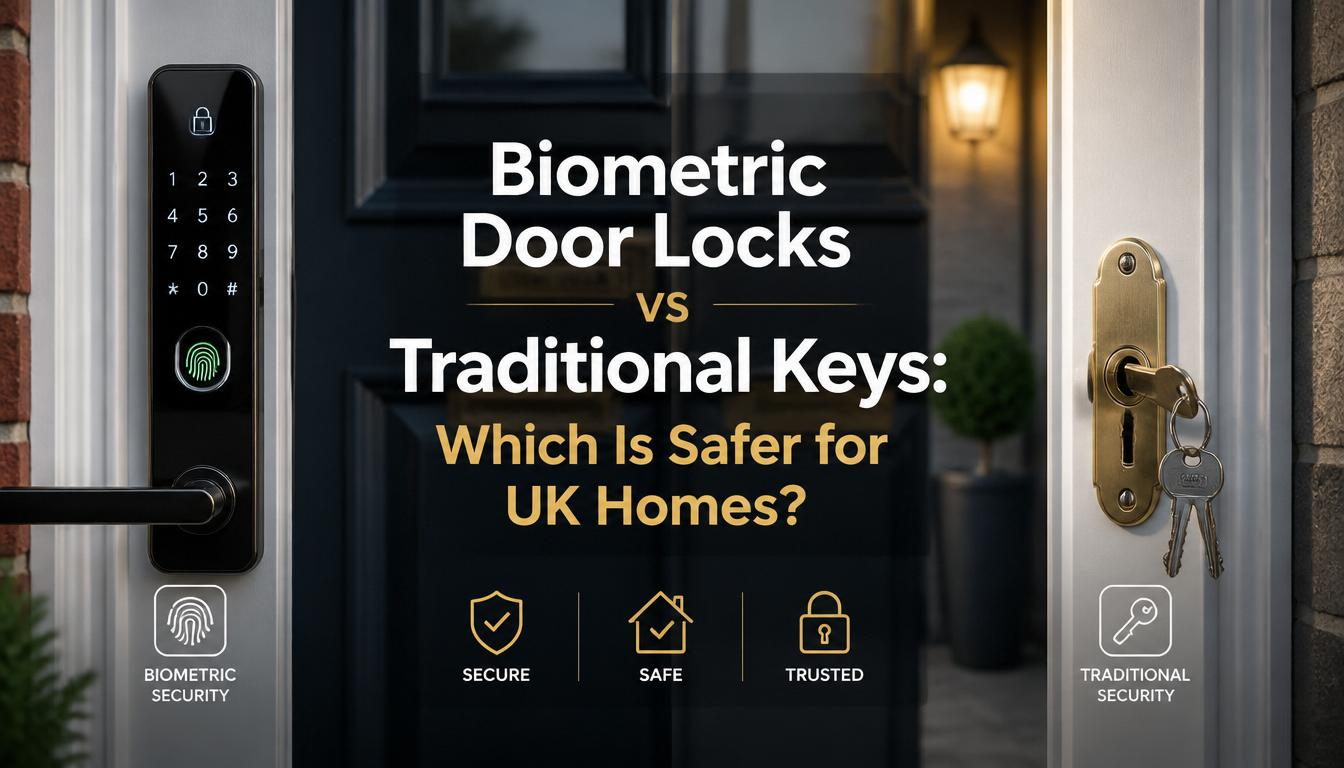
Biometric Door Locks vs Traditional Keys: Which Is Safer for UK Homes?
Biometric Door Locks vs Traditional Keys: Biometric door locks can be safer than traditional keys when they are part of a strong entrance system with encrypted access, multi point locking, backup entry, and professional installation. Traditional keys are simple and familiar, but they can be lost, copied, stolen, or used with weak cylinders. This guide explains how both options compare for UK homeowners.
Biometric door locks vs traditional keys is not just a technology comparison. A biometric system may offer stronger access control, but the safest option depends on the whole entrance: door material, frame strength, locking system, backup access, and installation quality.
What Are Biometric Door Locks?
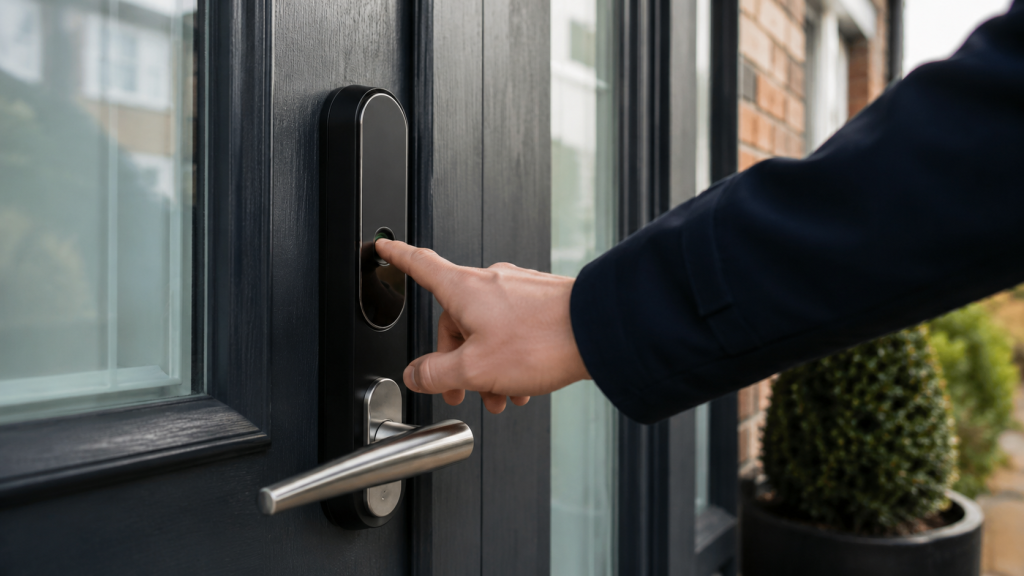
Biometric door locks use a physical identifier, usually a fingerprint, to confirm whether someone is authorised to enter.
Instead of inserting a key, the user places a registered finger on a scanner. If the fingerprint matches an approved profile, the door unlocks.
Biometric systems may also include:
- PIN keypad entry
- Smartphone app access
- Mechanical override
- Battery backup
- User management
- Entry logs
- Temporary access permissions
For modern homes, fingerprint aluminium doors can combine biometric access with strong aluminium construction and smart entrance design.
A secure entrance is not only about choosing a stronger lock. The door structure, frame, glazing, installation quality, and locking system all work together, which is why many homeowners compare secure front doors before making a final upgrade decision.
How Traditional Keys Work
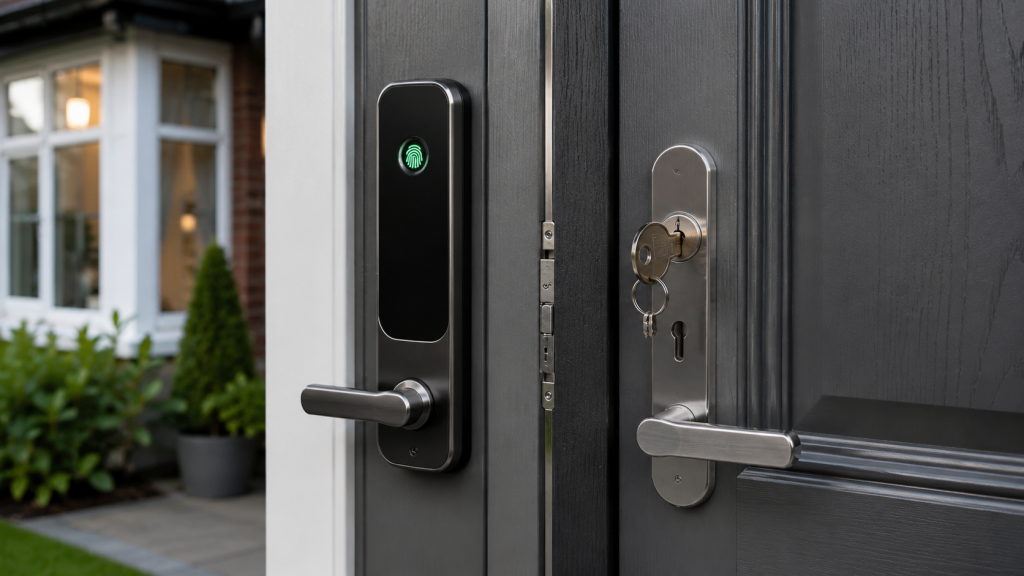
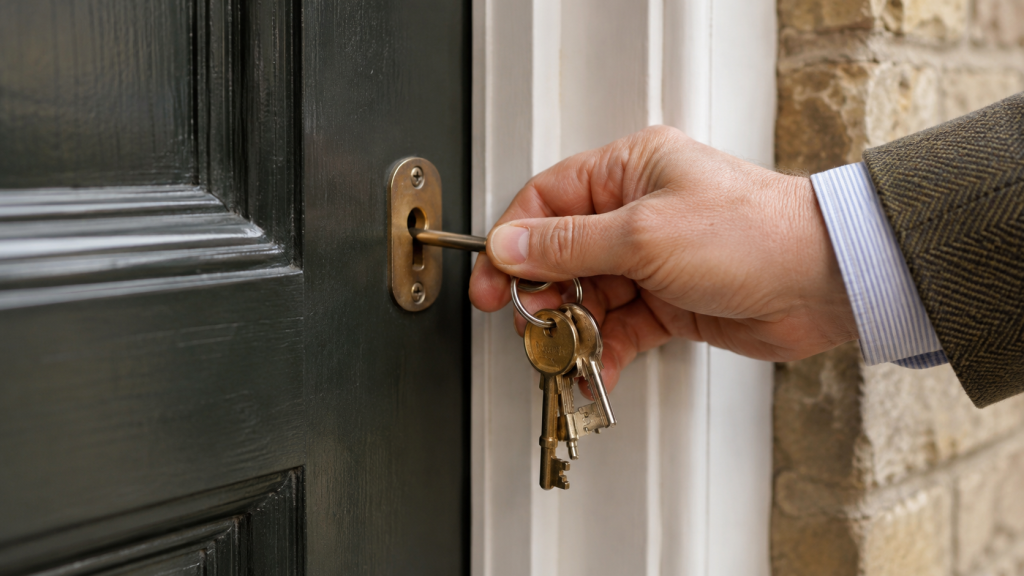
Traditional keys use a physical key and lock cylinder.
They are familiar, simple, and do not require apps, batteries, or fingerprint registration. Many homeowners still prefer keys because they understand how they work.
However, traditional keys have common risks:
- Keys can be lost
- Keys can be copied
- Keys can be stolen
- Spare keys may be hidden outside
- Cylinders may be vulnerable to attack
- Access cannot easily be removed without changing locks
Traditional keys can still be secure, but they need high quality cylinders, strong doors, and proper installation.
Which Is Safer?
Biometric door locks can be safer for access control because they reduce reliance on physical keys. You cannot leave your fingerprint at work or lose it on the bus.
However, biometric security should never be judged by the scanner alone.
A secure biometric entrance should include:
- Strong door construction
- Multi point locking
- Encrypted fingerprint templates
- Backup access
- Battery backup
- Secure user management
- Professional installation
For homes that need stronger physical protection, high security doors may be more important than the access method alone.
Traditional Key Risks
Traditional keys create several everyday security problems.
A lost key may require lock replacement. A copied key can remain in circulation without the homeowner knowing. A spare key hidden outside can be discovered. A weak cylinder can be targeted.
For families, keys are also inconvenient. Children can forget them. Visitors may need copies. Cleaners or contractors may keep keys longer than needed.
Biometric Lock Benefits
Biometric locks offer more control.
Benefits may include:
- No physical keys for daily use
- Faster access
- Easier user removal
- Reduced key copying risk
- Better family access management
- Optional entry logs
- Smart home compatibility
This makes biometric access useful for families, luxury homes, smart homes, and managed properties.
Biometric Lock Risks
Biometric locks are not perfect.
Possible issues include:
- Wet or dirty fingers
- Poor quality scanners
- Weak app security
- Dead batteries
- Poor installation
- Lack of backup access
- Unclear data storage
A good system should include backup methods and secure biometric data handling.
Privacy and Fingerprint Data
Homeowners often worry about fingerprint privacy.
Quality biometric systems usually store encrypted templates rather than simple fingerprint images. Still, buyers should ask:
- How is fingerprint data stored?
- Is the data encrypted?
- Can users be deleted?
- Is data local or cloud based?
- Who manages access?
- Can old users be removed?
These questions are essential before choosing any biometric door lock.
Backup Access Matters
A biometric door should not rely only on fingerprint recognition.
Useful backup options include:
- Mechanical emergency key
- PIN keypad
- Smartphone access
- Battery backup
- Multiple registered fingerprints
Backup access is what makes a biometric system practical for real homes.
Fortavia / Secure Doors Original Data Placeholder
Original Data Placeholder:
[Add verified internal data from securedoors.co.uk, Fortavia, or customer enquiries about how often homeowners ask about biometric locks, traditional key risks, lost keys, and backup access.]
Possible data points:
- Most common concerns about biometric locks
- Percentage of enquiries asking about keyless entry
- Top reasons homeowners want to replace traditional keys
- Most requested backup access method
Do not invent statistics.
Brand Mention Building Targets
To build stronger entity trust, securedoors.co.uk and partner brands should target genuine mentions in:
- UK smart home podcasts
- Locksmith and home security forums
- Reddit discussions about smart locks
- Local press stories about home security upgrades
- Home renovation podcasts
- Consumer safety articles
Only real, verifiable mentions should be claimed.
Final Thoughts
When comparing biometric door locks vs traditional keys, biometric access can offer better control and convenience, but only when paired with a strong entrance system.
Traditional keys are simple but vulnerable to loss, copying, and cylinder attacks. Biometric systems reduce key related risks but need encryption, backup access, quality hardware, and proper installation.
For physical entrance protection, compare secure front doors. For keyless biometric access, explore biometric entrance doors.
FAQ
Are biometric door locks safer than traditional keys?
They can be safer for access control because there are no physical keys to lose or copy, but the full door system still matters.
Can biometric locks fail?
Yes, any technology can have issues. Good systems include PIN entry, battery backup, app access, and mechanical override.
Are traditional keys still secure?
Traditional keys can be secure with strong cylinders, protected hardware, and a quality door, but they are easier to lose or copy.
Do biometric locks store real fingerprints?
Quality systems usually store encrypted biometric templates rather than simple fingerprint images.
What is the safest door access method?
The safest setup usually combines strong physical locking, secure door construction, biometric or controlled access, and backup entry.
Leave a Reply