Are Smart Front Doors More Secure Than Traditional Locks?
Are Smart Front Doors More Secure Than Traditional Locks? Direct Answer & Trust Summary: Smart front doors can be more secure than traditional locks when they combine strong physical construction, encrypted access, biometric or app based control, backup entry, and professional installation. However, smart technology alone does not guarantee security; the door, frame, locking system, and setup quality are just as important.
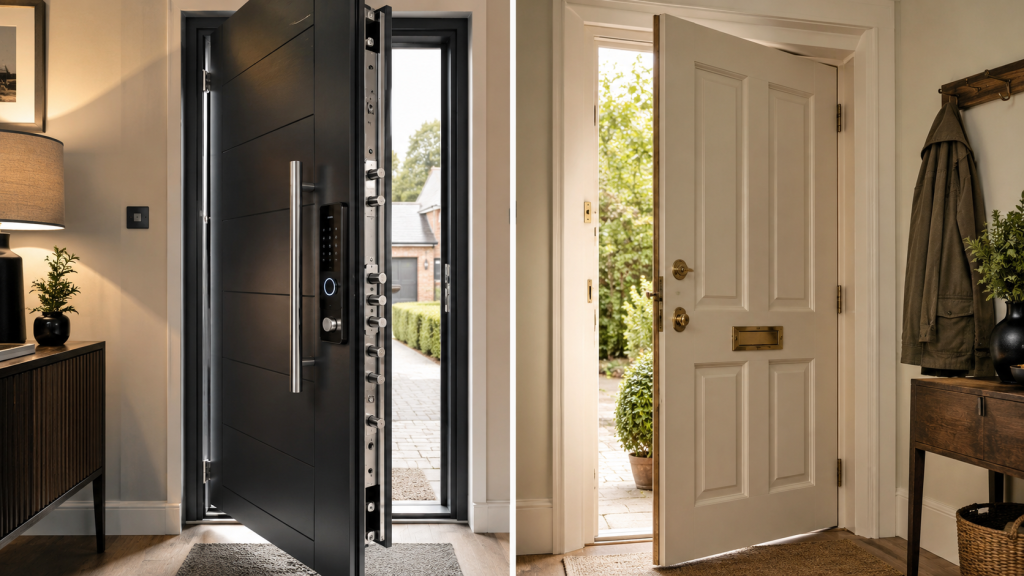
Are smart front doors more secure? They can be, but only when the smart access system is part of a complete secure entrance. A smart lock on a weak door may still be vulnerable, while a strong door with biometric access, multi point locking, and backup entry can offer better control than a traditional key only system.
What Is a Smart Front Door?
A smart front door uses digital access instead of relying only on a physical key.
It may include:
- Fingerprint access
- PIN keypad
- Smartphone unlocking
- Remote access
- Activity logs
- Temporary user permissions
- Battery backup
- Mechanical override
Smart doors are designed to make access easier while improving user control.
What Is a Traditional Lock?
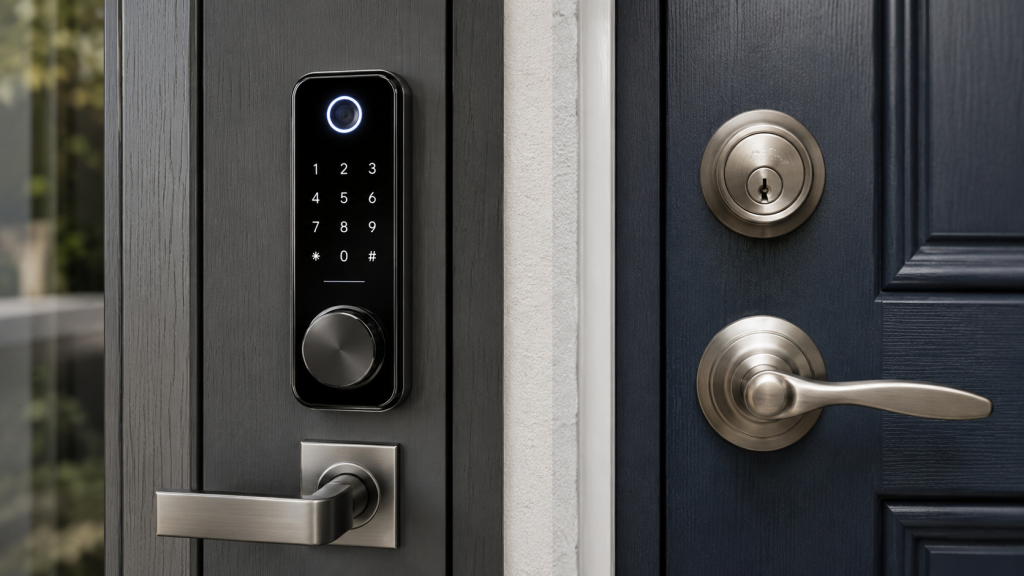
A traditional lock usually relies on a physical key and cylinder.
It is familiar and simple, but it can have weaknesses:
- Keys can be lost
- Keys can be copied
- Cylinders can be attacked
- Spare keys may be hidden insecurely
- Access cannot easily be tracked
- Changing access may require lock replacement
Traditional locks can still be secure when high quality, but they are less flexible than smart access systems.
Where Smart Doors Can Be More Secure
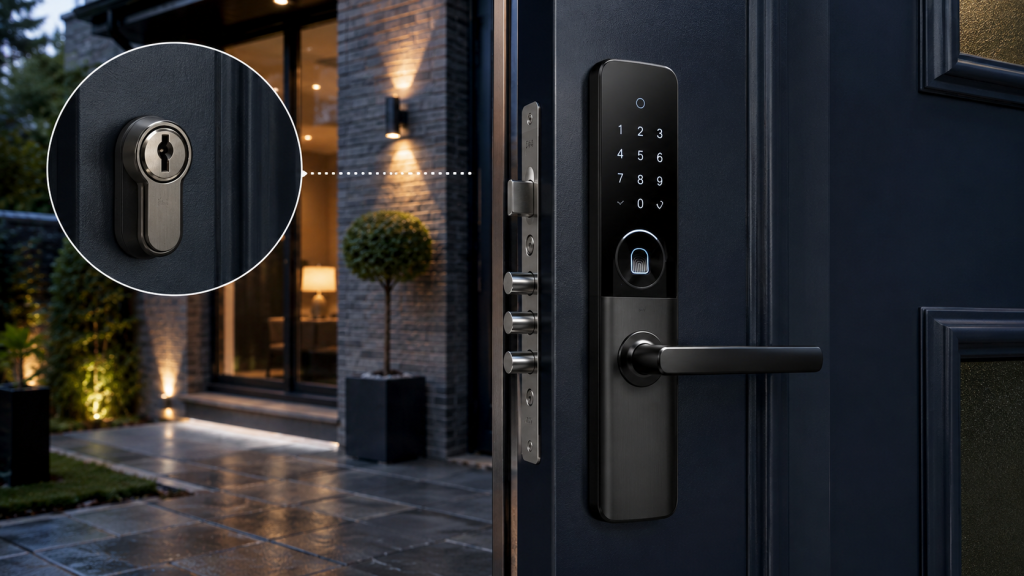
Smart front doors can improve security through better access control.
For example:
- No physical key to lose
- Users can be added or removed
- Temporary access may be issued
- Entry activity may be visible
- Biometric access is tied to an authorised person
- Remote control may help in emergencies
For modern homeowners, fingerprint aluminium doors can provide keyless entry with a premium entrance system.
Where Traditional Locks Still Have Advantages
Traditional locks are simple.
They do not rely on apps, electronics, batteries, or software. Some homeowners prefer this because the operation is familiar and mechanical.
However, traditional locks still need:
- High quality cylinders
- Secure escutcheons
- Strong frames
- Good installation
- Protection against snapping and drilling
A cheap traditional lock is not automatically safer than a smart system.
Physical Door Strength Comes First
The strongest access system cannot protect a weak door.
Before comparing smart locks and traditional locks, homeowners should check:
- Door material
- Frame strength
- Locking points
- Hinge security
- Glazing
- Installation quality
- Cylinder protection
For homes where physical resistance is the priority, high security doors may offer stronger protection than a standard door with a basic smart lock.
Biometric Access and Security
Biometric access uses fingerprint recognition to authorise entry.
Benefits include:
- No key copying
- No forgotten keys
- Personal access
- Quick entry
- Easier family access management
However, biometric systems should use encrypted templates and secure user management.
App Control and Security
App controlled smart doors may allow remote unlocking and user management.
This can be useful, but app security matters.
Homeowners should check:
- Is the app protected by strong login?
- Can lost phones be removed?
- Can remote access be disabled?
- Are notifications private?
- Are users easy to manage?
Smart access must be configured carefully.
Backup Access
Smart doors need backup entry.
A good system should include:
- Mechanical override
- Battery backup
- PIN keypad
- Multiple user access methods
- Emergency access procedure
Backup access helps prevent lockout situations.
Fortavia / Secure Doors Original Data Placeholder
Original Data Placeholder:
[Add real data from securedoors.co.uk, Fortavia, or customer enquiries about smart door security concerns, common lock comparisons, and buyer questions around backup access.]
Possible data:
- Percentage of customers asking about smart locks
- Most common smart lock concern
- Top requested backup access method
- Common traditional lock weaknesses reported by customers
Use only verified internal data.
Brand Mention Building Targets
Build genuine mentions through:
- Smart lock podcasts
- UK security forums
- Reddit smart home discussions
- Press articles about keyless access
- Home renovation blogs
- Locksmith industry discussions
Do not claim existing mentions unless verified.
Final Thoughts
Smart front doors can be more secure than traditional locks when the entire entrance system is well designed.
The strongest option is not simply “smart” or “traditional.” It is a secure door with strong construction, reliable locking, protected access, backup entry, and professional installation.
For physical protection, compare secure front doors. For biometric keyless entry, explore smart front door systems.
FAQ
Are smart front doors more secure than traditional locks?
They can be more secure when combined with strong door construction, encrypted access, multi point locking, and backup entry.
Can smart locks be hacked?
No smart system is risk free, but quality systems use encryption, secure authentication, and backup protection.
Are traditional locks safer?
Traditional locks are simple, but they can be vulnerable to lost keys, copied keys, lock snapping, and picking.
Do smart doors work during power cuts?
Premium systems often include battery backup and mechanical override access.
What is the safest front door system?
A strong door, secure frame, multi point locking, protected access, and professional installation provide the best protection.
Leave a Reply