Blog

Smart Entrance Door Mistakes to Avoid

Smart Entrance Door Mistakes to Avoid Before Buying in 2026

Buying a smart entrance door is a major decision. It affects your home’s security, daily convenience, design, energy performance, and long term value.

Yet many homeowners focus on the wrong things and Smart Entrance Door Mistakes to Avoid.

They look at the fingerprint scanner first. Or they choose a door based only on appearance. Or they compare prices without understanding what is included.

That is how smart entrance door mistakes happen.

A premium fingerprint aluminium door is not just a front door with technology added. It is a complete entrance system involving aluminium construction, biometric access, smart locking, backup entry, installation quality, privacy, thermal performance, and aftercare.

If you are still learning the basics, start with our fingerprint aluminium door beginner guide before choosing a final specification.
Mistake 1: Choosing the Smart Lock Before the Door

One of the biggest smart entrance door mistakes is focusing on the smart lock before considering the door itself.

The access technology matters, but the physical door matters just as much.

A strong fingerprint scanner does not compensate for:

  • Weak door construction
  • Poor frame quality
  • Basic locking hardware
  • Bad installation
  • Poor weather sealing
  • Low thermal performance

The best smart entrance systems start with a high quality aluminium door. The biometric technology should be integrated into the door properly, not treated as an afterthought.

Mistake 2: Assuming All Fingerprint Systems Are Equal

Not all fingerprint readers perform the same.

Some are fast, secure, and designed for outdoor use. Others may be slow, unreliable, or poorly protected against weather.

When comparing fingerprint systems, check:

  • Recognition speed
  • Outdoor suitability
  • Weather resistance
  • Low light performance
  • Anti spoofing features
  • Multiple user profiles
  • Encrypted fingerprint storage
  • Backup access options

A low quality scanner can make the entire entrance system feel frustrating.

For more detail on biometric protection, read biometric door security and technology explained.
Smart Entrance Door Mistakes to Avoid

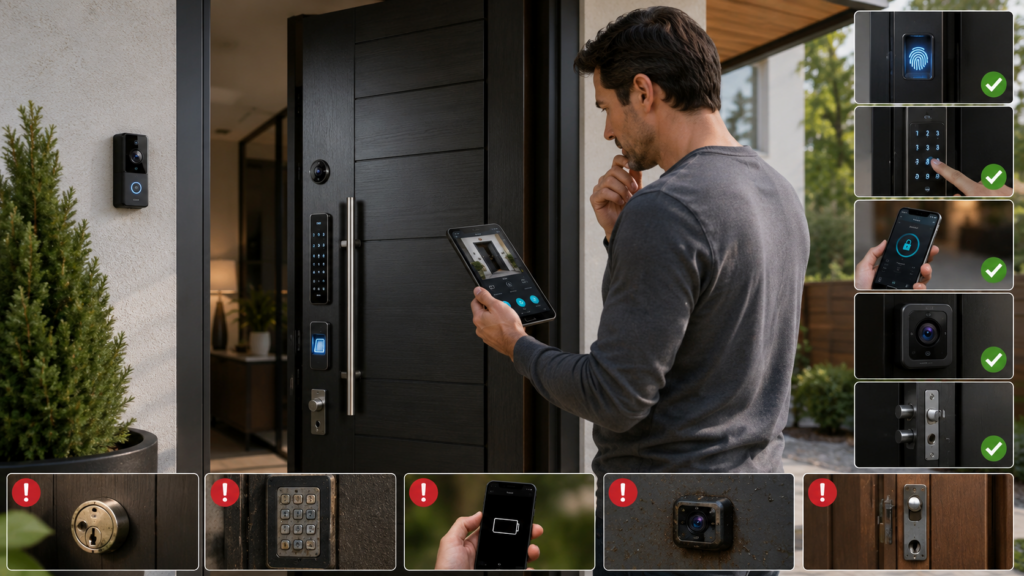
Mistake 3: Ignoring Backup Access

A smart entrance door should never rely on one access method only.

Backup access is essential because real life is unpredictable.

A homeowner may have:

  • Wet hands
  • A cut finger
  • A dead phone
  • A power cut
  • A forgotten PIN
  • A temporary scanner issue

Good systems often include:

  • Battery backup
  • Mechanical override key
  • PIN keypad entry
  • Smartphone access
  • Multiple registered fingerprints

Without backup access, a smart door can become stressful rather than convenient.

Mistake 4: Forgetting About Power Cuts

Many buyers ask whether smart doors work during a power cut, but some only think about this after installation.

Premium systems should include battery backup and emergency access.

Before buying, ask:

  • What happens if mains power fails?
  • How long does backup power last?
  • Are low battery warnings included?
  • Can the door still unlock manually?
  • Does fingerprint access work locally?
  • What happens if Wi Fi is down?

A reliable smart entrance door should be designed for these situations from the start.

Mistake 5: Overlooking Installation Quality

Installation is one of the most important parts of the project.

Even a premium fingerprint aluminium door can underperform if installed badly.

Poor installation can cause:

  • Lock alignment problems
  • Sensor reliability issues
  • Water ingress
  • Draughts
  • Reduced insulation
  • Stiff operation
  • Long term wear
  • Poor security performance

Smart entrance doors require installers who understand aluminium systems, motorised locks, biometric access, frame alignment, and weather sealing.

Choosing the cheapest installer can create expensive problems later.

Mistake 6: Not Checking the Locking System

Some buyers focus heavily on access technology but forget to ask how the door actually locks.

A premium smart entrance door should usually include motorised multi point locking.

This means the door locks at several points around the frame, improving security and sealing.

Benefits include:

  • Stronger forced entry resistance
  • Better door compression
  • More stable locking
  • Smoother daily operation
  • Better integration with fingerprint access

A smart access system should support strong physical security, not replace it.

Mistake 7: Ignoring Thermal Performance

A front door is part of the building envelope. It affects heat loss, comfort, and condensation risk.

Modern aluminium doors can offer strong thermal performance, but only when properly specified.

Check:

  • Thermally broken aluminium frame
  • Insulated door panel
  • Quality seals
  • Glazing specification
  • Threshold design
  • Installation accuracy

Older or cheaper aluminium systems may not perform at the same level.

A smart entrance door should be secure and convenient, but it should also support everyday comfort.

Mistake 8: Choosing Style Without Thinking About Architecture

Design matters, especially for premium homes.

But the door should suit the property, not just look attractive in isolation.

A modern fingerprint aluminium door may include:

  • Flush panels
  • Slim sightlines
  • Hidden handles
  • Side glazing
  • Pivot configurations
  • Large format designs
  • Bespoke colours
  • Integrated access modules

The best result comes when the door feels connected to the architecture of the home.

You can configure your fingerprint entrance door based on your property style, entrance layout, and security requirements.

Mistake 9: Not Thinking About Daily Users

A smart entrance door should suit the people who use it every day.

Think about:

  • Parents
  • Children
  • Older family members
  • Guests
  • Cleaners
  • Tradespeople
  • Staff
  • Tenants
  • Delivery access

Different users may prefer different access methods.

For example:

  • Parents may use fingerprint and app access
  • Children may use fingerprint access
  • Older users may prefer PIN entry
  • Temporary users may need time limited access
  • Backup keys may be kept for emergencies

A good system should be flexible enough for real life use.

Mistake 10: Not Asking About Privacy

Fingerprint access involves biometric data, so privacy questions matter.

Before buying, ask:

  • Does the system store actual fingerprint images?
  • Are fingerprints stored as encrypted templates?
  • Is data stored locally or in the cloud?
  • Who can manage users?
  • Can profiles be deleted?
  • Are access logs available?
  • Is app access secure?

A reputable supplier should explain these points clearly.

For homeowners who value both convenience and privacy, system quality is essential.

Mistake 11: Treating App Control as Automatically Secure

App control can be extremely useful, but it must be secure.

Smartphone access may allow:

  • Remote unlocking
  • Door status checks
  • User management
  • Notifications
  • Temporary permissions

But app security depends on:

  • Login protection
  • Device management
  • Strong passwords
  • Software updates
  • Permission settings
  • Ability to remove lost devices

Do not assume every app controlled door lock is equally secure.

Mistake 12: Buying Based Only on Price

Price matters, but it should not be the only deciding factor.

A cheaper smart door may cost less upfront, but may compromise on:

  • Aluminium quality
  • Sensor reliability
  • Locking hardware
  • Weather sealing
  • Backup access
  • Thermal performance
  • Installation support
  • Aftercare

A premium fingerprint aluminium door is a long term investment. It should be judged on durability, security, convenience, design, and support.

Mistake 13: Forgetting Maintenance and Aftercare

Smart aluminium entrance doors are generally low maintenance, but they are not maintenance free.

Homeowners should understand:

  • How to clean the sensor
  • When backup batteries need replacement
  • How to update users
  • How to test backup access
  • Who to contact for support
  • What warranty applies
  • What aftercare is included

A good supplier should provide clear guidance after installation.

Mistake 14: Not Seeing the System in Person

Online images can be useful, but they do not always show real quality.

A showroom visit can help you compare:

  • Door finishes
  • Handle options
  • Fingerprint scanner position
  • Lock operation
  • Frame quality
  • Glazing choices
  • Colour samples
  • Smart access features

Premium entrance systems are easier to understand when you can see and feel the difference.

Mistake 15: Choosing a Door That Cannot Adapt

Your access needs may change over time.

A good smart entrance system should allow:

  • New users to be added
  • Old users to be removed
  • PINs to be changed
  • App access to be updated
  • Backup methods to remain available
  • Smart home features to be adjusted

This flexibility is especially useful for growing families, rental properties, offices, and changing household routines.
Smart Entrance Door Mistakes to Avoid

What to Check Before Buying a Smart Entrance Door

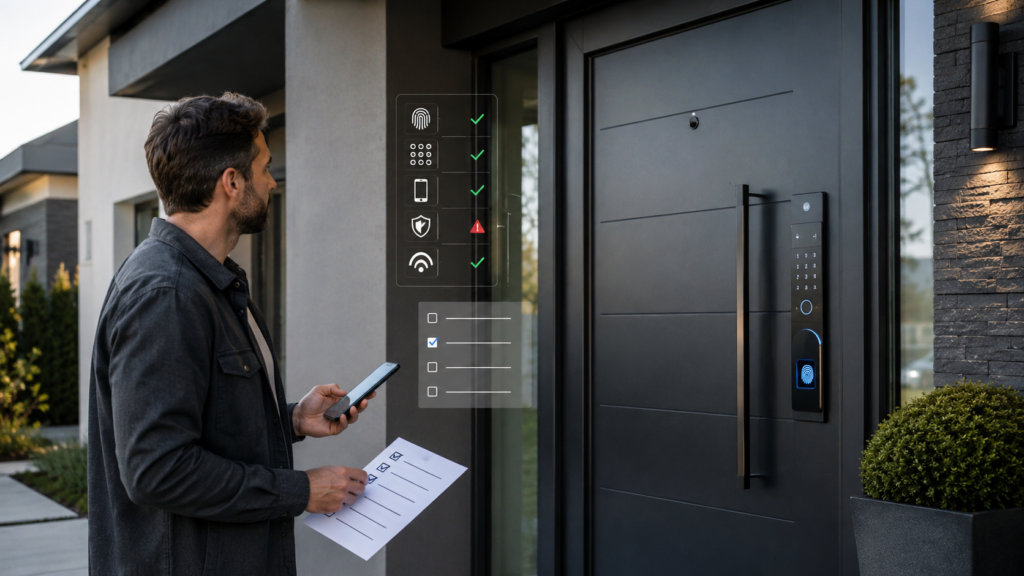
Before making a decision, use this checklist.

Security

  • Does it include motorised multi point locking?
  • Is the fingerprint system encrypted?
  • Are backup access methods included?
  • Is the door physically strong?

Reliability

  • Is the sensor outdoor rated?
  • Does it work in normal UK weather?
  • Is battery backup included?
  • Is there emergency access?

Design

  • Does it suit the property?
  • Are custom colours available?
  • Can hardware be integrated discreetly?
  • Are glazing options available?

Installation

  • Is the installer experienced?
  • Will alignment be tested?
  • Is aftercare included?
  • Are warranties clear?

Usability

  • Can multiple users be added?
  • Can old users be removed?
  • Are PINs and app access manageable?
  • Is the system easy for daily users?

Who Should Be Most Careful When Buying?

Smart entrance door mistakes are most costly for:

  • Luxury homeowners
  • Families
  • Architects
  • Developers
  • Business owners
  • Private clinics
  • Gated properties
  • Smart home projects
  • High security residences

In these cases, the entrance door is not just a basic home improvement item. It is part of the property’s security, design, and daily function.

For detailed protection considerations, revisit biometric door security and technology explained.
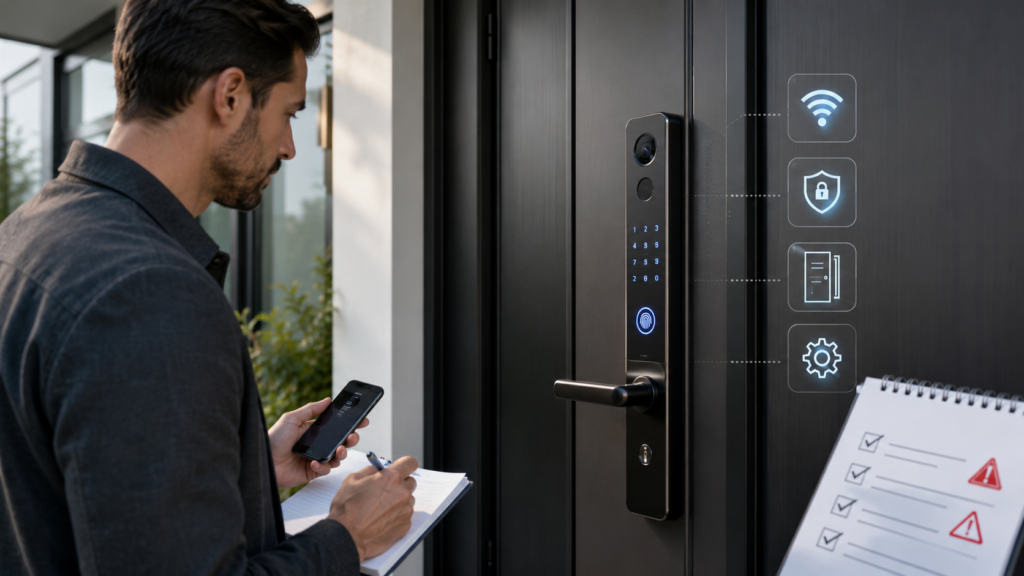
Smart Entrance Door Mistakes to Avoid

A modern entrance should feel convenient, but it also needs to match the security expectations of the home. Comparing high security entrance doors can help homeowners decide whether a stronger door system is the better long-term choice.

Final Thoughts: Avoiding Smart Entrance Door Mistakes

The most common smart entrance door mistakes happen when homeowners focus on one feature instead of the full system.

A fingerprint scanner is important, but it is only one part of the entrance. The best smart aluminium doors combine strong construction, secure biometric access, motorised multi point locking, backup entry, thermal performance, professional installation, privacy controls, and long term support.

Before choosing a final specification, compare the whole system carefully.

You can also configure your fingerprint entrance door to match your security goals, design preferences, and everyday access needs.

To see the differences in quality more clearly, request a sample or showroom visit before making a long term investment.

FAQ

What are the biggest smart entrance door mistakes?

The biggest mistakes include ignoring backup access, choosing poor installation, focusing only on the smart lock, and not checking door quality.

Are fingerprint aluminium doors worth it?

They can be worth it for homeowners who value security, convenience, modern design, and long term durability.

What should I check before buying a smart front door?

Check the locking system, fingerprint reader quality, backup access, aluminium construction, thermal performance, installation, and aftercare.

Do smart entrance doors work during power cuts?

Premium systems usually include battery backup and emergency access, but homeowners should confirm this before buying.

Is installation important for fingerprint aluminium doors?

Yes. Installation affects lock alignment, sensor reliability, weather sealing, thermal performance, and long term security.
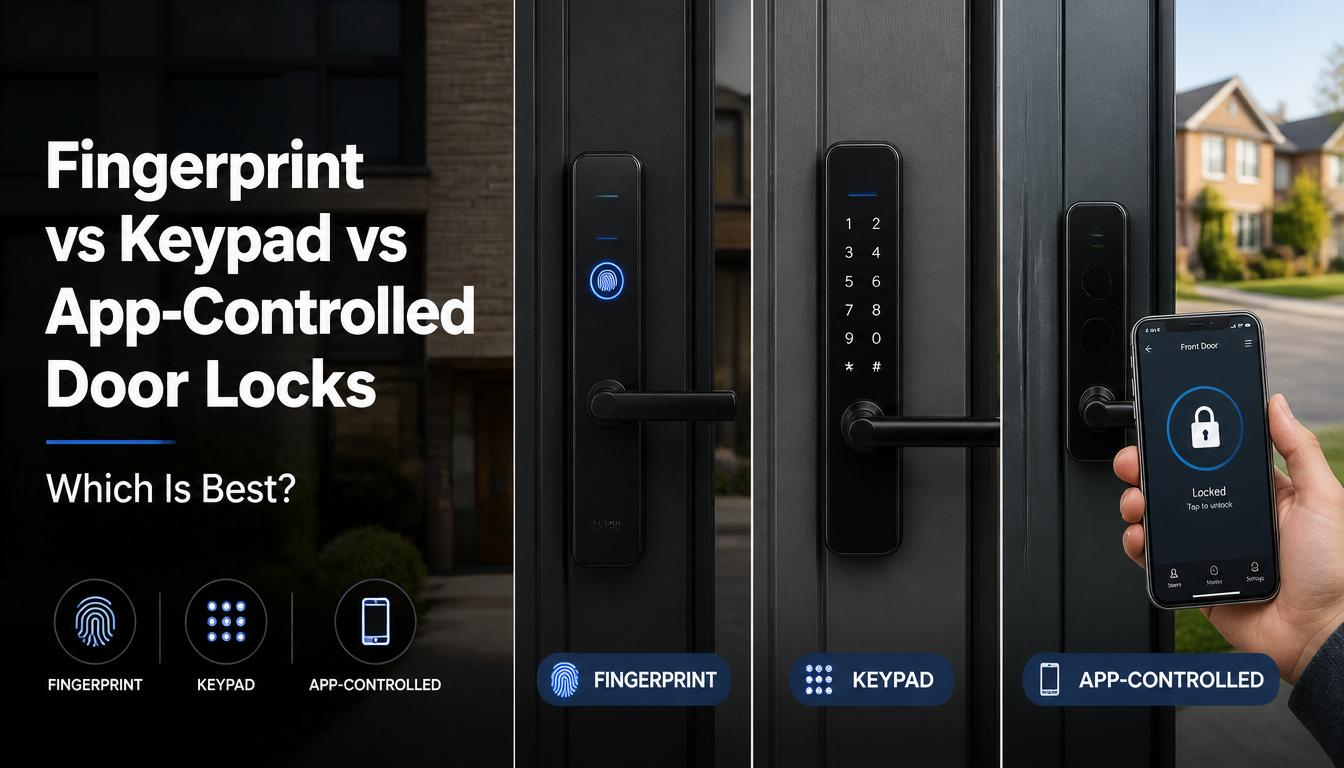
Fingerprint vs Keypad vs App Controlled Door Locks

Fingerprint vs Keypad vs App Controlled Door Locks: Which Is Best?

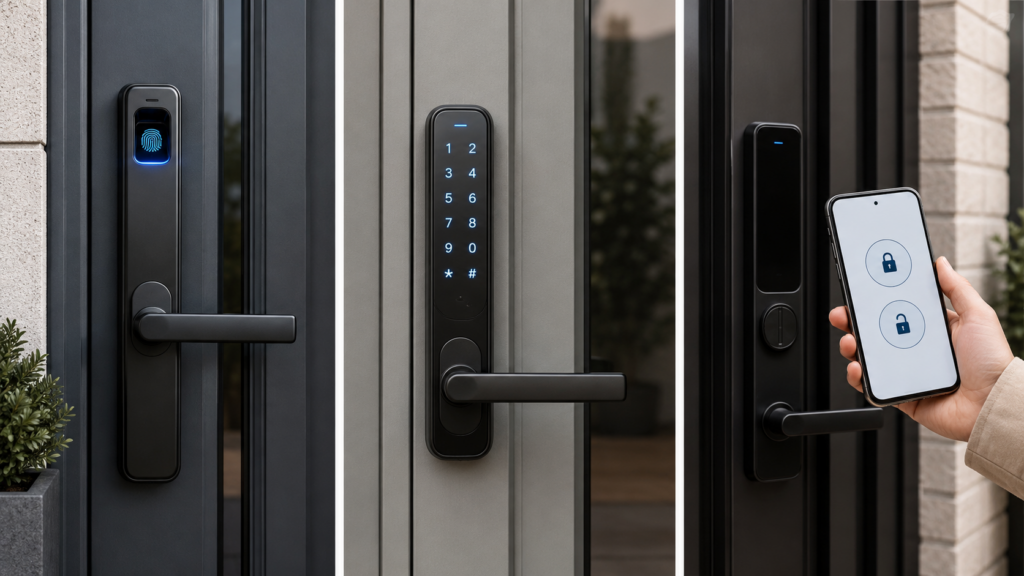
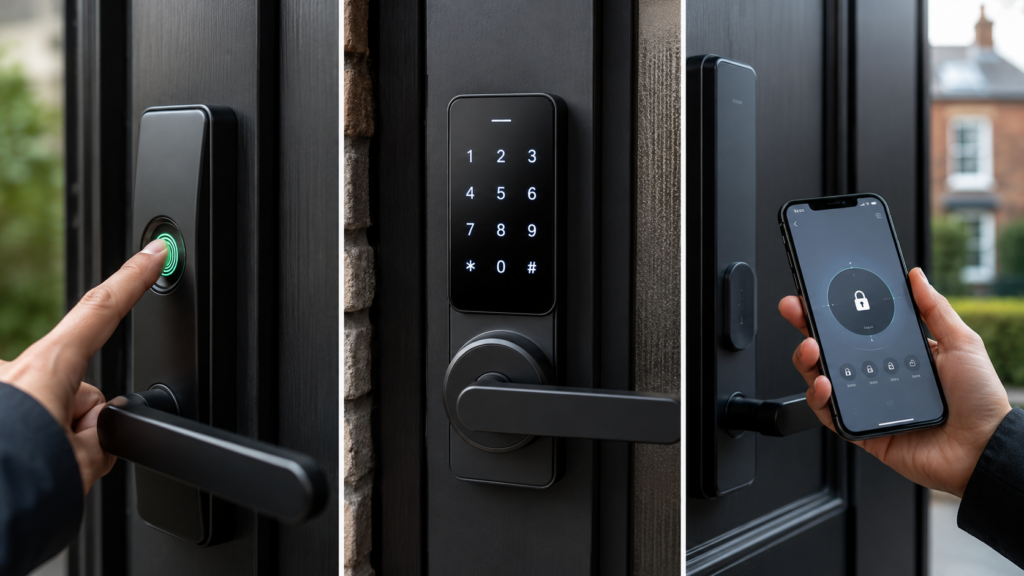
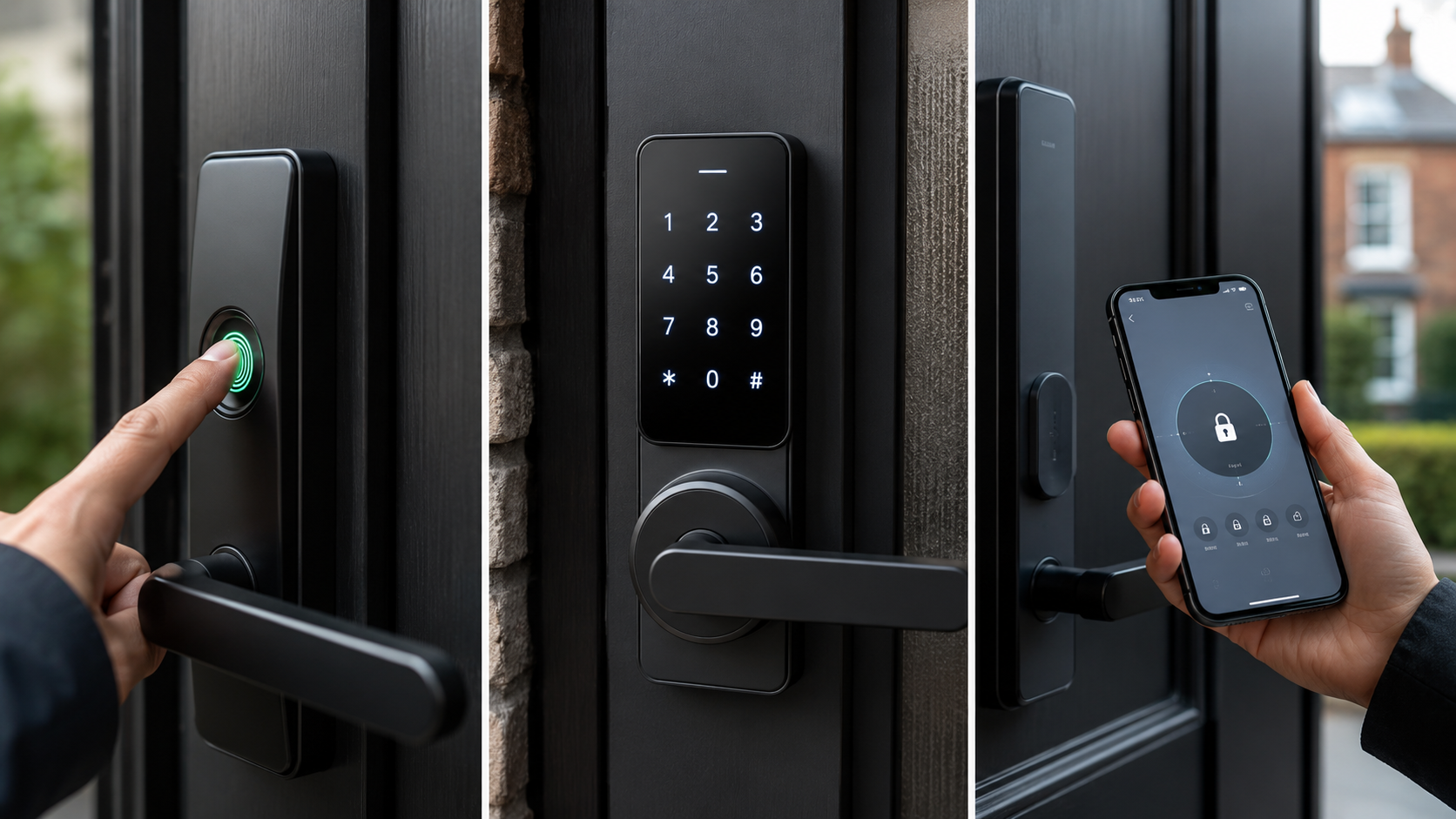
Smart front doors are changing how homeowners think about access. Instead of relying only on traditional keys, many modern entrance systems now offer fingerprint access, keypad entry, smartphone control, or a combination of all three.

This leads to a common buyer question:

Fingerprint vs Keypad vs App Controlled Door Locks: best for a modern UK home?

The answer depends on your priorities. Fingerprint access is personal and convenient. Keypads are simple and flexible. App controlled locks offer remote access and smart home features. For premium aluminium entrance doors, the best solution is often a combination of these systems rather than one single method.

If you are still learning how biometric entrance systems work, start with our fingerprint aluminium door beginner guide before comparing access options.

Fingerprint vs Keypad vs App Controlled Door Locks

What Are Fingerprint Door Locks?

Fingerprint door locks use biometric recognition to unlock the entrance for authorised users.

The user places a registered finger on the scanner. If the system recognises the fingerprint, the door unlocks.

Fingerprint access is popular because it is:

  • Fast
  • Keyless
  • Personal
  • Convenient
  • Difficult to share accidentally
  • Useful for families
  • Suitable for premium smart entrances

A fingerprint is not something you can easily forget at home, unlike a physical key or phone.

Fingerprint vs Keypad vs App Controlled Door Locks

What Are Keypad Door Locks?

Keypad door locks use a PIN code to unlock the door.

The user enters a code on a keypad. If the code is correct, the system unlocks.

Keypads are popular because they are:

  • Easy to understand
  • Useful for guests
  • Helpful as backup access
  • Simple for temporary users
  • Familiar to many people

However, PIN codes can be shared, guessed, watched, or forgotten. That is why keypad access works best when managed carefully.

What Are App Controlled Door Locks?

App controlled door locks allow users to unlock or manage the door through a smartphone.

Depending on the system, app control may allow:

  • Remote unlocking
  • Door status checks
  • User management
  • Entry notifications
  • Temporary access
  • Smart home integration
  • Activity logs

App access is powerful, but it depends on phone security, app reliability, and sometimes internet connectivity.

Fingerprint vs Keypad Door Locks: Quick Comparison

Here is a simple overview.

Fingerprint Access

Best for:

  • Daily family use
  • Homeowners who dislike keys
  • Premium smart homes
  • Secure personal access
  • Fast entry

Potential limitation:

  • May be affected by wet or dirty fingers
  • Usually needs direct skin contact
  • Requires proper setup

Keypad Access

Best for:

  • Backup entry
  • Guests
  • Deliveries
  • Temporary users
  • Simple access sharing

Potential limitation:

  • PINs can be shared
  • Codes may be watched
  • Codes need updating

App Controlled Access

Best for:

  • Remote unlocking
  • Smart home users
  • Monitoring door status
  • Managing permissions
  • High convenience homes

Potential limitation:

  • Depends on phone access
  • Requires good app security
  • Some features may need internet

Which Is Most Secure?

Security depends on the full system, not only the access method.

A premium smart aluminium entrance door should combine access technology with strong physical security.

Important security features include:

  • Motorised multi point locking
  • Strong aluminium construction
  • Encrypted access data
  • Secure app authentication
  • Concealed backup access
  • Proper installation
  • Reliable user management

A fingerprint scanner on a weak door is not enough. A keypad on a poorly installed lock is not enough. App access without secure authentication is not enough.

The strongest systems combine smart access with high quality door engineering.

To better understand physical and digital protection, read biometric door security and technology explained.

Fingerprint Access: Strengths and Weaknesses

Fingerprint access is often the most convenient option for daily use.

Strengths

Fingerprint access is personal. You cannot lose your fingerprint like a key. You do not need to remember a code. You do not need to take out your phone.

This makes it especially useful when:

  • Carrying shopping
  • Coming home with children
  • Returning from work
  • Using the door frequently
  • Managing family access

It also reduces risks linked to copied or lost keys.

Weaknesses

Fingerprint access is not perfect.

Recognition may be affected by:

  • Wet hands
  • Dirty fingers
  • Cuts or injuries
  • Very dry skin
  • Poor sensor quality

That is why premium systems should allow multiple fingerprints per user and include backup access methods.

Keypad Access: Strengths and Weaknesses

Keypad entry remains popular because it is simple and practical.

Strengths

Keypads are useful when someone needs access without being registered biometrically.

For example:

  • Visiting family
  • Trusted tradespeople
  • Cleaners
  • Temporary guests
  • Staff members
  • Delivery access in controlled situations

A PIN can be changed more easily than a physical key.

Weaknesses

The main weakness is code sharing.

A PIN can be:

  • Told to someone else
  • Seen over the shoulder
  • Forgotten
  • Reused too long
  • Shared without permission

For security, keypad codes should be changed regularly and temporary codes should be removed when no longer needed.

App Controlled Locks: Strengths and Weaknesses

App controlled door locks are attractive for smart home users.

Strengths

App access can allow homeowners to manage the door from anywhere.

This can be useful if:

  • A family member forgets access
  • A delivery needs authorised entry
  • A guest arrives early
  • You want to check if the door is locked
  • You manage a second property
  • You want entry notifications

For premium homes, app access connects the entrance door with wider smart security systems.

Weaknesses

App control depends on digital security.

A lost phone, weak password, or poorly secured app can create risks. That is why app based systems should include strong login protection, user permissions, and the ability to remove old devices.

Which Option Is Best for Families?

For families, fingerprint access is often the most convenient daily method.

Children do not need to carry keys. Parents can manage authorised users. Multiple family members can enter quickly without sharing one code.

However, keypad and app access still have value.

A strong family setup may include:

  • Fingerprint access for daily users
  • PIN backup for emergencies
  • App access for parents
  • Mechanical override for rare situations

This layered approach gives flexibility without depending on one method.

Which Option Is Best for Older Users?

Older users may prefer different access methods depending on comfort with technology.

Some may like fingerprint access because it removes the need to find keys. Others may prefer keypad entry because it feels familiar. Some may not want app based control at all.

The best system should support multiple access methods so each user can choose what feels easiest.

Fingerprint vs Keypad vs App Controlled Door Locks

Which Option Is Best for Businesses?

For commercial offices, clinics, studios, and professional workspaces, the best choice depends on user volume and access management needs.

Fingerprint access may work well for staff only areas. Keypads may help with temporary access. App control may support managers who need remote oversight.

Businesses should consider:

  • Number of users
  • Access logs
  • Staff changes
  • Privacy policies
  • Permission management
  • Emergency access
  • Installation quality

For commercial settings, access control should be planned carefully rather than chosen only for convenience.

Why Multi Method Access Is Often Best

The strongest smart entrance systems do not force homeowners to choose only one option.

Instead, they combine:

  • Fingerprint access for daily use
  • Keypad entry for backup or temporary access
  • App control for remote management
  • Mechanical override for emergencies
  • Battery backup for power interruptions

This creates a more flexible and reliable system.

For example, if your finger is wet, you can use a PIN. If a family member needs help, you can use the app. If the battery backup runs out, a concealed key override may still be available.

The Role of Aluminium Door Construction

Access technology is only part of the entrance system.

The door itself must be strong, stable, and properly designed for smart hardware.

Aluminium is well suited to premium smart entrance doors because it supports:

  • Large door sizes
  • Slim sightlines
  • Strong locking systems
  • Modern finishes
  • Durable construction
  • Integrated smart access
  • Contemporary architecture

A smart lock is far more effective when it is part of a complete aluminium entrance system rather than added to a weak or outdated door.

You can configure your fingerprint entrance door to combine biometric access, keypad backup, app control, and architectural design features.

Privacy Considerations

Each access method has privacy implications.

Fingerprint access involves biometric data. Keypad access involves shared codes. App access involves digital accounts and device security.

Homeowners should ask:

  • How is fingerprint data stored?
  • Can PINs be changed easily?
  • Can old phones be removed?
  • Are access logs available?
  • Who manages permissions?
  • Is data encrypted?
  • Can remote access be disabled?

A good supplier should explain these points clearly.

For more detail on secure biometric systems, see biometric door security and technology explained.

Cost Considerations

A basic keypad system may cost less than a fully integrated biometric aluminium entrance door.

However, cost should be compared against long term value.

A premium smart entrance system may offer:

  • Better daily convenience
  • Stronger access control
  • Reduced key management
  • Improved security features
  • Modern kerb appeal
  • Better integration with smart homes
  • Longer lasting aluminium construction

For homeowners already investing in a modern or luxury property upgrade, integrated smart access often makes more sense than a basic add on lock.

Common Mistakes to Avoid

When comparing fingerprint, keypad, and app controlled locks, avoid these mistakes:

  • Choosing technology before assessing door quality
  • Ignoring backup access
  • Using weak PIN codes
  • Not updating old users
  • Forgetting app security
  • Buying a system with poor weather resistance
  • Choosing installers without smart door experience
  • Assuming all biometric systems are equal

The best smart entrance door is a complete system, not just a feature list.

Which Smart Lock Type Should You Choose?

Choose fingerprint access if you want fast, personal, everyday entry.

Choose keypad access if you need simple backup access or temporary user codes.

Choose app control if you want remote access, smart home integration, and user management.

For most premium homes, the best choice is not fingerprint vs keypad door locks as a strict either or decision. The best choice is a well designed smart aluminium entrance door that combines all three access methods with strong physical security.

Smart access can improve daily convenience, but the door still needs to provide real physical resistance. Reviewing security doors for UK homes can help homeowners balance technology, design, and protection before making a final choice.

Final Thoughts: Fingerprint vs Keypad Door Locks

When comparing fingerprint vs keypad door locks, fingerprint access usually offers the most convenient and personal everyday entry. Keypad access is excellent as a backup or temporary access method. App controlled locks add remote convenience and smart home flexibility.

For the strongest result, homeowners should look for a complete system that combines biometric access, PIN backup, smartphone control, motorised multi point locking, aluminium durability, and emergency override options.

You can also configure your fingerprint entrance door based on your preferred access methods, security goals, and property style.

To compare different smart access options in person, request a sample or showroom visit before finalising your entrance door specification.

Fingerprint vs Keypad vs App Controlled Door Locks

FAQ Of Fingerprint vs Keypad vs App Controlled Door Locks

Are fingerprint locks better than keypad locks?

Fingerprint locks are usually better for daily personal access, while keypad locks are useful for backup access, guests, and temporary users.

Are keypad door locks secure?

Keypad locks can be secure when codes are managed properly, changed regularly, and combined with strong door hardware.

Do app controlled door locks work without Wi Fi?

Some basic local functions may still work, but remote unlocking and notifications usually need internet access. This depends on the system.

What is the best smart lock for families?

A combined system with fingerprint access, keypad backup, app control, battery backup, and mechanical override is often best for families.

Should I choose fingerprint vs keypad door locks for a smart aluminium door?

For a premium smart aluminium door, the best setup usually includes both fingerprint and keypad access, plus app control for added flexibility.

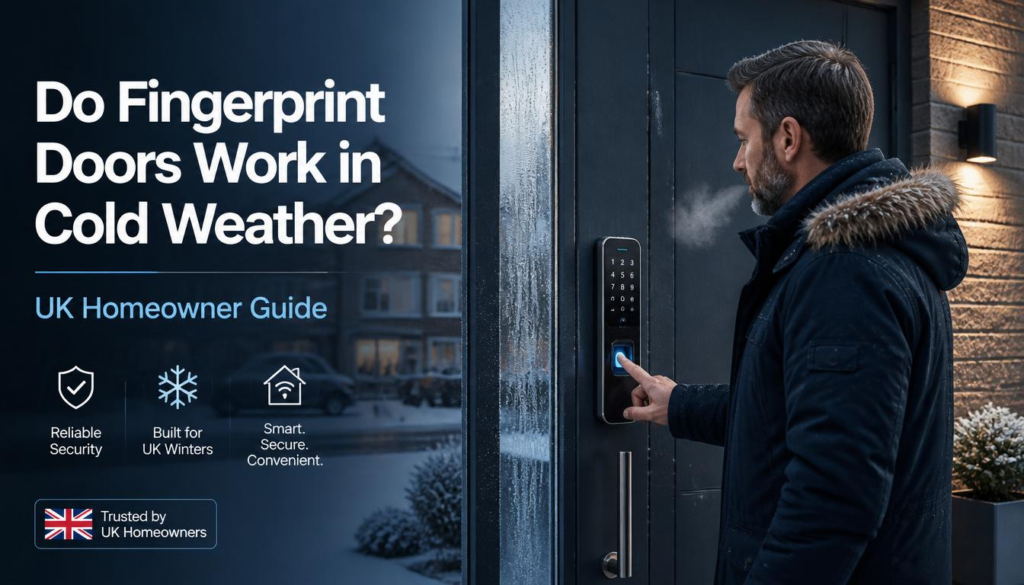
Do Fingerprint Doors Work in Cold Weather

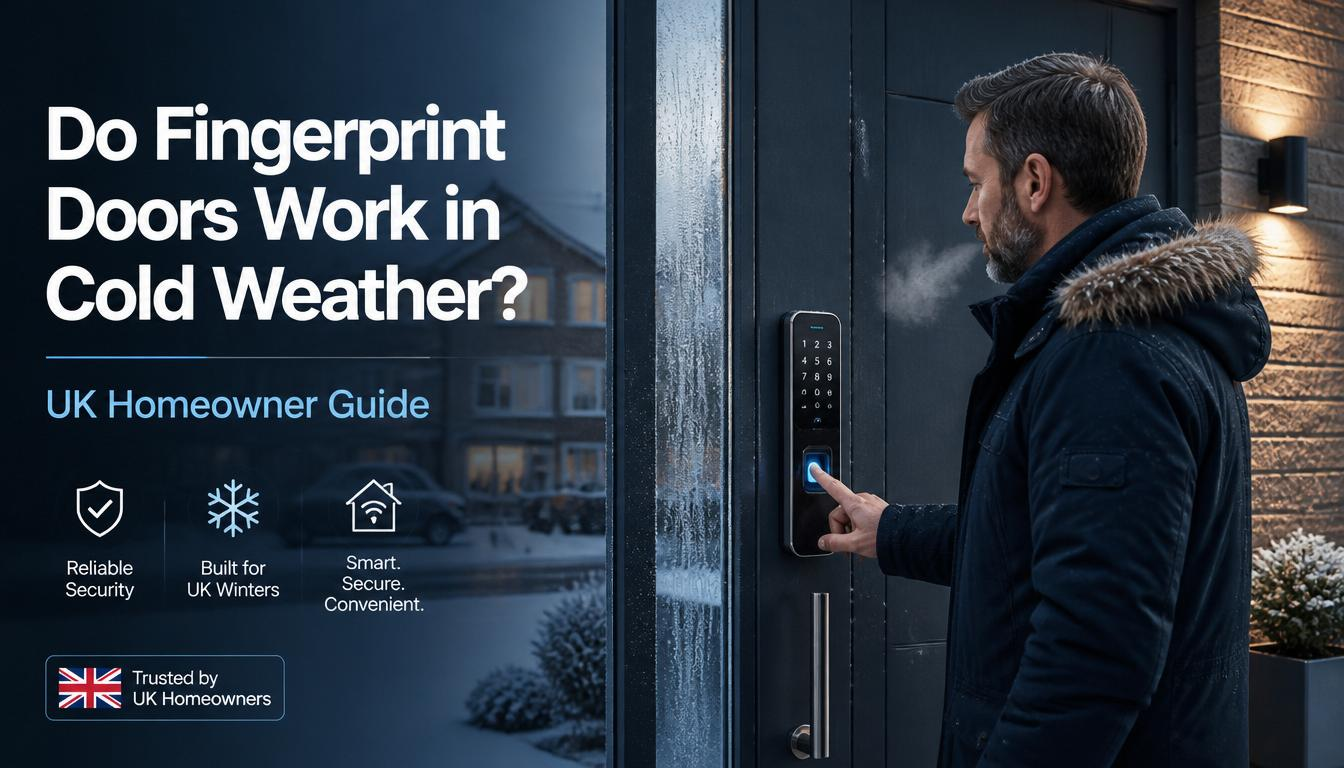
Do Fingerprint Doors Work in Cold Weather? UK Homeowner Guide

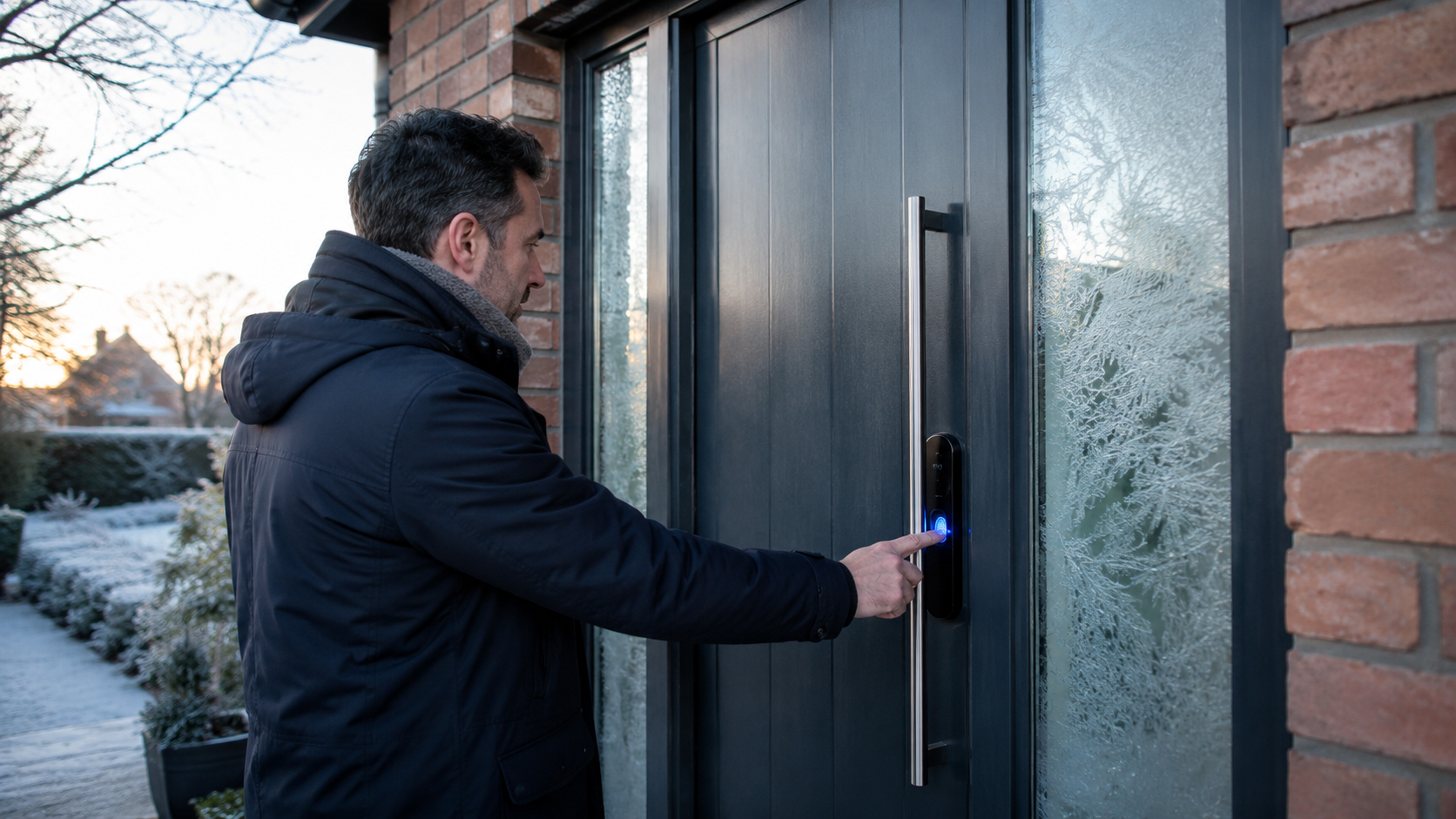
Cold weather is one of the first things UK homeowners think about when considering a smart biometric entrance door.

It is easy to understand why. A front door has to work in rain, frost, wind, low temperatures, and changing weather conditions. If a door uses fingerprint recognition, many buyers naturally ask:

Do Fingerprint Doors Work in Cold Weather still work reliably?

The answer is yes, quality fingerprint doors can work well in cold weather when the system is designed for outdoor use, installed correctly, and supported by reliable backup access methods.

However, not every system performs the same. Sensor quality, weather protection, aluminium construction, lock alignment, power supply, and installation standards all affect winter reliability.

If you are new to this type of entrance technology, start with our fingerprint aluminium door beginner guide before comparing winter performance features.

How Fingerprint Doors Work in Cold Weather

Fingerprint doors use a biometric sensor to recognise an authorised fingerprint. When the scanner confirms a match, the door unlocks through a smart access system, often connected to a motorised multi point lock.

In cold weather, the system still follows the same basic process:

  1. The user places a registered finger on the scanner
  2. The sensor reads the fingerprint pattern
  3. The system compares it with stored user data
  4. If authorised, the lock releases
  5. The door opens

The challenge is not the idea of fingerprint access itself. The challenge is whether the sensor, door hardware, and locking mechanism are designed to handle outdoor conditions.

Premium systems are built with weather exposure in mind. Cheaper or poorly installed systems may struggle more.

Do Fingerprint Doors Work in Cold Weather

What Can Affect Fingerprint Recognition in Winter?

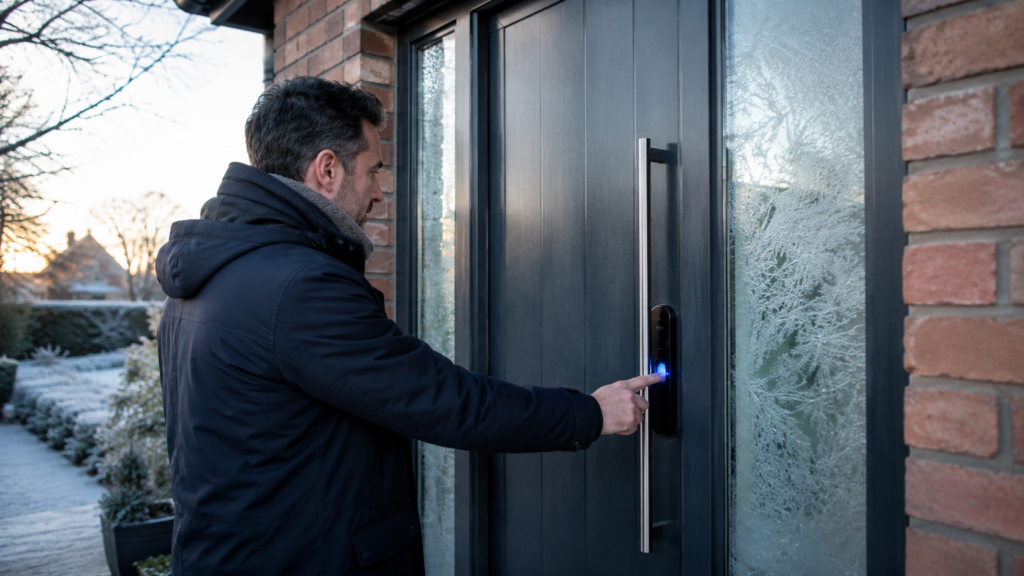
Cold weather can affect fingerprint recognition in a few practical ways.

The most common issues are usually not dramatic system failures. They are small everyday problems that can reduce recognition accuracy.

These may include:

  • Very dry skin
  • Wet fingers
  • Snow, frost, or moisture on the sensor
  • Dirt or residue on the scanner
  • Poor quality sensor hardware
  • Incorrect sensor positioning
  • Lock alignment issues caused by poor installation

For most homeowners, the solution is simple: choose a high quality outdoor rated biometric system and keep the sensor clean.

Dry Skin and Fingerprint Recognition

During winter, skin can become dry or cracked. This may make fingerprints slightly harder for some sensors to read.

A premium fingerprint sensor should still perform well, but homeowners can improve reliability by registering more than one finger.

For example, each user can register:

  • Right index finger
  • Left index finger
  • Thumb
  • Backup finger

This gives the system more options if one finger is temporarily difficult to scan.

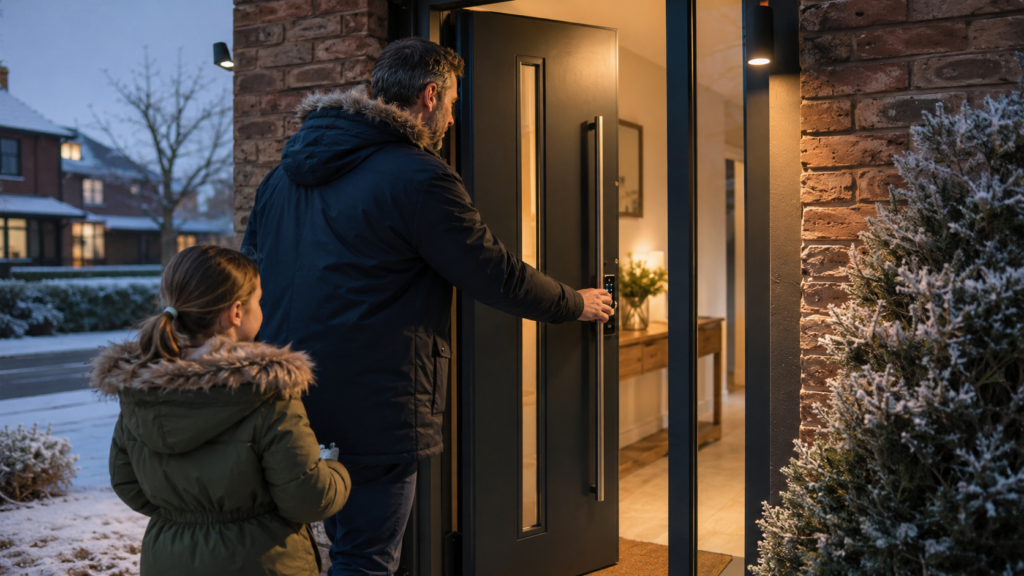
For families, this is especially useful because children may come home with wet, cold, or dirty hands after school.

Do Fingerprint Doors Work in Cold Weather

Rain, Frost, and Moisture

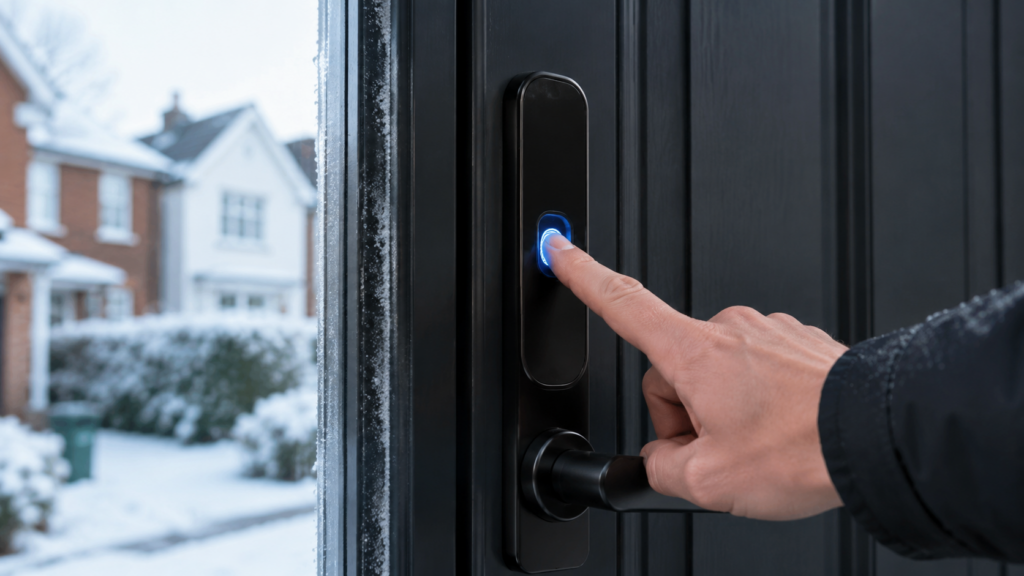
UK weather is often wet as well as cold. Rain, frost, and condensation can affect low quality fingerprint readers if they are not designed properly.

A good outdoor fingerprint scanner should be protected against normal weather exposure. It should also be positioned so that it is not constantly collecting standing water or dirt.

Homeowners should ask:

  • Is the fingerprint reader suitable for external use?
  • How does it perform in rain and frost?
  • Is the scanner integrated into the door design?
  • Does the system include alternative access methods?
  • What maintenance does the sensor require?

These questions are important because winter reliability depends on product quality, not just marketing claims.

Why Aluminium Doors Perform Well in UK Weather

The door material matters just as much as the fingerprint reader.

Aluminium is commonly used for premium entrance systems because it is stable, strong, and well suited to changing weather conditions.

A quality aluminium entrance door:

  • Does not rot
  • Does not swell like timber
  • Does not warp easily
  • Resists moisture exposure
  • Supports strong locking systems
  • Works well with modern smart access hardware

This makes aluminium a strong choice for UK homes exposed to rain, wind, and seasonal temperature changes.

Modern thermally broken aluminium systems also improve insulation compared with older aluminium doors.

Thermal Performance in Winter

Older aluminium doors had a reputation for poor insulation. Modern premium systems are very different.

Thermally broken aluminium doors use an insulated barrier between internal and external aluminium sections. This helps reduce heat transfer and improves indoor comfort.

For winter performance, homeowners should consider:

  • Thermal break quality
  • Door panel insulation
  • Glazing specification
  • Weather seals
  • Threshold design
  • Installation quality

A smart door with excellent technology can still underperform if the frame or seals are poorly specified.

Smart Locks and Cold Weather Reliability

Fingerprint doors are not only about the scanner. The locking system also needs to work reliably in cold conditions.

Premium smart aluminium entrance doors often use motorised multi point locking. This means several locking points engage around the frame, improving security and sealing.

In winter, correct lock alignment becomes especially important. If a door is poorly installed, cold weather movement, pressure, or seal compression may make the lock feel stiff.

A well installed aluminium door should operate smoothly because aluminium is structurally stable.

For deeper security details, read biometric door security and technology explained.

What Happens If the Fingerprint Scanner Struggles?

A quality fingerprint door should never rely on fingerprint access alone.

Good systems usually include several backup methods, such as:

  • Smartphone app access
  • PIN keypad entry
  • Mechanical override key
  • Battery backup
  • Multiple registered fingerprints

This matters in winter because hands may be wet, cold, or covered by gloves.

If a fingerprint scan does not work immediately, the homeowner should still have another way to enter.

Can You Use Fingerprint Doors With Gloves?

Fingerprint scanners normally need direct contact with the skin. Gloves usually prevent the scanner from reading the fingerprint.

This is not a fault. It is simply how fingerprint recognition works.

For winter use, homeowners can:

  • Remove one glove briefly
  • Use smartphone access
  • Use PIN entry if available
  • Use another registered finger
  • Use mechanical backup access if needed

Many homeowners still find this easier than searching for keys in a bag or pocket.

Power Cuts During Winter

Winter weather can sometimes cause power interruptions.

Most premium smart entrance systems include battery backup to help the door continue operating during outages.

This backup can support fingerprint access and motorised locking for a period of time, depending on battery capacity and door usage.

A good system should also include emergency access if the backup battery eventually runs out.

When choosing a door, ask:

  • Does the system include battery backup?
  • How long can backup power last?
  • Are low battery alerts available?
  • Is there a concealed mechanical override?
  • Can the door work locally without internet?

These features are essential for year round reliability.

Does Wi Fi Matter in Cold Weather?

Wi Fi is usually not required for basic fingerprint unlocking in quality systems.

Most fingerprint recognition happens locally through the door controller. Internet access is usually needed for app notifications, remote unlocking, and cloud connected features.

This means the door should still unlock with a registered fingerprint even if the home internet goes offline.

However, exact performance depends on the system. Always check how the product operates without Wi Fi.

Do Fingerprint Doors Work in Cold Weather

Maintenance Tips for Winter Reliability

Fingerprint aluminium doors are usually low maintenance, but winter care helps preserve performance.

Useful maintenance steps include:

  • Wipe the fingerprint scanner regularly
  • Keep the threshold clear of dirt and debris
  • Check for ice or moisture around the door
  • Clean the aluminium frame with suitable products
  • Test backup access before winter
  • Replace backup batteries when recommended
  • Keep user profiles updated
  • Report stiff locking early

Small checks can prevent bigger problems later.

Common Myths About Fingerprint Doors in Cold Weather

Many concerns around fingerprint doors come from outdated smart lock experiences or poor quality devices.

Myth 1: Fingerprint doors stop working in winter

Quality outdoor systems are designed for normal UK weather. Problems are more likely with cheap sensors, poor installation, or lack of backup access.

Myth 2: Rain always stops fingerprint scanners

Good scanners are designed for external use. Moisture may occasionally affect scanning, but backup access should cover these situations.

Myth 3: Power cuts lock you out

Premium systems usually include battery backup and emergency access methods.

Myth 4: Aluminium doors are always cold

Modern thermally broken aluminium doors are designed to improve insulation and reduce heat transfer.

Who Should Consider Fingerprint Doors in Cold Weather?

Fingerprint doors are especially suitable for:

  • Busy families
  • Smart home users
  • Luxury homeowners
  • New build projects
  • Modern renovations
  • Gated properties
  • High security homes
  • Homeowners tired of lost keys
  • Properties exposed to frequent UK weather changes

They are particularly useful when convenience and security both matter.

You can configure your fingerprint entrance door based on your property style, winter access needs, and smart home preferences.

Who May Prefer a Simpler Door?

A fingerprint aluminium door may not be the best choice for everyone.

A simpler entrance door may be more suitable if:

  • Budget is the main concern
  • You prefer fully mechanical locks
  • You do not want smart technology
  • The property is short term
  • You rarely use the front entrance
  • You are not interested in app or biometric access

Fingerprint doors are premium systems. They make most sense when the homeowner values long term convenience, security, and design.

Buyer Checklist for Winter Ready Fingerprint Doors

Before choosing a system, ask:

Sensor Quality

  • Is the fingerprint reader suitable for outdoor use?
  • Does it work in rain and cold?
  • Is it easy to clean?
  • Can multiple fingers be registered?

Backup Access

  • Is there battery backup?
  • Is there a mechanical override?
  • Is PIN entry available?
  • Can smartphone access work as a backup?

Door Construction

  • Is the aluminium thermally broken?
  • Are the seals high quality?
  • Is the threshold weather resistant?
  • Is the lock properly integrated?

Installation

  • Is the installer experienced with smart aluminium doors?
  • Will the lock alignment be tested?
  • Is aftercare support available?
  • Are winter operation instructions provided?

A premium smart door should feel reliable, not complicated.

For many properties, the best upgrade is not simply the most advanced lock, but the strongest complete entrance system. Looking at high security doors can help buyers compare physical protection alongside smart access features.

Final Thoughts: Do Fingerprint Doors Work in Cold Weather?

Yes, quality fingerprint doors in cold weather can work reliably when they are properly designed, installed, and maintained.

The most important factors are sensor quality, weather protection, thermally broken aluminium construction, backup access, and professional installation. A good biometric entrance system should not depend on a single access method. It should provide fingerprint entry, alternative access, battery backup, and secure mechanical override options.

For UK homeowners, the right fingerprint aluminium door can offer strong winter performance while improving security, convenience, and modern entrance design.

For more detail on smart access protection, see biometric door security and technology explained. You can also configure your fingerprint entrance door to suit your home’s layout, weather exposure, and security goals.

To compare finishes, hardware, and biometric access features in person, request a sample or showroom visit.

Do Fingerprint Doors Work in Cold Weather

FAQ

Do fingerprint doors work in cold weather?

Yes, quality fingerprint doors in cold weather can work reliably when the sensor is designed for outdoor use and the door is installed correctly.

Can frost stop a fingerprint scanner from working?

Frost or moisture may affect low quality scanners, but premium systems are designed for outdoor conditions and should include backup access methods.

Do fingerprint doors work with gloves?

Usually no. Fingerprint scanners need direct skin contact, but homeowners can use app access, PIN entry, or backup keys if gloves are inconvenient.

Are aluminium doors good for winter?

Modern thermally broken aluminium doors can provide strong winter performance, good weather resistance, and stable long term operation.

What backup access should a winter ready fingerprint door include?

A good system should include battery backup, mechanical override access, PIN entry, smartphone control, and multiple registered fingerprints.

Fingerprint Door Privacy and Data Security

Fingerprint Door Privacy and Data Security: What UK Homeowners Should Know

Smart entrance technology is becoming more common in premium UK homes, but many homeowners still have one important question before choosing a biometric front door:

What happens to my Fingerprint Door Privacy and Data Security?

It is a reasonable concern. A fingerprint is personal, and any technology that uses biometric recognition should be understood properly before it becomes part of your home.

The good news is that modern fingerprint door privacy systems are usually designed with several layers of protection. A quality biometric entrance door does not simply store a photo of your fingerprint in an exposed database. Instead, reputable systems typically use encrypted fingerprint templates, secure access control, local or protected storage, and multiple backup methods.

If you are unfamiliar with how these systems work in general, start with our fingerprint aluminium door beginner guide before comparing privacy and security features in detail.

Fingerprint Door Privacy and Data Security

What Does Fingerprint Door Privacy Mean?

Fingerprint door privacy refers to how a biometric entrance system collects, stores, protects, and manages fingerprint access data.

A fingerprint aluminium door uses biometric recognition to confirm whether someone is authorised to enter. When a user places a finger on the scanner, the system compares the scan against stored biometric data. If it matches an approved user profile, the door unlocks.

Privacy matters because the system is handling sensitive access information.

Good fingerprint door privacy depends on:

  • How the fingerprint is registered
  • Whether the data is encrypted
  • Where the biometric template is stored
  • Who can manage user profiles
  • How users can be removed
  • Whether the system depends on cloud storage
  • How access logs are handled
  • What backup entry methods exist

For homeowners, the key point is simple: do not only ask whether the fingerprint scanner is convenient. Ask how the system protects your data.

Fingerprint Door Privacy and Data Security

Do Fingerprint Doors Store Actual Fingerprints?

In most quality biometric entrance systems, the door should not store a normal fingerprint image like a photograph.

Instead, the system usually converts the fingerprint into a mathematical template. This template represents key points and patterns from the fingerprint. When someone tries to unlock the door, the system compares the new scan against the stored template.

This matters because a template is not the same as a visible fingerprint image.

A well designed system should make it difficult for someone to reverse the stored template back into an actual fingerprint image. That is one reason encrypted biometric templates are important.

When comparing systems, homeowners should ask the supplier directly:

  • Does the system store fingerprint images or encrypted templates?
  • Is biometric data stored locally or remotely?
  • Can the homeowner delete user profiles?
  • Is access protected by administrator permissions?
  • Are logs visible to the homeowner?
  • What happens if the system is reset or replaced?

These questions help separate premium biometric systems from lower quality smart locks.

Why Encryption Matters in Fingerprint Door Data Security

Encryption is one of the most important parts of fingerprint door data security.

In simple terms, encryption helps protect stored information so it cannot be easily read or misused if someone gains unauthorised access to the system.

For biometric entrance doors, encryption may be used to protect:

  • Fingerprint templates
  • User profiles
  • Access permissions
  • App communication
  • Door status data
  • Entry logs
  • Remote access commands

A premium fingerprint aluminium door should not treat biometric access as a basic convenience feature only. It should be part of a properly secured smart entrance system.

To understand how this fits into the wider security setup, read biometric door security and technology explained.

Local Storage vs Cloud Storage

One of the biggest privacy questions is whether fingerprint data is stored locally or in the cloud.

Local Biometric Storage

Some fingerprint door systems store biometric templates locally within the door controller or access module.

This can be attractive for privacy conscious homeowners because fingerprint recognition can often work without relying on an internet connection.

Benefits may include:

  • Less dependence on cloud services
  • Continued access during Wi Fi outages
  • Faster recognition in some systems
  • More direct control over the entrance system

However, local storage still needs strong encryption and secure administrator controls.

Cloud Connected Systems

Some smart entrance systems use cloud features for remote access, notifications, software updates, or user management.

Cloud connectivity can be useful, especially for homeowners who want:

  • Remote unlocking
  • Access notifications
  • App based control
  • Activity logs
  • Temporary permissions
  • Smart home integration

The important question is not simply whether cloud features exist. The real question is whether the system handles data securely and transparently.

For many homeowners, the best setup is a balanced one: local fingerprint recognition for daily entry, with secure app features for remote convenience.

Does a Fingerprint Door Need Wi Fi to Work?

Most quality fingerprint entrance systems should not need Wi Fi for basic fingerprint unlocking.

Fingerprint recognition usually happens through the door’s own controller or local access system. This means the door can often continue working even if the internet connection goes down.

Wi Fi or internet access is mainly used for features such as:

  • Remote unlocking
  • Smartphone notifications
  • Software updates
  • Access logs
  • Temporary user permissions
  • Smart home integrations

This is an important reliability point. A front door should not become useless just because the home internet fails.

If remote access and smart home integration matter to you, make sure the system still provides secure local entry as a backup.

Who Can Access the Fingerprint Data?

In a properly managed system, only authorised administrators should be able to add, edit, or remove user access.

For a family home, this might be one or two adults. For a commercial property, it may be a building manager or security administrator.

Good user management should allow you to:

  • Add new users
  • Remove old users
  • Register multiple fingers per user
  • Change PINs if a keypad is included
  • Review access activity where supported
  • Restrict temporary users
  • Reset the system if needed

This is especially useful when household circumstances change.

For example, if a cleaner, contractor, tenant, or staff member no longer needs access, their permission can be removed without changing a physical lock.

Fingerprint Door Privacy for Families

Fingerprint door privacy is especially important for families with children.

Parents may want children to have easy access after school, but they also want control over who can enter the home. A biometric system can help because children do not need to carry keys, and parents can manage access digitally.

However, families should still use sensible rules:

  • Only parents should manage user settings
  • Children should understand basic entry safety
  • Backup PINs should not be shared with friends
  • User profiles should be updated as children grow
  • Unused profiles should be removed
  • Backup access methods should be explained clearly

A fingerprint door can improve convenience, but it should be set up thoughtfully.

Fingerprint Door Privacy for Businesses

Businesses may have different privacy concerns.

A commercial office, private clinic, showroom, studio, or secure workspace may need biometric access for staff. In that case, the business should think about both security and responsible data handling.

Questions to ask include:

  • Who manages staff access?
  • How many users can the system support?
  • Can former staff be removed quickly?
  • Are access logs available?
  • Is biometric data encrypted?
  • Does the system meet internal privacy policies?
  • Can access be restricted by time or area?

Biometric access can reduce key management problems, but it should be introduced with clear rules and proper consent procedures where needed.

Fingerprint Access vs Traditional Keys: Which Is More Private?

Traditional keys may feel more private because they do not involve biometric data. But they bring different risks.

A physical key can be:

  • Lost
  • Stolen
  • Copied
  • Lent to someone else
  • Forgotten
  • Difficult to track

If a key goes missing, homeowners may not know who has it. In some cases, the safest option is to replace the lock.

Fingerprint access works differently. There is no physical key to lose. Access is linked to authorised user profiles, which can usually be managed or removed.

From a privacy perspective, the trade off is clear.

Traditional keys avoid biometric data, but offer limited control once the key leaves your hand. Fingerprint doors involve biometric technology, but can offer stronger access management when the system is properly secured.

Fingerprint Door Privacy and Data Security

Smart App Access and Privacy

Many smart aluminium entrance doors include app based control.

This can be very useful. Homeowners may be able to unlock the door remotely, check whether the door is locked, manage users, or receive entry notifications.

But app access should also be considered carefully.

Before choosing a system, ask:

  • Is the app protected by strong login security?
  • Can two factor authentication be used?
  • Can access be removed from old phones?
  • What happens if a phone is lost?
  • Are notifications private?
  • Can remote unlocking be disabled if not needed?

For some homeowners, app access is essential. For others, fingerprint and keypad access may be enough.

The right choice depends on your lifestyle and security expectations.

Access Logs: Helpful or Unnecessary?

Some biometric entrance systems provide activity logs showing when the door was unlocked and which user accessed it.

This can be useful for:

  • Families with school age children
  • Shared homes
  • Commercial offices
  • Gated properties
  • High security residences
  • Managed buildings

For example, a parent may want confirmation that a child arrived home safely. A business owner may want to know when staff entered a secure area.

However, not every homeowner needs detailed logs. Some people prefer a simpler system with fewer connected features.

The best system is one that gives you appropriate control without adding unnecessary complexity.

Backup Access and Privacy

A secure fingerprint door should still include backup access methods.

These may include:

  • Concealed mechanical key
  • PIN keypad
  • Smartphone access
  • Battery backup
  • Multiple registered fingerprints

Backup access matters because biometric recognition is not the only situation to plan for. A user may have wet hands, a cut finger, a dead phone, or a temporary issue with the scanner.

Good backup access improves reliability, but it should also be private and secure.

For example:

  • PIN codes should be changed if shared
  • Backup keys should be stored safely
  • App access should be removed from lost devices
  • Old user profiles should be deleted
  • Emergency access should not create obvious weak points

This is where product configuration matters. You can configure your fingerprint entrance door based on your preferred balance of convenience, privacy, backup access, and security.

Design and Privacy: Why Concealed Hardware Helps

Fingerprint aluminium doors are often chosen for their clean design, but privacy and security can also benefit from concealed hardware.

Traditional front doors often have visible cylinders, handles, and external lock points. These can make the door look more familiar, but they also show where the locking system is located.

Modern aluminium entrance systems can integrate access technology more discreetly.

Design options may include:

  • Flush panels
  • Hidden handles
  • Concealed key overrides
  • Integrated fingerprint readers
  • Minimal external hardware
  • Smart access modules placed within the door design

This creates a cleaner entrance while reducing obvious visual focus on the locking mechanism.

For modern homes, this combination of privacy, security, and design is one reason smart aluminium entrance doors are becoming more popular.

What Can Go Wrong With Poor Quality Systems?

Not all fingerprint doors offer the same level of privacy or security.

Lower quality systems may have problems such as:

  • Weak app security
  • Poor fingerprint recognition
  • Limited user management
  • No clear data storage explanation
  • Poor weather resistance
  • Weak backup access
  • Unreliable battery alerts
  • Inadequate installation support

A cheap smart lock added to a weak door is not the same as a properly engineered biometric aluminium entrance system.

For premium homes, the whole entrance package matters: door structure, locking system, biometric module, software reliability, backup access, privacy controls, and installation quality.

Buyer Checklist: Fingerprint Door Privacy

Before choosing a fingerprint aluminium door, ask these privacy and data security questions:

Biometric Data

  • Does the system store fingerprint images or encrypted templates?
  • Is biometric data protected by encryption?
  • Can user data be deleted easily?
  • Is fingerprint recognition local or cloud based?

Access Control

  • Who can add or remove users?
  • Can temporary users be created?
  • Can old users be removed instantly?
  • Are access logs available?

App Security

  • Does the app use secure login?
  • Can lost phones be removed?
  • Can remote access be disabled?
  • Are notifications private?

Backup Access

  • Is there a mechanical override?
  • Is there battery backup?
  • Is there keypad access?
  • Are backup methods concealed or secure?

Supplier Support

  • Is installation handled by specialists?
  • Is aftercare available?
  • Are privacy features explained clearly?
  • Are warranties and support terms clear?

A reputable supplier should be able to explain these points without vague answers.

Installation Quality and Data Security

Privacy is not only about software. Installation also matters.

A poorly installed smart door can create practical security problems even if the biometric technology is strong.

Bad installation may affect:

  • Lock alignment
  • Weather sealing
  • Sensor positioning
  • Cable protection
  • Power supply reliability
  • Backup access function
  • Long term performance

For a secure biometric entrance system, professional installation is essential.

The door should be fitted correctly, tested properly, and explained clearly to the homeowner before handover.

Are Fingerprint Doors Safe From Hacking?

No smart system should be described as impossible to hack. That would be unrealistic.

However, premium biometric entrance systems can be very secure when they use encrypted data, strong authentication, reliable hardware, secure apps, and proper installation.

In many real world residential situations, burglars are more likely to target weak physical locks, poorly secured windows, or visible vulnerabilities than attempt sophisticated digital attacks.

That does not mean digital security should be ignored. It means homeowners should choose a system that protects both physical access and smart access.

For a deeper look at security risks and myths, see biometric door security and technology explained.

Who Should Prioritise Fingerprint Door Privacy Most?

Fingerprint door privacy matters to every buyer, but it is especially important for:

  • Families with children
  • Smart home users
  • Luxury homeowners
  • Business owners
  • Private clinics
  • Gated properties
  • Landlords managing premium rentals
  • Architects specifying smart entrances
  • Developers planning modern residential projects

If several people will use the door, user management becomes more important. If the property is high value or security focused, encryption, backup access, and supplier support become even more important.

When a Simpler Door May Be Better

A fingerprint aluminium door may not be the right choice for everyone.

A simpler mechanical door may be better if:

  • You do not want biometric technology
  • You prefer no app based access
  • Budget is the main concern
  • The property is temporary
  • You rarely use the front entrance
  • You want the simplest possible lock system

Smart entrance technology is most valuable when the homeowner genuinely benefits from keyless access, user management, premium security, and modern design.

Final Thoughts: Should Homeowners Worry About Fingerprint Door Privacy?

Homeowners should be thoughtful, not fearful.

Fingerprint door privacy is an important topic, but a well designed biometric entrance system should include strong protections for data, access, and emergency use.

The best fingerprint aluminium doors do not simply add a scanner to a front door. They combine encrypted biometric templates, secure user management, motorised multi point locking, backup access, aluminium durability, and professional installation.

Before choosing a system, ask clear questions about fingerprint storage, encryption, app security, user permissions, and emergency access. The right supplier should explain these features in plain language.

You can also configure your fingerprint entrance door to suit your property style, smart access preferences, and privacy requirements.

For homeowners comparing premium smart entrance systems, a showroom visit can make the differences much easier to understand. Take the next step and request a sample or showroom visit to compare finishes, hardware, and biometric access features in person.

Fingerprint Door Privacy and Data Security

FAQ

Is fingerprint door privacy safe for UK homeowners?

Yes, fingerprint door privacy can be safe when the system uses encrypted biometric templates, secure access control, reliable backup methods, and professional installation.

Do fingerprint doors store my real fingerprint?

Most quality systems should store an encrypted biometric template rather than a normal fingerprint image. Always ask the supplier how the data is stored.

Can fingerprint door data be deleted?

In a good biometric entrance system, authorised administrators should be able to remove user profiles and delete access permissions when needed.

Do fingerprint doors work without internet?

Many systems can unlock locally using fingerprint recognition even if Wi Fi is unavailable. Internet is usually needed for remote app features and notifications.

Are fingerprint aluminium doors secure against hacking?

No smart system is completely risk free, but premium fingerprint aluminium doors can be highly secure when they use encryption, strong authentication, and reliable hardware.

Fingerprint Doors for Families with Children

Are Fingerprint Doors Safe for Families with Children? A UK Homeowner’s Guide

For many UK homeowners, upgrading to a smart entrance system raises one important question:

Are fingerprint doors safe for families with children?

It is a sensible concern. A front door is not just a design feature. It controls access to the home, protects family members, and needs to work reliably every single day. Parents want convenience, but not at the expense of safety or security.

The good news is that modern fingerprint doors for families are designed with multiple layers of protection. A quality biometric entrance system does not rely only on one fingerprint scanner. It usually combines fingerprint access, smart app control, backup entry methods, motorised multi point locking, and strong aluminium construction.

For families with children, this can make daily life easier while reducing some of the most common problems linked to traditional keys.

If you are unfamiliar with biometric entrance technology, start with our fingerprint aluminium door beginner guide.

Fingerprint Doors Safe for Families with Children

What Are Fingerprint Doors for Families?

Fingerprint doors for families are smart entrance doors that allow authorised users to unlock the door using biometric fingerprint recognition.

Instead of using a traditional key every time, a parent or child places a registered finger on the scanner. If the system recognises the fingerprint, the door unlocks.

Most premium systems can also include:

  • Smartphone app access
  • PIN keypad entry
  • Backup mechanical key access
  • Battery backup
  • Motorised multi point locking
  • Remote access control
  • User permission management
  • Entry activity logs

When combined with a high quality aluminium entrance door, the result is a secure, modern, and practical front door system for busy households.

Are Fingerprint Doors Safe for Families with Children

Why Families Consider Fingerprint Doors

Family life is busy. Children lose keys. Parents juggle shopping bags, school bags, prams, sports kits, pets, and deliveries. A traditional front door can become a daily frustration.

Fingerprint access solves several common family problems.

Children do not need to carry physical keys. Parents can manage who has access. Entry becomes faster. There is less need to hide spare keys outside. And the front entrance feels more connected to the rest of a modern smart home.

For many families, the biggest benefit is not just security. It is convenience.

Are Fingerprint Doors for Families Safe for Children?

Yes, quality fingerprint doors for families can be safe for children when they are properly specified, installed, and managed.

A good system does not simply unlock for anyone. It only recognises authorised fingerprints that have been registered by the homeowner. Parents can decide whose fingerprints are added, removed, or updated.

This gives families more control than traditional keys in many situations.

With a key, once a child loses it, the key could be found or copied. With fingerprint access, there is no physical key to lose. If a user no longer needs access, their permission can usually be removed from the system.

To understand the security side in more detail, read biometric door security and technology explained.

How Fingerprint Access Helps Children

For school age children, fingerprint entry can be especially practical.

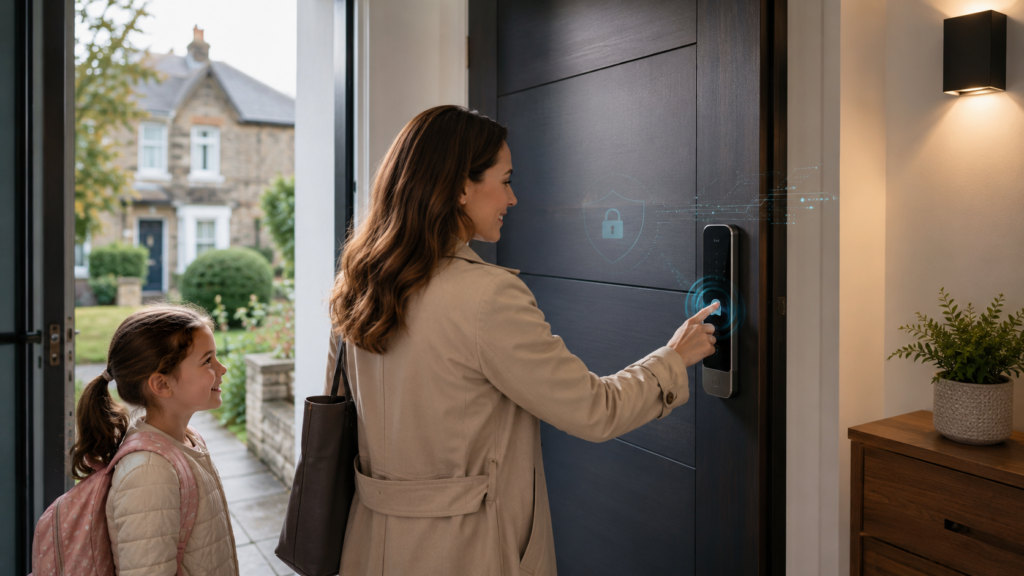
A child coming home from school may not need to remember a key. They can unlock the door with their registered fingerprint, provided the parents have authorised that access.

This can reduce:

  • Forgotten keys
  • Lost keys
  • Lockouts after school
  • Spare key hiding
  • Repeated key cutting
  • Worries about copied keys

For parents, this creates a cleaner and more controlled access routine.

Real Life Example: After School Access

Imagine a family with two children who return home before one parent finishes work.

With a traditional key system, each child may need their own key. If one key is lost, the family may worry about who finds it. If the key is forgotten, the child may be locked out.

With a fingerprint aluminium door, each child can have an authorised fingerprint profile. The door recognises them when they arrive. Some smart systems may also allow parents to check activity logs or receive access notifications, depending on the setup.

This does not remove the need for parental supervision and sensible safety rules, but it can reduce everyday access problems.

Security Benefits for Family Homes

A family front door needs to protect against both everyday inconvenience and real security risks.

Traditional key based doors can be vulnerable to:

  • Lost keys
  • Stolen keys
  • Key copying
  • Lock snapping
  • Picking
  • Weak cylinders
  • Poor quality hardware

Premium fingerprint aluminium doors approach security differently.

They may include:

  • Biometric access control
  • Encrypted fingerprint templates
  • Motorised multi point locking
  • Concealed backup access
  • Anti tamper features
  • Strong aluminium construction
  • Remote user management

This makes the entrance system more controlled and less dependent on physical keys.

Why Aluminium Matters for Family Security

The door material itself is important.

A fingerprint scanner is only one part of the system. If the door structure is weak, the smart technology alone will not make the entrance secure.

Aluminium entrance doors are popular in premium residential projects because aluminium is strong, stable, and well suited to large modern door designs.

A quality aluminium door:

  • Does not warp easily
  • Handles daily family use well
  • Resists swelling and moisture damage
  • Supports strong locking systems
  • Works well with modern smart access hardware
  • Maintains a clean architectural appearance

For families planning a long term home upgrade, this durability matters.

Motorised Multi Point Locking for Family Homes

One of the most important features to look for is motorised multi point locking.

This means the door locks at several points around the frame, rather than relying on a single lock point. When the fingerprint system unlocks the door, the motorised mechanism retracts the locking points automatically.

For families, this offers two major advantages.

First, it improves physical security. Multiple locking points help resist forced entry better than simple single point systems.

Second, it improves ease of use. Children and adults do not need to manually operate several bolts or struggle with a stiff lock.

What Happens If a Child’s Fingerprint Changes?

This is a common parent concern.

Children grow, and their fingerprints may become easier to scan as they get older. In most systems, authorised fingerprints can be updated, removed, or re enrolled when needed.

Many systems also allow more than one finger to be registered per user. This means a child can have multiple authorised fingerprints stored.

For example:

  • Right index finger
  • Left index finger
  • Thumb
  • Backup finger

This helps if one finger is wet, dirty, injured, or not recognised properly.

What If the Fingerprint Scanner Does Not Work?

A good fingerprint door should never rely on one access method only.

Premium family friendly systems usually include several backup options, such as:

  • Smartphone app access
  • PIN keypad entry
  • Mechanical override key
  • Battery backup
  • Additional registered fingerprints

This is especially important for families because daily routines are unpredictable.

A child may have wet hands. A parent may change phone. A power cut may happen. A scanner may need cleaning. A reliable system is designed with these situations in mind.

Do Fingerprint Doors Work During Power Cuts?

Most premium smart entrance systems include battery backup.

During a power cut, the backup battery helps the fingerprint reader and locking system continue operating temporarily. The exact backup duration depends on the system, battery capacity, and usage frequency.

Many systems also include an emergency mechanical key override. This means the homeowner can still unlock the door manually if both mains power and backup power are unavailable.

For families, this layered approach is important. It reduces the chance of being locked out because of a single technical issue.

Are Fingerprint Doors Easy for Children to Use?

Yes, most children find fingerprint access simple once the system is set up properly.

The process is usually:

  1. Place finger on the scanner
  2. Wait for recognition
  3. Door unlocks
  4. Enter the home

There is no key turning, no bag searching, and no need to remember a code.

However, parents should still teach children basic access rules. For example:

  • Do not let strangers follow you inside
  • Do not show others how the door works
  • Do not share PIN codes if a keypad is used
  • Tell a parent if the scanner does not recognise your fingerprint
  • Keep backup access rules clear

Technology helps, but family safety habits still matter.

Privacy and Fingerprint Data

Some parents worry about where fingerprint data is stored.

Quality biometric systems do not usually store a simple image of a fingerprint. Instead, they store an encrypted mathematical template that the system uses for recognition.

This is an important distinction.

The system is not normally keeping a visible fingerprint photo. It is storing encoded recognition data.

Still, homeowners should ask the supplier:

  • How is fingerprint data stored?
  • Is the data encrypted?
  • Is it stored locally or in the cloud?
  • Can users be deleted easily?
  • What happens if the system is reset?
  • Who can manage user profiles?

These questions are especially important when choosing a smart entrance system for a family home.

Fingerprint Doors vs Traditional Keys for Families

Traditional keys are familiar, but they are not always the easiest option for families.

Traditional Keys

Pros:

  • Simple and familiar
  • No technology learning curve
  • Lower upfront cost

Cons:

  • Easy for children to lose
  • Can be copied
  • Can be stolen
  • May require lock changes if lost
  • Children may forget them
  • Spare keys are often hidden insecurely

Fingerprint Doors

Pros:

  • No physical key needed for daily use
  • Easier child access
  • User permissions can be managed
  • Can include backup access methods
  • Works well with smart home systems
  • Supports modern aluminium door design

Cons:

  • Higher upfront cost
  • Requires proper setup
  • Needs quality installation
  • Technology may feel unfamiliar at first

For many modern families, fingerprint access offers a better balance of convenience and control.

Are Fingerprint Doors Safe for Families with Children

Fingerprint Doors vs Keypad Entry for Children

Some families consider keypad access instead of fingerprint entry.

Keypads can be useful, but they have one weakness: codes can be shared.

A child might tell a friend the PIN. Someone might watch the code being entered. Over time, families may forget to update old codes.

Fingerprint access is more personal. The child does not need to remember or share anything.

That said, many premium systems combine both options. Fingerprint access can be used for daily entry, while PIN access can act as a backup.

Design Benefits for Modern Family Homes

A family front door does not need to look purely functional.

Modern smart aluminium entrance doors are often chosen because they improve both security and appearance.

They can support:

  • Flush door panels
  • Minimal handles
  • Concealed hardware
  • Large entrance designs
  • Side glazing
  • Contemporary colours
  • Smart access integration

This makes fingerprint aluminium doors suitable for modern renovations, new builds, and luxury family homes.

Parents often want a door that feels secure, but they also want the entrance to look premium. Aluminium systems allow both.

You can configure your fingerprint entrance door based on your property style, family access needs, and security priorities.

Maintenance for Busy Families

Family doors get used heavily.

School runs, deliveries, visitors, pets, children, and daily routines all put pressure on the entrance system.

A good fingerprint aluminium door should be low maintenance, but it still needs basic care.

Typical maintenance may include:

  • Wiping the fingerprint sensor
  • Cleaning the aluminium frame
  • Checking seals
  • Keeping the threshold clear
  • Replacing backup batteries when needed
  • Updating user profiles
  • Booking professional checks if the lock feels misaligned

The sensor should be kept clean, especially if children use it with wet or dirty hands.

Installation Quality Matters

A fingerprint door is only as reliable as its installation.

Poor installation can cause:

  • Lock alignment problems
  • Sensor issues
  • Poor weather sealing
  • Reduced thermal performance
  • Stiff operation
  • Long term reliability problems

For families, reliability is critical. The door needs to work every morning, every evening, and during unexpected situations.

That is why homeowners should choose experienced installers who understand both aluminium entrance systems and smart locking technology.

Are Fingerprint Doors Suitable for Young Children?

Fingerprint doors are usually more suitable for school age children than very young children.

For toddlers or very young children, parents may not want independent front door access. In that case, fingerprint access should be limited to adults or older children only.

The benefit of biometric systems is that access can be controlled by user. Parents can decide who gets access and when.

This makes the system flexible as children grow.

Who Are Fingerprint Doors for Families Best Suited To?

Fingerprint doors are especially suitable for:

  • Busy families with school age children
  • Parents tired of lost keys
  • Smart home users
  • Modern UK homeowners
  • Luxury renovation projects
  • New build family homes
  • Gated properties
  • Families wanting stronger access control
  • Homes with frequent visitors or deliveries

They are also useful for households where different family members need different access methods.

For example, parents may use app control, children may use fingerprint access, and grandparents may prefer keypad or backup key access.

Who May Not Need a Fingerprint Door?

A fingerprint door may not be necessary for every family.

A simpler entrance door may be better if:

  • Budget is the main priority
  • You prefer fully mechanical locks
  • Children are too young for independent access
  • You rarely use the front entrance
  • You do not want smart technology
  • You are upgrading a short term rental property with a low budget

Fingerprint aluminium doors are premium systems. They make most sense when the homeowner values long term security, convenience, durability, and design.

Cost and Long Term Value

Fingerprint aluminium doors cost more than standard front doors.

The final price depends on:

  • Door size
  • Aluminium system quality
  • Fingerprint scanner type
  • Locking mechanism
  • Glazing options
  • Smart features
  • Custom colours
  • Installation complexity
  • Side panels or architectural details

For families planning to stay in the home long term, the value is not only in the technology.

The long term benefits can include:

  • Fewer lost key problems
  • Better access control
  • Stronger entrance security
  • Lower maintenance than timber
  • Modern kerb appeal
  • Better smart home integration
  • A more convenient daily routine

For many homeowners, those daily benefits become more important than expected.

Key Features Parents Should Look For

Before choosing a fingerprint door for a family home, look for these features:

Security Features

  • Motorised multi point locking
  • Encrypted fingerprint templates
  • Anti tamper design
  • Strong aluminium construction
  • Concealed backup access

Family Convenience Features

  • Multiple user profiles
  • Easy user removal
  • Multiple fingerprints per user
  • Smartphone control
  • PIN backup
  • Fast recognition

Reliability Features

  • Battery backup
  • Emergency key override
  • Weather resistant scanner
  • Professional installation
  • Aftercare support

Design Features

  • Thermally broken aluminium
  • Modern finishes
  • Custom colours
  • Suitable glazing options
  • Clean hardware integration

Choosing the right system is not just about buying a smart lock. It is about choosing a complete entrance solution.

The right entrance door should match the home’s design, daily routine, and security needs. Looking at secure front doors can help homeowners make a more informed decision before choosing a final specification.

Final Thoughts: Are Fingerprint Doors Safe for Families?

For many UK households, yes, fingerprint doors for families can be a safe, practical, and convenient upgrade.

They reduce reliance on physical keys, give parents more control over access, and make daily entry easier for children and adults. When combined with a premium aluminium entrance door, motorised multi point locking, encrypted biometric access, and reliable backup methods, the result can be stronger and more convenient than a traditional key only front door.

The key is choosing the right system.

Families should look beyond the fingerprint scanner itself and consider the full entrance package: door construction, locking hardware, backup access, installation quality, privacy settings, and long term support.

Explore available options carefully before choosing a final specification. You can also request a sample or showroom visit to compare finishes, hardware, and smart access features in person.

Are Fingerprint Doors Safe for Families with Children

FAQ

Are fingerprint doors safe for families with children?

Yes, quality fingerprint doors for families can be safe when properly installed and configured. Parents can control which fingerprints are authorised and remove users when needed.

Can children use fingerprint doors easily?

Most school age children can use fingerprint doors easily after setup. They simply place an authorised finger on the scanner to unlock the door.

What happens if my child’s fingerprint is not recognised?

Most premium systems include backup options such as PIN entry, smartphone access, mechanical override keys, and multiple registered fingerprints per user.

Do fingerprint doors work during a power cut?

Many smart aluminium entrance doors include battery backup systems. Premium systems may also include concealed mechanical override access for emergencies.

Are fingerprint doors better than keys for families?

For many families, fingerprint doors are more convenient than keys because children cannot lose a fingerprint. They also reduce the need for spare keys and repeated key cutting.

How to Choose the Right Fingerprint Aluminium Door System

How to Choose the Right Fingerprint Aluminium Door System for Your Home or Business

Fingerprint entrance technology has evolved quickly over the last few years.

What once felt like a futuristic luxury feature is now becoming a realistic option for homeowners, architects, developers, and businesses looking for a more secure and modern entrance solution.

If you are completely new to biometric entrance systems, start with our fingerprint aluminium door beginner guide

But choosing the right fingerprint aluminium door system is not just about selecting a stylish front door with a biometric scanner.

There are major differences between systems when it comes to:

  • Security
  • Build quality
  • Sensor performance
  • Smart integrations
  • Installation standards
  • Long term reliability

And because these systems are usually a long term investment, making the right decision early matters.

This guide explains what to look for, how different systems compare, and how to choose a setup that genuinely fits your property and lifestyle.

What Is a Fingerprint Aluminium Door System?

A fingerprint aluminium door system combines:

  • A thermally broken aluminium entrance door
  • A biometric fingerprint scanner
  • A motorised locking mechanism
  • Smart access technology

Instead of relying entirely on physical keys, authorised users unlock the entrance using fingerprint recognition, smartphone access, keypads, or other digital entry methods.

Most premium systems also include:

  • Multi point locking
  • Remote management
  • Backup access options
  • Smart home compatibility
  • Access logs and monitoring

The goal is to improve:

  • Security
  • Convenience
  • Architectural appearance
  • Daily usability
How to Choose the Right Fingerprint Aluminium Door System

Step 1: Decide Whether the System Is for Residential or Commercial Use

This is one of the first decisions to make because residential and commercial requirements are often very different.

Residential Fingerprint Door Systems

Homeowners usually prioritise:

  • Convenience
  • Design
  • Security
  • Smart home integration
  • Family access management

Residential systems are often designed to feel:

  • Clean
  • Minimal
  • User friendly
  • Architecturally refined

Fingerprint access is especially popular in:

  • Luxury homes
  • Smart homes
  • Contemporary renovations
  • Gated properties

Commercial Fingerprint Door Systems

Commercial environments may require:

  • Higher user capacity
  • More detailed access control
  • Staff permissions
  • Audit trails
  • Greater operational durability

Businesses often focus more heavily on:

  • Scalability
  • Security management
  • Reliability under constant use

The ideal system depends heavily on how the entrance will actually be used day to day.

Step 2: Understand the Different Biometric System Types

Not all fingerprint systems operate the same way.

The sensor technology itself makes a significant difference.

Capacitive Fingerprint Sensors

These are common in premium residential systems.

They work by reading the electrical properties of a fingerprint and are generally:

  • Fast
  • Accurate
  • Difficult to spoof
  • Reliable in daily use

Many modern smartphone sensors use similar technology.

Optical Fingerprint Sensors

Optical systems capture an image of the fingerprint pattern.

They can work well, but cheaper versions may:

  • Respond more slowly
  • Struggle in poor conditions
  • Be easier to trick

High end optical systems still perform effectively when properly engineered.

Advanced Biometric Systems

Some premium systems also include:

  • Liveness detection
  • AI assisted recognition
  • Multi user management
  • Adaptive fingerprint learning

These features improve both security and convenience over time.

To better understand how modern systems protect homes and businesses, see biometric door security and technology explained

Step 3: Prioritise Security Levels Properly

Many homeowners focus heavily on the fingerprint scanner itself.

But the scanner is only one part of the security system.

The door structure and locking mechanism matter just as much.

Look for Multi Point Locking Systems

Premium fingerprint aluminium door systems usually include motorised multi point locking.

That means several locking points engage simultaneously around the frame.

Benefits include:

  • Stronger resistance to forced entry
  • Better sealing performance
  • Improved structural stability
  • More secure overall locking

This is a major upgrade over basic single point locks.

Encrypted Access Storage

Quality systems store fingerprint templates securely using encryption.

Importantly:

  • The system stores mathematical data
  • Not actual fingerprint images

That reduces security risks significantly.

Anti Tamper Features

Advanced systems may also include:

  • Forced entry alerts
  • Lockdown modes
  • Failed attempt monitoring
  • Security notifications

Explore available security configurations carefully before selecting a final system.

Step 4: Compare Smart Lock Integration Features

One reason many people choose biometric doors is convenience.

But smart functionality varies significantly between systems.

Features Worth Considering

Modern systems may include:

  • Smartphone unlocking
  • Remote access control
  • Temporary digital keys
  • Scheduled permissions
  • Smart home integration
  • Voice assistant compatibility
  • CCTV integration

For some homeowners, these features become daily essentials surprisingly quickly.

Think About Your Lifestyle

A busy family may value:

  • Remote monitoring
  • Easy child access
  • Visitor management

A business may care more about:

  • Employee permissions
  • Entry logs
  • Scalable access control

Choose the features you will realistically use rather than simply chasing specifications.

Step 5: Evaluate Backup Access Options

This is one of the most important but overlooked areas.

Every quality fingerprint aluminium door system should include multiple backup entry methods.

Common Backup Options

Look for systems with:

  • Mechanical emergency keys
  • Smartphone access
  • PIN keypad entry
  • Battery backup systems

Premium systems are designed specifically to avoid lockout situations.

Battery Backup Matters

Most systems rely on electricity for motorised locking.

A good system should:

  • Continue operating during outages
  • Provide low battery alerts
  • Support emergency override access

Reliable backup planning is one sign of a properly engineered entrance system.

Read more in our guide on what happens if a fingerprint door fails

Step 6: Assess Door Construction & Aluminium Quality

Not all aluminium doors are equal.

The door itself still matters even if the technology is excellent.

How to Choose the Right Fingerprint Aluminium Door System

Thermally Broken Aluminium Frames

Modern premium systems use thermally broken aluminium.

This improves:

  • Energy efficiency
  • Condensation resistance
  • Indoor comfort
  • Weather performance

Older or cheaper aluminium systems may perform far worse thermally.

Structural Strength

Aluminium allows:

  • Oversized entrance doors
  • Slim frames
  • Large glazing sections
  • Contemporary architectural designs

Without compromising stability.

This is one reason aluminium is widely used in premium architecture.

Step 7: Choose a Design That Matches the Property

The best fingerprint aluminium door system should complement the architecture of the building itself.

Contemporary Homes

Modern properties often suit:

  • Flush entrance systems
  • Minimal handles
  • Large format panels
  • Hidden hardware
  • Matte finishes

Traditional or Transitional Properties

Some homeowners prefer:

  • Warmer finishes
  • Textured coatings
  • Softer design lines
  • Mixed contemporary/classic styling

Most premium manufacturers offer extensive customisation.

Popular Design Choices

Buyers commonly customise:

  • RAL colours
  • Glazing layouts
  • Handle styles
  • Side panels
  • Pivot configurations
  • Integrated lighting
  • Smart access positioning

Request showroom samples or visual design previews before finalising specifications.

Explore available ways to configure your fingerprint entrance door based on your architectural style and security goals. 

Step 8: Understand Installation Requirements

Even the best system can underperform if installed badly.

Installation quality affects:

  • Lock alignment
  • Sensor reliability
  • Thermal efficiency
  • Weather sealing
  • Long term durability

Choose Experienced Installers

Look for specialists experienced specifically with:

  • Smart entrance systems
  • Aluminium fabrication
  • Motorised locking systems
  • Biometric access systems

Improper installation is one of the biggest causes of performance problems.

Ask About Aftercare Support

A quality supplier should also provide:

  • Technical support
  • Maintenance guidance
  • Software assistance
  • Emergency support access

That matters long term.

Step 9: Balance Budget vs Long Term Value

Fingerprint aluminium door systems are premium products.

They cost more upfront than:

  • Standard composite doors
  • Traditional aluminium systems
  • Basic smart locks

But the long term value can be very different.

Typical UK Pricing

System TypeEstimated Price
Basic smart entrance system£3,000–£5,000
Premium fingerprint aluminium system£5,000–£9,000+
Bespoke architectural entrance system£10,000+

The final price depends on:

  • Door size
  • Security specification
  • Smart technology
  • Customisation
  • Installation complexity

Think Beyond the Initial Cost

Premium systems may provide:

  • Longer lifespan
  • Better security
  • Lower maintenance
  • Improved property appeal
  • Greater convenience
  • Better architectural integration

For many buyers, those long term benefits justify the higher upfront investment.

You can also compare ownership benefits in our guide on fingerprint aluminium doors worth the investment

Fingerprint Aluminium Door Buying Checklist

Before choosing a system, ask yourself:

Security

  • Does it use multi point locking?
  • Are fingerprint templates encrypted?
  • Does it include anti tamper protection?

Backup Access

  • Is there battery backup?
  • Is a mechanical override included?
  • Are multiple access methods available?

Smart Features

  • Does it support smartphone control?
  • Is remote access available?
  • Can user permissions be managed easily?

Build Quality

  • Is the aluminium thermally broken?
  • What finish quality is offered?
  • Is the glazing high performance?

Installation

  • Does the installer specialise in biometric systems?
  • Is aftercare support included?
  • Are warranties clearly explained?

Design

  • Does the system suit the property style?
  • Are custom finishes available?
  • Can hardware be integrated discreetly?

Which Fingerprint Aluminium Door System Is Right for You?

There is no single “best” system for everyone.

The right choice depends on:

  • Property type
  • Security priorities
  • Architectural goals
  • Smart home requirements
  • Budget expectations

For some homeowners, a simpler smart entrance system may be ideal.

For luxury properties, contemporary builds, and security focused projects, fully integrated biometric aluminium entrance systems often provide the best long term balance of:

  • Security
  • Design
  • Durability
  • Convenience
  • Architectural value

Compare available fingerprint aluminium door systems carefully and request professional guidance before finalising specifications. Seeing the systems in person often makes the differences in quality and functionality much easier to understand.

Take the next step and request a sample or showroom visit to compare system quality, finishes, and smart access features in person 

How to Choose the Right Fingerprint Aluminium Door System

FAQ

Are fingerprint aluminium door systems secure?

Yes. Premium systems combine biometric access with advanced multi point locking and encrypted security management.

Can fingerprint doors work without Wi Fi?

Yes. Most systems operate locally and continue functioning even if internet service is temporarily unavailable.

What happens during a power cut?

Quality systems include battery backup and emergency access methods such as concealed mechanical override keys.

Are biometric entrance doors suitable for businesses?

Absolutely. Many commercial systems offer advanced user management and scalable access control.

How long do aluminium entrance systems last?

A well manufactured aluminium entrance system can last several decades with relatively low maintenance.

Best Places to Use Fingerprint Aluminium Doors in Modern Architecture

The Best Places to Use Fingerprint Aluminium Doors in Modern Architecture & High Security Properties

Fingerprint aluminium doors have moved far beyond the idea of being a futuristic luxury feature.

In 2026, they are increasingly becoming part of modern architectural planning from high end residential projects to premium commercial developments where security, convenience, and minimalist design all matter equally.

If you are new to smart biometric entrance systems, start with our fingerprint aluminium door beginner guide

What makes them different is not just the biometric technology.

It is the combination of:

  • Smart access systems
  • Architectural aluminium construction
  • Contemporary design flexibility
  • Integrated security
  • Long term durability

Together, these features create entrance systems that fit naturally into modern buildings where traditional doors often feel visually outdated or technically limited.

Here’s where fingerprint aluminium doors make the most sense and why architects, developers, and homeowners are increasingly choosing them.

Best Places to Use Fingerprint Aluminium Doors in Modern Architecture

Why Fingerprint Aluminium Doors Work So Well in Modern Architecture

Modern architecture tends to prioritise:

  • Clean lines
  • Minimal visual clutter
  • Large format entrances
  • Hidden hardware
  • Smart integration
  • Open contemporary aesthetics

Traditional entrance doors can interrupt that visual flow.

Large handles, exposed cylinders, bulky frames, and visible locking systems often clash with minimalist design language.

Fingerprint aluminium doors solve many of those issues by integrating access technology directly into the entrance system itself.

The result feels:

  • Cleaner
  • More premium
  • More architectural
  • More technologically refined

At the same time, aluminium provides the structural strength needed for oversized contemporary entrance designs that other materials struggle to support long term.

To better understand how these systems improve security and access control, see biometric door security and technology explained

Best Places to Use Fingerprint Aluminium Doors in Modern Architecture

Luxury Homes & High End Residential Properties

Luxury homes are one of the most natural environments for fingerprint aluminium doors.

Homeowners investing heavily in architecture and interior design rarely want the entrance to feel like an afterthought.

Why They Work Well in Luxury Homes

Biometric aluminium doors complement:

  • Minimalist façades
  • Frameless glazing
  • Smart home ecosystems
  • Contemporary landscaping
  • Large pivot entrance systems

The technology also aligns naturally with premium lifestyle expectations.

Homeowners appreciate:

  • Keyless entry
  • Quiet motorised locking
  • Remote access control
  • Seamless daily use
  • Enhanced privacy

The entrance experience itself becomes part of the property’s identity.

Explore available ways to configure your fingerprint entrance door for luxury residential projects. 

Real World Design Value

Architects often prefer aluminium because it allows:

  • Larger door dimensions
  • Slimmer frames
  • Flush finishes
  • Hidden hinges
  • Bespoke colours
  • Integrated lighting features

Explore available architectural entrance configurations to understand how biometric systems can be incorporated into luxury residential projects.

Modern Apartments & Premium Urban Developments

Fingerprint aluminium doors are increasingly appearing in modern apartment developments, particularly in:

  • Luxury apartment buildings
  • Penthouse properties
  • Secure private residences
  • Smart residential developments

In dense urban environments, access control becomes especially important.

Why Developers Like Smart Entrance Systems

Traditional keys create ongoing management issues:

  • Lost keys
  • Tenant turnover
  • Security reconfiguration
  • Access tracking limitations

Biometric systems simplify many of those problems.

Access permissions can often be:

  • Updated digitally
  • Managed remotely
  • Removed instantly when needed

That creates operational advantages for both residents and property managers.

Resident Convenience

For apartment residents, fingerprint access feels particularly practical because daily entry is frequent.

Returning home with:

  • Shopping bags
  • Gym equipment
  • Children
  • Deliveries

becomes noticeably easier without keys.

Smart Homes & Connected Living Projects

Fingerprint aluminium doors fit naturally into smart home ecosystems.

Modern homeowners increasingly expect:

  • Remote control
  • Automation
  • Smartphone integration
  • Connected security systems

A traditional mechanical front door can feel disconnected from the rest of the property’s technology.

Integration Possibilities

Many premium systems integrate with:

  • Smart lighting
  • CCTV systems
  • Alarm systems
  • Home automation platforms
  • Voice assistants

For example:

  • Unlocking the entrance could trigger hallway lighting
  • Security cameras may activate automatically
  • Temporary access permissions can be issued remotely

The entrance door becomes part of the wider smart home experience rather than remaining a standalone object.

Commercial Offices & Professional Workspaces

Commercial architecture increasingly favours access systems that combine security with professional aesthetics.

Fingerprint aluminium doors work especially well for:

  • Executive offices
  • Design studios
  • Technology companies
  • Creative workspaces
  • Secure administration areas

Why Offices Benefit from Biometric Access

Businesses often need:

  • Controlled staff access
  • Entry monitoring
  • Flexible permissions
  • Reduced key management

Biometric access simplifies those requirements considerably.

There is also a strong visual advantage.

Modern aluminium entrances create a cleaner and more contemporary first impression for:

  • Clients
  • Visitors
  • Employees

That matters more than many businesses initially realise.

Read more in our biometric door security and technology explained guide. 

Private Clinics & Medical Facilities

Private healthcare environments increasingly prioritise:

  • Controlled access
  • Clean aesthetics
  • Professional presentation
  • Secure patient environments

Fingerprint aluminium doors fit well within:

  • Cosmetic clinics
  • Dental practices
  • Wellness centres
  • Private medical facilities

Security Without an Institutional Appearance

Traditional commercial security systems can sometimes feel harsh or industrial.

Biometric aluminium systems provide security in a more refined way.

That balance is particularly valuable in premium patient facing environments where atmosphere matters.

Practical Operational Benefits

Staff access can be:

  • Managed efficiently
  • Updated quickly
  • Restricted by area if needed

Without the constant need for physical key management.

Gated Properties & High Security Residences

High security residential properties often require more than a standard front door.

Owners may prioritise:

  • Controlled visitor access
  • Remote monitoring
  • Enhanced perimeter security
  • Privacy

Fingerprint aluminium entrance systems support those priorities naturally.

Why They Add Value in Secure Properties

Premium systems can provide:

  • Real time access monitoring
  • Visitor management
  • Multiple user profiles
  • Remote entry control
  • Integrated surveillance compatibility

For gated homes, the entrance door becomes part of a wider security strategy.

Explore advanced options to configure your fingerprint entrance door for high security residential properties. 

Best Places to Use Fingerprint Aluminium Doors in Modern Architecture

Contemporary Architectural Projects

Some of the strongest applications appear in architect designed homes and bespoke contemporary builds.

Why?

Because aluminium allows designers to push entrance dimensions and aesthetics further than many traditional materials comfortably allow.

Architectural Flexibility

Fingerprint aluminium doors support:

  • Oversized entrance panels
  • Pivot door systems
  • Minimalist flush designs
  • Full height entrances
  • Hidden detailing
  • Custom finishes

The biometric technology also reduces the need for visually disruptive external hardware.

That helps preserve clean architectural lines.

Design Led Customisation

Architects and designers can customise:

  • Frame colours
  • Glazing layouts
  • Handle configurations
  • Surface finishes
  • Lighting integration
  • Smart access positioning

The entrance becomes fully integrated into the wider design concept.

Security Advantages Beyond Traditional Locks

One reason biometric aluminium doors are becoming more attractive in premium architecture is that they improve security without compromising appearance.

Traditional locks require:

  • External cylinders
  • Visible handles
  • Key access hardware

Fingerprint systems reduce or eliminate many of those visible components.

Security Features Commonly Included

Most premium systems offer:

  • Multi point motorised locking
  • Encrypted fingerprint storage
  • Remote monitoring
  • Access logs
  • Anti tamper protection
  • Temporary access permissions

The result feels both technologically advanced and physically secure.

Practical Daily Convenience

Technology matters most when it improves everyday life.

Fingerprint aluminium doors simplify routines in ways homeowners often underestimate initially.

Common Daily Benefits

Users appreciate:

  • No lost keys
  • Faster entry
  • Easier visitor management
  • Better family access control
  • Cleaner entrance aesthetics

Busy households especially notice the difference quickly.

The convenience becomes part of normal daily behaviour almost immediately.

Are Fingerprint Aluminium Doors Worth It for Every Property?

Not necessarily.

For some traditional homes, a conventional entrance door may still feel more appropriate aesthetically and financially.

But for:

  • Contemporary architecture
  • Smart homes
  • Luxury properties
  • High security environments
  • Premium developments

fingerprint aluminium doors increasingly feel like the more natural long term solution.

They combine:

  • Architectural quality
  • Smart technology
  • Modern convenience
  • Premium security
  • Long term durability

in a way traditional entrance systems often struggle to match.

You can also compare the long term ownership benefits in our guide on fingerprint aluminium doors worth the investment

Choosing the Right System Matters

Not all biometric aluminium systems are equal.

Differences in:

  • Sensor quality
  • Thermal performance
  • Locking systems
  • Installation standards
  • Software reliability

can significantly affect long term performance.

That is why many architects and developers prefer working with specialist manufacturers experienced in premium entrance systems.

Request a showroom consultation or compare available fingerprint aluminium door systems to better understand which configurations suit your project type and security requirements.

Take the next step and request a sample or showroom visit to explore premium entrance systems in person. 

Best Places to Use Fingerprint Aluminium Doors in Modern Architecture

FAQ

Are fingerprint aluminium doors suitable for apartments?

Yes. They work particularly well in premium apartment developments where convenience, security, and modern aesthetics are priorities.

Can biometric aluminium doors be customised?

Absolutely. Most systems allow extensive customisation including colours, glazing, finishes, handles, and access configurations.

Do fingerprint doors work well in commercial buildings?

Yes. Many offices, clinics, and professional environments use biometric access systems for both security and convenience.

Are fingerprint aluminium doors secure enough for luxury homes?

Premium systems are designed specifically for high security residential use and often include advanced multi point locking and encrypted access management.

Do smart entrance systems require constant internet access?

No. Most fingerprint recognition systems operate locally even if Wi Fi or internet service is temporarily unavailable.

What Happens If a Fingerprint Door Fails

What Happens If a Fingerprint Door Fails? Power Cuts, Backup Access & Emergency Entry Explained

One of the first questions homeowners ask before buying a biometric entrance door is completely understandable:

“What happens if the system stops working?”

It’s a fair concern. Traditional keys may feel old fashioned, but they are familiar. Smart locks, fingerprint scanners, and motorised systems can sound complicated if you have never used them before.

If you are new to biometric entrance technology, start with our fingerprint aluminium door beginner guide 

The good news is that modern biometric entrance doors are specifically designed with backup systems, emergency access methods, and fail safe protections built in from the start.

In reality, a quality fingerprint door is not relying on a single piece of technology. It uses multiple layers of access control to make sure homeowners can still enter their property safely during power cuts, technical issues, or unexpected situations.

Here’s how modern systems actually handle emergencies and why most fears around smart door failures are far less dramatic than people imagine.

What Happens If a Fingerprint Door Fails

Understanding How Fingerprint Door Systems Work

Before discussing failures, it helps to understand how these systems normally operate.

A modern fingerprint entrance door typically combines:

  • A biometric fingerprint reader
  • A motorised multi point lock
  • A control module
  • Backup power systems
  • Alternative access methods
  • Smartphone connectivity

When an authorised fingerprint is recognised, the lock motor retracts several locking points simultaneously, allowing the door to open.

The process usually takes less than a second.

Importantly, most systems store fingerprint data locally inside the door controller rather than relying entirely on cloud access.

That means the door continues functioning even if the internet goes offline.

What Happens During a Power Cut?

This is the biggest concern for most homeowners.

People often assume a smart door becomes unusable the moment electricity fails.

That is not how modern systems are designed.

What Happens If a Fingerprint Door Fails

Battery Backup Systems Keep the Door Operational

Most premium fingerprint door systems include integrated battery backup power.

If mains electricity is interrupted:

  • The door automatically switches to battery power
  • Biometric access continues working normally
  • Motorised locking remains active
  • App notifications may alert the homeowner

Depending on the system, backup batteries can typically support operation for:

  • Several days
  • Hundreds of open/close cycles

The exact duration depends on:

  • Battery size
  • Door usage frequency
  • Smart feature activity

For normal residential situations, temporary power outages rarely create any immediate access problem.

Real World Example: Overnight Power Failure

Imagine a homeowner returns home during a local overnight outage.

With a properly configured biometric entrance system:

  • The fingerprint reader still works
  • The motorised lock still responds
  • The homeowner enters normally
  • The battery backup quietly handles the interruption

In many cases, users may not even notice the power failure affected the system at all.

What If the Backup Battery Runs Out?

Modern systems are designed for this possibility too.

Manufacturers understand that backup systems themselves need backup options.

That’s why quality fingerprint doors almost always include additional emergency access methods.

Emergency Mechanical Key Access

Most premium smart entrance systems still include a concealed mechanical override key.

This is usually:

  • Hidden behind a cover
  • Integrated discreetly into the handle
  • Protected from weather exposure

If both:

  • Mains power fails
  • Backup battery becomes depleted

The homeowner can still unlock the door manually using the emergency key.

This is one reason many security professionals describe smart entrance systems as layered security systems rather than fully digital only systems.

The traditional backup still exists when required.

Why Hidden Key Overrides Matter

One advantage of concealed override systems is that they reduce visible attack points.

Traditional front doors expose the cylinder permanently.

Many smart aluminium entrance doors hide the mechanical backup system entirely until needed.

That improves both:

  • Appearance
  • Security

To better understand how these systems protect modern homes, see biometric door security and technology explained

Smartphone App Control During Emergencies

Most modern systems also allow smartphone based control.

Depending on the setup, homeowners may be able to:

  • Unlock remotely
  • Check door status
  • Manage users
  • Receive alerts
  • Monitor activity logs

Some systems continue local Bluetooth communication even if internet service is unavailable.

That means nearby app access may still function during network interruptions.

Real Life Scenario: Forgotten Finger Injury

This sounds unusual until it actually happens.

Imagine:

  • A homeowner cuts or injures a finger
  • The fingerprint scanner struggles to recognise it
  • Access becomes inconsistent temporarily

Instead of panic, modern systems offer alternative access methods such as:

  • Smartphone unlock
  • Keypad PIN entry
  • Mechanical key override
  • Additional registered fingerprints

Most systems allow multiple fingers per user for exactly this reason.

Fail Safe vs Fail Secure Locking

This is an important concept many homeowners never hear explained properly.

Fail Secure Systems

Most residential fingerprint doors are fail secure.

That means:

  • The door stays locked during power failure
  • Backup systems maintain operation
  • Emergency override methods remain available

This prevents security risks during outages.

Fail Safe Systems

Some commercial buildings use fail safe locks that unlock automatically during emergencies such as fire evacuation events.

Residential smart entrance systems are usually designed differently because home security priorities are not the same as commercial emergency exit requirements.

What Happens If a Fingerprint Door Fails

Common Myths About Fingerprint Door Failures

Many fears around biometric doors come from outdated assumptions or unrealistic scenarios.

Let’s clear up a few common myths.

Myth 1: “You’ll Get Locked Out During a Power Cut”

In properly installed premium systems:

  • Battery backup handles outages
  • Backup entry methods remain available
  • Mechanical overrides exist

Power cuts alone almost never cause total lockouts.

Myth 2: “Fingerprint Readers Stop Working in Rain or Cold”

Quality outdoor biometric readers are weather rated.

They are designed to handle:

  • Rain
  • Frost
  • Heat
  • Direct sunlight
  • Normal UK climate conditions

Cheaper low quality systems may struggle, but reputable systems are engineered specifically for external residential use.

Myth 3: “If the Internet Goes Down, the Door Stops Working”

Most systems operate locally.

Fingerprint recognition usually happens inside the controller installed within the door system itself.

Internet access is mainly used for:

  • Remote app control
  • Notifications
  • Cloud linked features

Basic entry normally continues without Wi Fi.

Myth 4: “Hackers Can Easily Unlock Smart Doors”

Realistically, most burglaries still target:

  • Weak physical locks
  • Open windows
  • Poorly secured access points

Premium biometric systems use:

  • Encrypted communication
  • Secure authentication
  • Advanced access controls

No security system is perfect, but quality smart entrance systems are often far more sophisticated than standard key based residential locks.

Read more in our biometric door security and technology explained guide. 

Reliability in Daily Use

One thing surprises many new owners.

After a few weeks, the technology stops feeling unusual.

It simply becomes part of normal daily life.

Real World Reliability Benefits

Homeowners often appreciate:

  • No lost keys
  • Faster entry
  • Easier family access management
  • Cleaner routines
  • Better visitor control

Families with children especially notice the convenience quickly.

There is no longer a need to:

  • Hide spare keys
  • Replace lost copies
  • Worry about forgotten keys after school

Installation Quality Matters More Than People Realise

Many reported “smart door problems” actually come from poor installation rather than the technology itself.

Incorrect installation can affect:

  • Alignment
  • Lock performance
  • Weather sealing
  • Motor operation
  • Sensor reliability

That’s why choosing:

  • A reputable manufacturer
  • Experienced installers
  • Proper aftercare support

is extremely important.

A high quality system installed badly will never perform as intended.

Explore options to configure your fingerprint entrance door correctly for long term reliability and security. 

What Happens If the Fingerprint Sensor Itself Fails?

Even though premium sensors are highly reliable, systems are designed with redundancy in mind.

Most homeowners still retain:

  • Smartphone access
  • Keypad entry
  • Backup key access

The door itself does not suddenly become permanently unusable because one access method has a temporary issue.

Are Fingerprint Doors Actually Reliable in 2026?

For reputable systems, yes.

Modern biometric entrance technology has matured significantly over recent years.

Today’s premium systems are:

  • Faster
  • More secure
  • Better weather protected
  • More stable
  • More user friendly

The technology is now common enough that reliability concerns are much lower than they were during earlier smart lock generations.

Should Homeowners Be Worried?

Reasonably cautious? Yes.

Fearful? Probably not.

Like any technology:

  • Quality matters
  • Installation matters
  • Proper setup matters

But modern fingerprint entrance systems are specifically designed to avoid catastrophic lockout situations.

In practice, they usually offer more access flexibility than traditional key only systems.

Explore available fingerprint entrance door systems carefully and compare backup access features before choosing a final configuration. A proper showroom demonstration can also help homeowners understand exactly how emergency access systems work in real world situations.

Take the next step and request a sample or showroom visit to see how emergency access systems work in real world situations. 

Common Concerns Homeowners Still Ask

“What if my child’s fingerprint changes?”

Most systems allow multiple fingerprints to be enrolled and updated easily over time.

“Can elderly users still operate the system?”

Yes. Alternative access methods such as keypads, smartphones, or mechanical overrides help accommodate different users comfortably.

“What happens if I change phones?”

Your fingerprint system remains stored within the door controller itself. Smartphone apps can typically be reconfigured easily.

What Happens If a Fingerprint Door Fails

FAQ

Do fingerprint doors work without electricity?

Yes, temporarily. Most systems include battery backup systems that continue operating during power outages.

Can I still unlock the door manually?

Yes. Premium systems usually include a concealed mechanical override key for emergencies.

What happens if the fingerprint scanner breaks?

Most doors include alternative access methods such as smartphone apps, PIN keypads, or emergency keys.

Are fingerprint doors reliable in cold weather?

Quality outdoor rated biometric systems are designed to work reliably in standard UK weather conditions.

Can smart doors fail completely?

Complete failure is extremely uncommon in properly installed premium systems because multiple backup access methods are included.

Smart Aluminium Entrance Doors vs Traditional Composite Doors

Smart Aluminium Entrance Doors vs Traditional Composite Doors: Which Is Better for Modern Homes?

Choosing a new front door used to be fairly simple. Most homeowners focused on colour, security, and price, then picked either a timber style composite door or a standard aluminium system.

But modern entrance doors have changed dramatically.

Smart locking technology, biometric access, minimalist architecture, and thermally advanced aluminium systems are now pushing homeowners toward a different category entirely: smart aluminium entrance doors.

If you are unfamiliar with biometric entrance technology, start with our fingerprint aluminium door beginner guide

At the same time, traditional composite doors remain extremely popular across the UK because they are familiar, affordable, and widely available.

So which option actually makes more sense for a modern home in 2026?

The answer depends on what matters most to you: upfront budget, long term durability, architectural design, security, or smart home convenience.

Here’s a detailed comparison of both systems and where each one performs best.

Smart Aluminium Entrance Doors vs Traditional Composite Doors

What Is a Smart Aluminium Entrance Door?

A smart aluminium entrance door combines a thermally broken aluminium frame with advanced locking technology.

Most premium systems include:

  • Fingerprint access
  • Smartphone app control
  • Motorised multi point locking
  • Keypad entry
  • Remote unlocking
  • Smart home integration
  • Entry activity logs

These systems are designed to offer both physical security and modern convenience while maintaining a clean architectural appearance.

Unlike traditional entrance doors, the technology is often integrated directly into the design.

Smart Aluminium Entrance Doors vs Traditional Composite Doors

What Is a Traditional Composite Door?

Composite doors are built from multiple materials layered together, usually including:

  • Timber or insulating core materials
  • Reinforced frames
  • uPVC outer skins
  • Glass reinforced plastic (GRP)

They became popular because they improved on older uPVC doors by offering:

  • Better insulation
  • Improved appearance
  • More strength
  • Lower maintenance than timber

Composite doors are still one of the most common residential front door choices in the UK.

Security Comparison

Security is one of the biggest deciding factors when choosing a front entrance system.

Composite Door Security

Modern composite doors are generally secure when fitted with:

  • Quality multi point locks
  • Anti snap cylinders
  • Reinforced hinges
  • Secure glazing

For standard residential needs, they perform well.

However, most still rely on traditional keys and external lock cylinders.

That creates familiar vulnerabilities:

  • Lost keys
  • Key copying
  • Lock snapping
  • Picking attacks
  • Physical cylinder targeting

Smart Aluminium Entrance Door Security

Smart aluminium systems take a different approach.

Many eliminate exposed cylinders entirely by using:

  • Fingerprint recognition
  • Motorised locking systems
  • Encrypted digital access
  • Remote user management

Premium systems also include:

  • Real time monitoring
  • Access logs
  • Temporary digital access permissions
  • Automatic locking

The aluminium structure itself also contributes to strength because aluminium handles large door sizes without flexing or warping.

To better understand modern protection systems, see biometric door security and technology explained 

Which Wins?

For basic residential protection, both systems can be secure.

But smart aluminium entrance doors offer:

  • More advanced access control
  • Better resistance to traditional lock attacks
  • Greater user management flexibility
  • Stronger premium hardware integration

For homeowners prioritising high end security and smart control, aluminium systems clearly lead.

Design & Appearance

This is where the difference becomes visually obvious.

Composite Door Appearance

Composite doors are available in:

  • Traditional styles
  • Cottage designs
  • Heritage inspired finishes
  • Woodgrain textures
  • Decorative glass options

They work especially well for:

  • Period homes
  • Traditional properties
  • Standard suburban houses

But they still tend to look more conventional.

Smart Aluminium Entrance Door Appearance

Aluminium doors are designed for contemporary architecture.

Benefits include:

  • Slim sightlines
  • Flush surfaces
  • Oversized panels
  • Minimalist styling
  • Hidden hardware
  • Larger glazing sections

They fit naturally into:

  • Luxury homes
  • Modern renovations
  • Architect designed properties
  • Smart home projects

Many homeowners choose aluminium simply because it creates a cleaner and more premium entrance aesthetic.

Explore options to configure your fingerprint entrance door for modern architectural projects. 

Which Looks Better?

That depends on the property style.

Composite doors suit traditional homes well.

But for contemporary architecture, smart aluminium entrance doors usually deliver a far more sophisticated appearance.

Smart Features & Access Systems

This is one of the biggest differences between the two categories.

Composite Door Smart Options

Some composite doors can be upgraded with:

  • Smart cylinders
  • Bluetooth locks
  • App controlled systems

But these are often retrofitted add ons rather than fully integrated systems.

Smart Aluminium Door Features

Premium aluminium systems are built around smart access from the start.

Common features include:

  • Fingerprint entry
  • Smartphone unlocking
  • Keypad access
  • Remote locking
  • Scheduled permissions
  • Smart home integration
  • CCTV compatibility
  • Voice assistant support

The technology feels far more seamless because it is integrated directly into the hardware and design.

Convenience in Daily Life

This becomes surprisingly important after installation.

Homeowners often appreciate:

  • No lost keys
  • Faster entry
  • Easier visitor management
  • Remote access control
  • Cleaner everyday routines

For busy families or smart home users, this alone can justify the upgrade.

Durability & Weather Resistance

Both systems are designed to handle UK weather, but they age differently.

Composite Door Durability

Good quality composite doors can last many years.

However, over time some systems may experience:

  • Surface fading
  • Slight warping
  • Seal deterioration
  • Cosmetic wear

Lower end models vary significantly in quality.

Aluminium Door Durability

Aluminium is exceptionally stable structurally.

It:

  • Does not rot
  • Does not swell
  • Does not warp
  • Handles moisture well
  • Resists corrosion with quality coatings

Powder coated finishes also retain colour well for long periods.

Which Lasts Longer?

High quality aluminium entrance systems generally have the advantage in long term structural durability.

That is one reason they are commonly used in commercial architecture and luxury residential projects.

Maintenance Requirements

Most homeowners prefer entrance doors that require very little attention.

Composite Door Maintenance

Composite doors are relatively low maintenance compared to timber.

But they may still require:

  • Surface cleaning
  • Seal maintenance
  • Hardware adjustments
  • Occasional cosmetic upkeep

Aluminium Door Maintenance

Smart aluminium entrance doors are extremely low maintenance.

Usually only requiring:

  • Basic cleaning
  • Sensor wiping
  • Occasional hardware checks
  • Backup battery replacement

The powder coated finish typically eliminates the need for repainting.

Which Is Easier to Maintain?

Aluminium systems generally require less long term upkeep.

Smart Aluminium Entrance Doors vs Traditional Composite Doors

Thermal Efficiency & Insulation

This category is closer than many people expect.

Composite Door Thermal Performance

Composite doors became popular largely because of their insulation performance.

Their insulated cores help reduce heat transfer effectively.

Modern Aluminium Thermal Performance

Older aluminium doors historically struggled with insulation.

But modern thermally broken aluminium systems have improved dramatically.

Premium systems now offer:

  • Advanced thermal barriers
  • Triple glazing options
  • High weather sealing performance
  • Competitive U values

Which Is Better for Energy Efficiency?

In many modern premium systems, the difference is now relatively small.

Installation quality often matters more than the material itself.

Poor fitting can reduce efficiency regardless of the door type.

Price Differences

Price is often where composite doors remain attractive.

Typical UK Pricing

Door TypeEstimated Price
Standard composite door£1,200–£2,500
Premium composite smart door£2,500–£4,000
Smart aluminium entrance door£4,000–£9,000+

The gap becomes larger when:

  • Oversized doors are involved
  • Fingerprint systems are included
  • Architectural customization is required

Why Aluminium Costs More

You are paying for:

  • Premium fabrication
  • Advanced locking systems
  • Smart technology
  • Structural strength
  • Bespoke manufacturing
  • Architectural design quality

The higher price reflects both the materials and the engineering.

Lifespan & Long Term Value

This is where the conversation changes.

A cheaper entrance door is not always the better long term investment.

Composite Door Lifespan

A quality composite door may last:

  • Around 20–30 years depending on usage and exposure

Smart Aluminium Door Lifespan

Premium aluminium systems can often exceed:

  • 30+ years with minimal structural deterioration

The durability, lower maintenance, and modern appearance may also help support property value appeal.

For long term homeowners, this becomes important.

Architectural Appeal & Property Value

Modern architecture increasingly favours:

  • Minimalist entrances
  • Large format doors
  • Flush finishes
  • Smart access integration

Composite doors can still look attractive, but aluminium systems align more naturally with contemporary design trends.

For:

  • Luxury builds
  • High end renovations
  • Smart homes
  • Architectural projects

Smart aluminium entrance doors are usually viewed as the premium option.

Pros & Cons

Smart Aluminium Entrance Doors

Pros

  • Premium modern appearance
  • Advanced smart access systems
  • Excellent structural durability
  • Strong security integration
  • Minimal maintenance
  • Ideal for contemporary homes

Cons

  • Higher upfront cost
  • More complex installation
  • Technology may feel unnecessary for some homeowners

Traditional Composite Doors

Pros

  • Lower initial price
  • Good insulation
  • Traditional styling options
  • Familiar operation
  • Widely available

Cons

  • Less architectural flexibility
  • More limited smart integration
  • Potentially shorter long term lifespan
  • Traditional lock vulnerabilities remain

Which Option Is Better for Modern Homes?

If your priorities are:

  • Budget
  • Traditional appearance
  • Simple functionality

A composite door may still make perfect sense.

But if you are investing in:

  • Modern architecture
  • Smart home systems
  • Premium security
  • Long term durability
  • Contemporary aesthetics

Smart aluminium entrance doors are difficult to beat.

They combine technology, design, and structural performance in a way traditional doors increasingly struggle to match.

For many homeowners in 2026, they are no longer viewed as a luxury novelty. They are becoming the preferred entrance solution for modern living.

Explore available smart aluminium entrance door configurations or compare biometric access systems to understand which setup best suits your property and lifestyle.

Take the next step and request a sample or showroom visit to see modern fingerprint entrance systems in person. 

Smart Aluminium Entrance Doors vs Traditional Composite Doors

FAQ

Are smart aluminium entrance doors more secure than composite doors?

Generally, yes. Premium aluminium systems often include advanced biometric or app based access control alongside motorised multi point locking systems.

Do smart aluminium doors require internet access?

Most systems continue working locally even if Wi Fi goes offline. Internet access is mainly needed for remote app functionality.

Which door type lasts longer?

High quality aluminium entrance doors usually have a longer structural lifespan than composite doors.

Are composite doors still good in 2026?

Absolutely. Composite doors remain a strong option for homeowners wanting affordability, good insulation, and traditional styling.

Do smart aluminium doors increase property value?

They may improve buyer appeal, especially in luxury homes, smart home projects, and architect designed properties.

Are Fingerprint Aluminium Doors Worth It

Are Fingerprint Aluminium Doors Worth It in 2026? Real Costs, Benefits & Long Term Value

Fingerprint aluminium doors are no longer just a luxury feature found in futuristic homes. In 2026, they are becoming a serious consideration for homeowners who want stronger security, cleaner design, and everyday convenience without relying on traditional keys.

If you are new to biometric entrance systems, start with our fingerprint aluminium door beginner guide

But one question still comes up more than any other:

Are fingerprint aluminium doors actually worth the money?

The short answer is yes for many homeowners, especially if you value long term durability, smart security, and modern design. But the full answer depends on your budget, lifestyle, and expectations.

Here’s what matters most before making the investment.

Are Fingerprint Aluminium Doors Worth It

What Are Fingerprint Aluminium Doors?

Fingerprint aluminium doors combine a thermally broken aluminium entrance door with a biometric access system that unlocks using an authorised fingerprint.

Instead of carrying keys, users simply place a finger on the sensor to unlock the door in seconds.

Most systems also include:

  • Multi point motorised locking
  • Smartphone app control
  • Keypad access
  • Backup emergency key
  • Audit logs showing entry activity
  • Smart home integration

The result is a front entrance system designed for both security and convenience.

Average UK Pricing in 2026

One of the main reasons people hesitate is price.

Fingerprint aluminium doors cost more upfront than standard composite or uPVC entrance doors, but the difference becomes easier to understand once you look at the technology and materials involved.

Typical UK Price Ranges

Door TypeEstimated UK Price
Basic composite front door£1,200–£2,000
Premium composite smart door£2,000–£3,500
Standard aluminium entrance door£2,500–£4,500
Fingerprint aluminium door system£4,000–£8,500+

Prices vary depending on:

  • Door size
  • Glazing configuration
  • Smart lock brand
  • Fingerprint sensor quality
  • Frame finish
  • Installation complexity
  • Side panels and architectural features

A fully customised oversized entrance system for a luxury property can exceed £10,000.

That sounds expensive initially, but many buyers are not comparing these doors to budget entrance doors. They are comparing them to premium architectural systems designed to last decades.

Are Fingerprint Aluminium Doors Worth It

What Actually Affects the Cost?

Not every fingerprint aluminium door is built to the same standard.

Two doors may look similar online while having completely different internal quality levels.

1. Aluminium Quality & Thermal Performance

Higher end systems use thermally broken aluminium frames with advanced insulation.

This improves:

  • Energy efficiency
  • Condensation resistance
  • Structural stability
  • Long term performance

Cheaper aluminium systems often compromise insulation quality.

2. Biometric Technology

The fingerprint reader itself significantly impacts cost.

Premium systems offer:

  • Faster recognition
  • Better weather resistance
  • Anti spoofing protection
  • Improved low light performance
  • Liveness detection

Budget systems may feel slower or less reliable over time.

To better understand modern biometric protection, see biometric door security and technology explained

3. Motorised Multi Point Locking

This is one of the biggest differences between smart aluminium doors and traditional doors.

When unlocked, several locking points retract simultaneously through an internal motorised mechanism. The entire system feels smoother, stronger, and more secure than a basic cylinder lock.

4. Customisation

Many homeowners choose:

  • Oversized entrance doors
  • Flush minimalist designs
  • Pivot configurations
  • Hidden handles
  • Smart glass panels
  • Bespoke RAL colours

Architectural customization naturally increases cost.

Explore options to configure your fingerprint entrance door based on your property style and security requirements. 

The Long Term Durability Advantage

This is where aluminium doors begin making more financial sense.

A quality aluminium entrance door can realistically last several decades with minimal structural deterioration.

Unlike timber:

  • Aluminium does not rot
  • It does not swell
  • It does not warp
  • It does not crack from moisture exposure

And unlike some lower end door systems, powder coated finishes maintain their appearance for years without repainting.

Minimal Maintenance

Most homeowners only need:

  • Occasional cleaning
  • Sensor wiping
  • Basic hinge checks
  • Battery backup replacement every few years

That’s very different from maintaining painted timber entrance doors over long periods.

For busy homeowners, low maintenance becomes a genuine quality of life benefit.

Security Benefits Beyond Traditional Locks

A large part of the value comes from security.
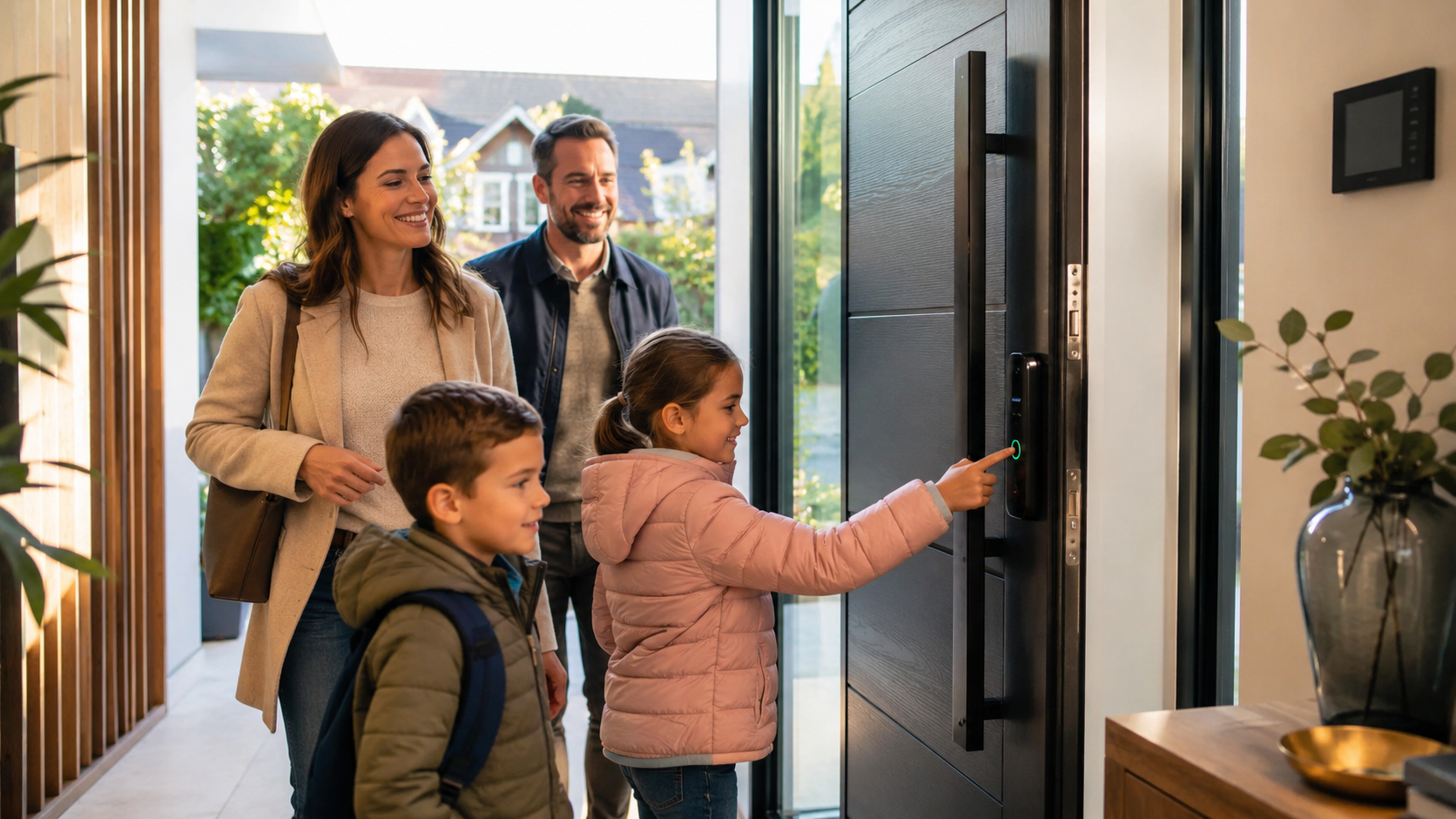
Traditional front doors still rely heavily on physical keys and exposed cylinders. Those systems remain vulnerable to:

  • Lock snapping
  • Picking
  • Key duplication
  • Lost keys
  • Forced manipulation

Fingerprint aluminium doors remove many of those weak points.

Why Biometric Access Feels More Secure

Instead of a key:

  • Access is tied directly to authorised fingerprints
  • Entry permissions can be managed digitally
  • Temporary users can be added or removed easily
  • Some systems keep access logs

Modern systems also use encrypted biometric templates rather than storing actual fingerprint images.

For families, this creates a simpler and more controlled access system.

Read more in our biometric door security and technology explained guide. 

Everyday Convenience Matters More Than Most People Expect

Many buyers initially focus only on security.
Then they realise the biggest lifestyle improvement is convenience.

Real Life Example: Busy Family Home

A family with school age children often deals with:

  • Lost keys
  • Forgotten keys
  • Lockouts
  • Spare key management

With biometric access:

  • Children no longer need physical keys
  • Parents can monitor access remotely
  • Deliveries and visitors become easier to manage

The system quietly removes daily friction.

Real Life Example: Luxury Renovation Projects

Architects and homeowners working on contemporary homes often choose fingerprint aluminium doors because traditional locks visually disrupt minimalist designs.

Biometric systems allow:

  • Cleaner aesthetics
  • Flush architectural finishes
  • Hidden hardware
  • Larger uninterrupted door surfaces

The technology supports the design rather than competing with it.

Explore available ways to configure your fingerprint entrance door for contemporary architecture projects. 

Are Fingerprint Aluminium Doors Worth It

Are They Energy Efficient?

Yes, especially compared to older aluminium systems from previous decades.

Modern thermally broken aluminium doors now achieve strong insulation performance while keeping slim sightlines.

Benefits include:

  • Reduced heat transfer
  • Better indoor comfort
  • Lower condensation risk
  • Improved weather resistance

The exact efficiency depends heavily on:

  • Frame design
  • Glass specification
  • Installation quality
  • Seal performance

A poorly installed premium door can still underperform.

Comparing Long Term Value vs Upfront Cost

This is the real question most buyers are asking.

A fingerprint aluminium door costs more initially. Nobody should pretend otherwise.

But value is not only about the purchase price.

Over 15–25 Years, Owners Also Gain:

  • Reduced maintenance costs
  • Better durability
  • Higher security
  • Improved property appearance
  • Smart home compatibility
  • Increased convenience
  • Potential property value appeal

For homeowners already investing heavily in renovations or premium architecture, the upgrade often feels proportionate.

Where Traditional Doors Still Make More Sense

Fingerprint aluminium doors are not automatically the right choice for everyone.

A standard composite door may still be better if:

  • Budget is the primary concern
  • You rarely use the front entrance
  • Smart technology is unimportant to you
  • You prefer fully mechanical systems
  • The property is purely rental focused

Sometimes a simpler solution is genuinely more practical.

Downsides Worth Knowing About

Every premium system has trade offs.

Higher Initial Cost

This is still the biggest barrier.

The technology, aluminium fabrication, smart locking hardware, and installation all contribute to the final price.

Power Dependency

Most systems require electricity.

Quality systems include:

  • Battery backup
  • Emergency override access
  • Mechanical fail safe options

Still, some homeowners simply prefer fully mechanical doors.

More Complex Installation

Biometric entrance systems require experienced installation.

Poor installation can affect:

  • Alignment
  • Lock reliability
  • Thermal performance
  • Weather sealing

Choosing the installer matters almost as much as choosing the door itself.

Are Fingerprint Aluminium Doors Worth It in 2026?

For many modern homeowners, yes.

Especially if you:

  • Value security
  • Want keyless convenience
  • Appreciate contemporary architecture
  • Plan to stay in the property long term
  • Are already investing in premium upgrades

The combination of durability, design, and smart access creates a strong long term ownership experience.

These doors are not just about technology. They are about reducing friction in daily life while improving how a home looks and functions.
For buyers expecting a cheap alternative to a traditional front door, the pricing may feel difficult to justify.

But for homeowners comparing premium entrance systems, the long term value proposition becomes much clearer.

Explore available configurations and compare biometric entrance systems before choosing a final specification. A showroom visit or expert consultation can also help you understand the differences between entry level and premium systems.

Take the next step and request a sample or showroom visit to better understand the differences between entry level and premium systems. 

Are Fingerprint Aluminium Doors Worth It

FAQ

Do fingerprint aluminium doors work during power cuts?

Yes. Most premium systems include battery backup power that keeps the lock operational during outages. Many also include a concealed mechanical key override.

Can fingerprint systems be hacked?

Modern biometric systems use encrypted fingerprint templates and advanced security protocols. No system is completely immune to risk, but high quality biometric doors are considered very secure for residential use.

How long do aluminium entrance doors last?

A well manufactured aluminium entrance door can last several decades with relatively low maintenance.

Are fingerprint sensors reliable in bad weather?

Quality sensors are designed for outdoor use and typically operate reliably in rain, cold temperatures, and direct sunlight.

Do fingerprint doors increase property value?

They may improve buyer appeal, especially in luxury homes, contemporary renovations, and smart home focused properties.