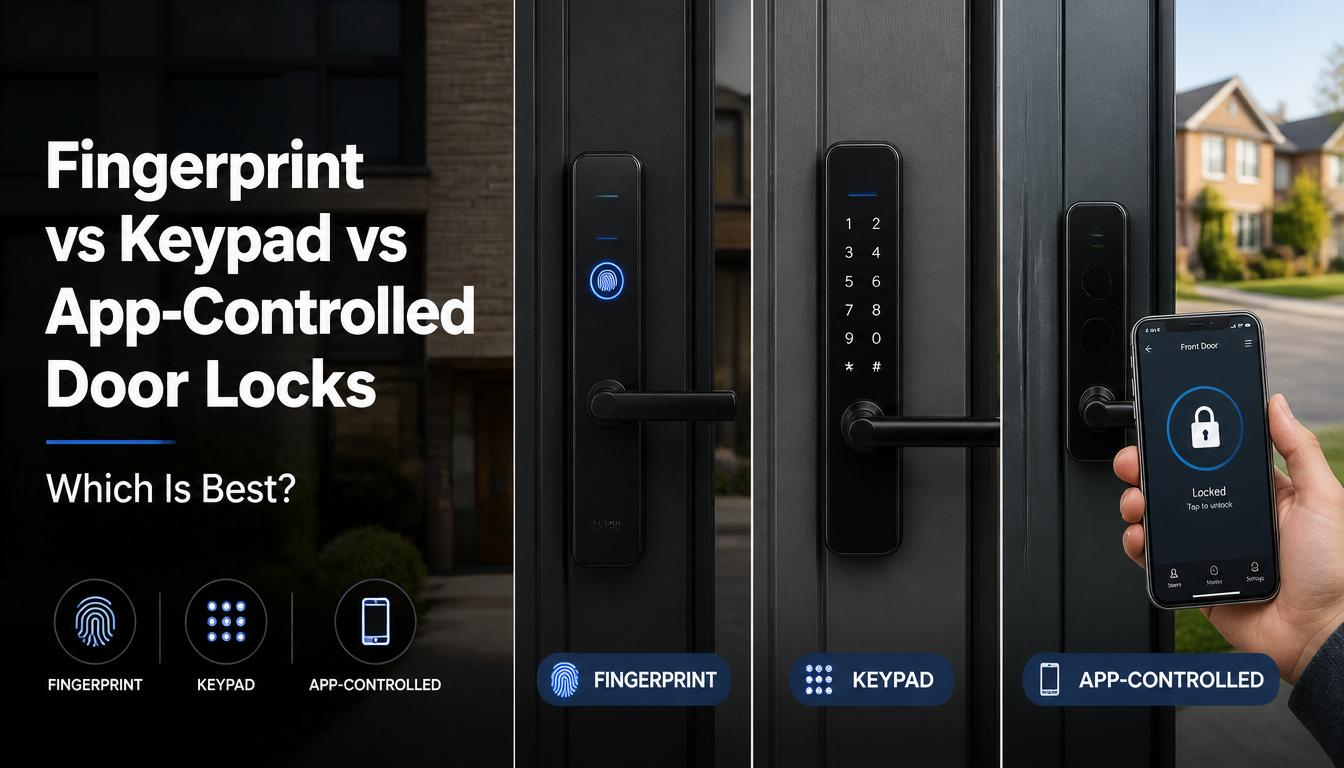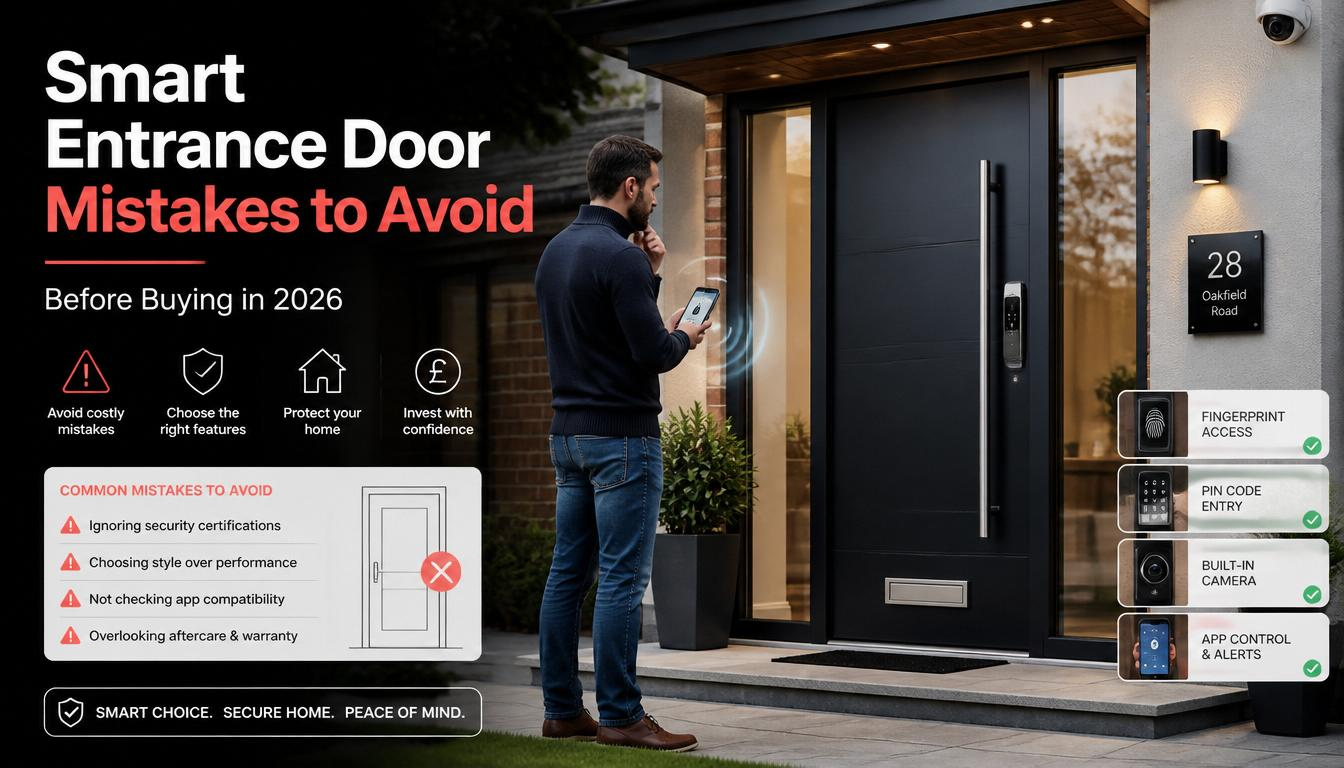
Smart Entrance Door Mistakes to Avoid Before Buying in 2026
Buying a smart entrance door is a major decision. It affects your home’s security, daily convenience, design, energy performance, and long term value.
Yet many homeowners focus on the wrong things and Smart Entrance Door Mistakes to Avoid.
They look at the fingerprint scanner first. Or they choose a door based only on appearance. Or they compare prices without understanding what is included.
That is how smart entrance door mistakes happen.
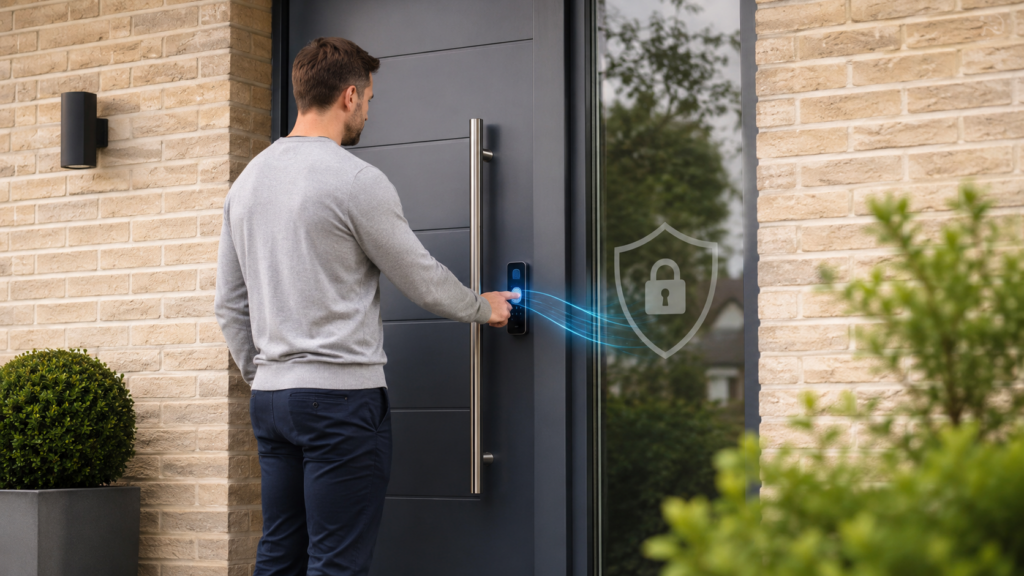
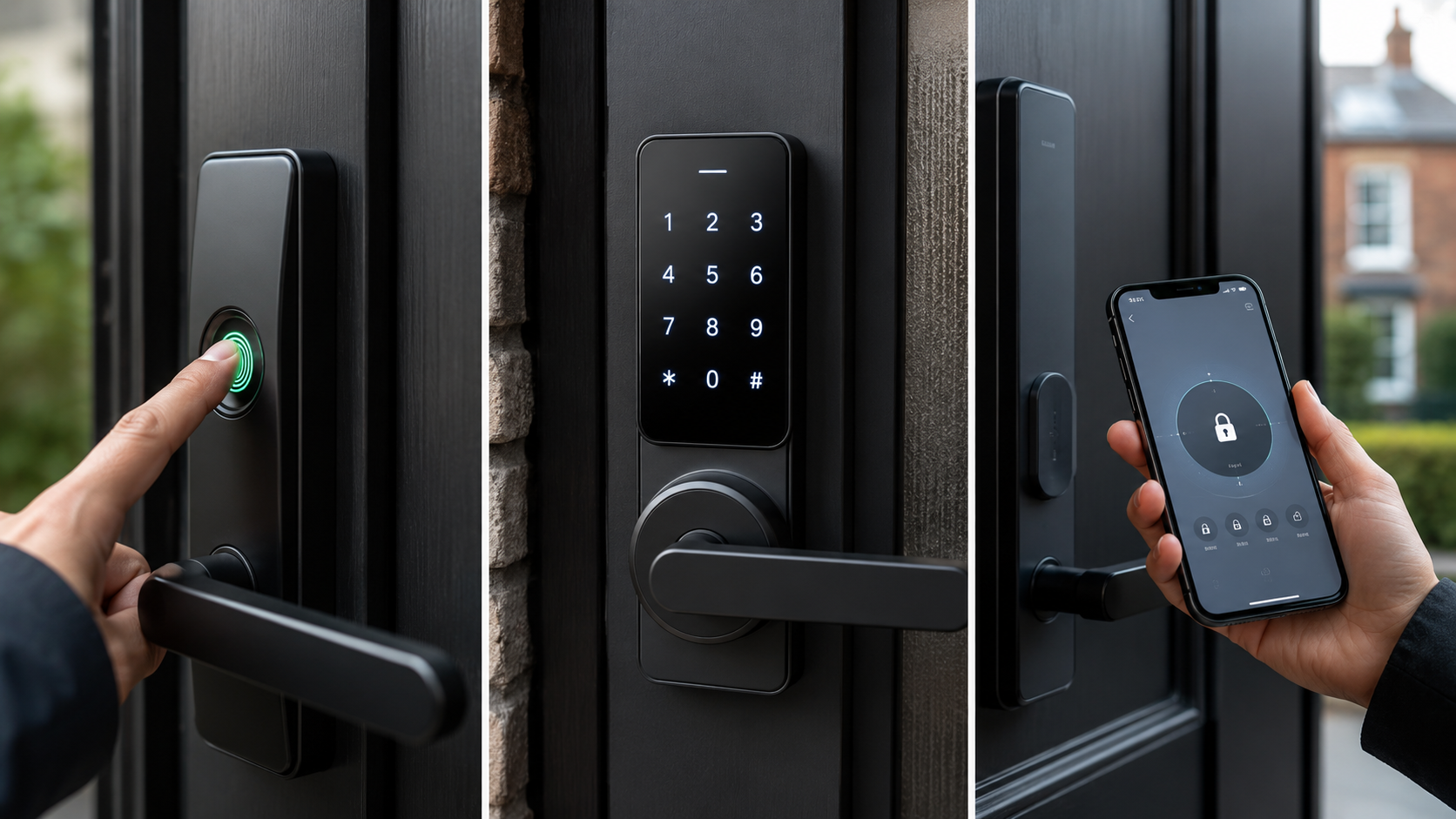
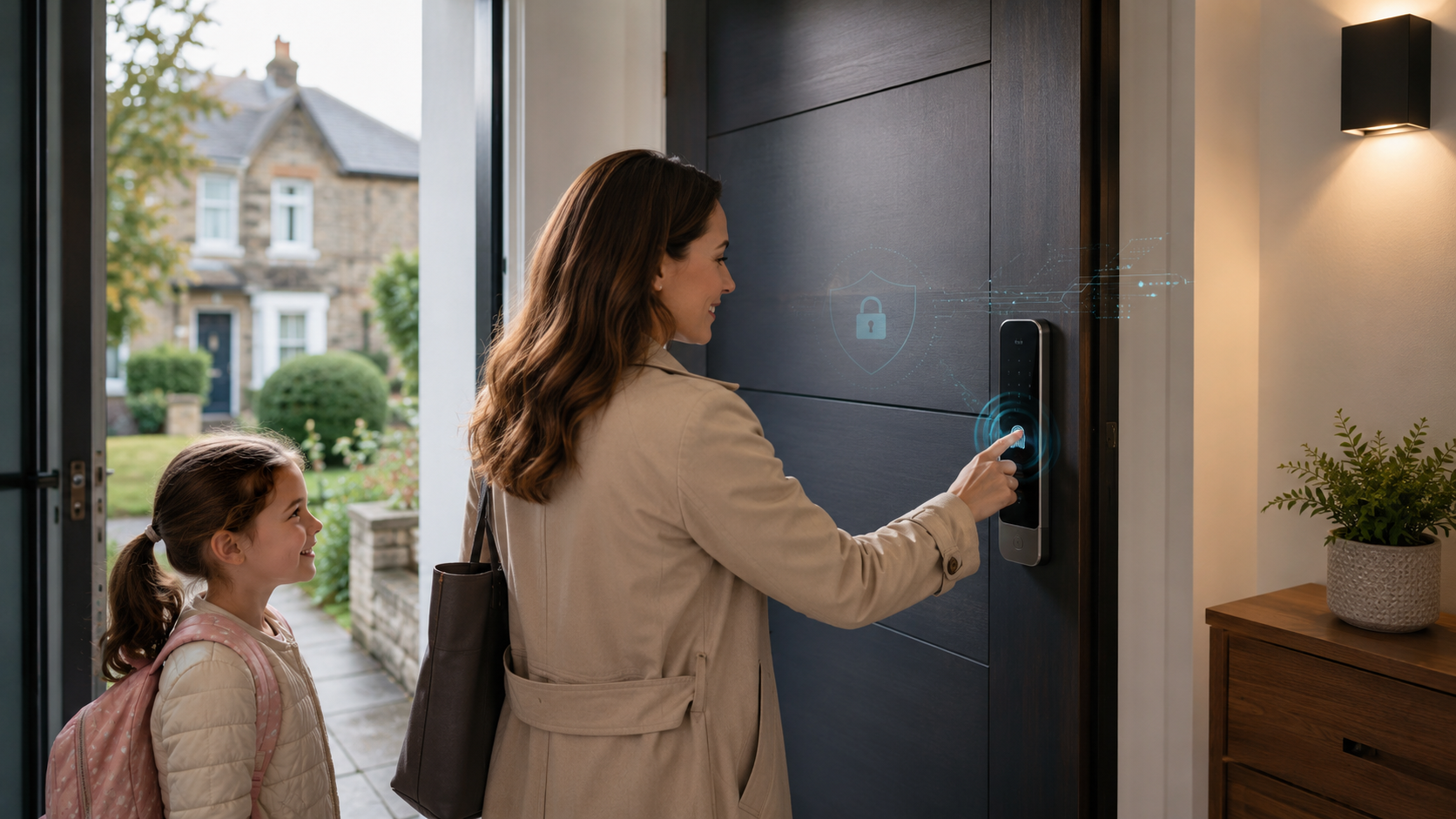
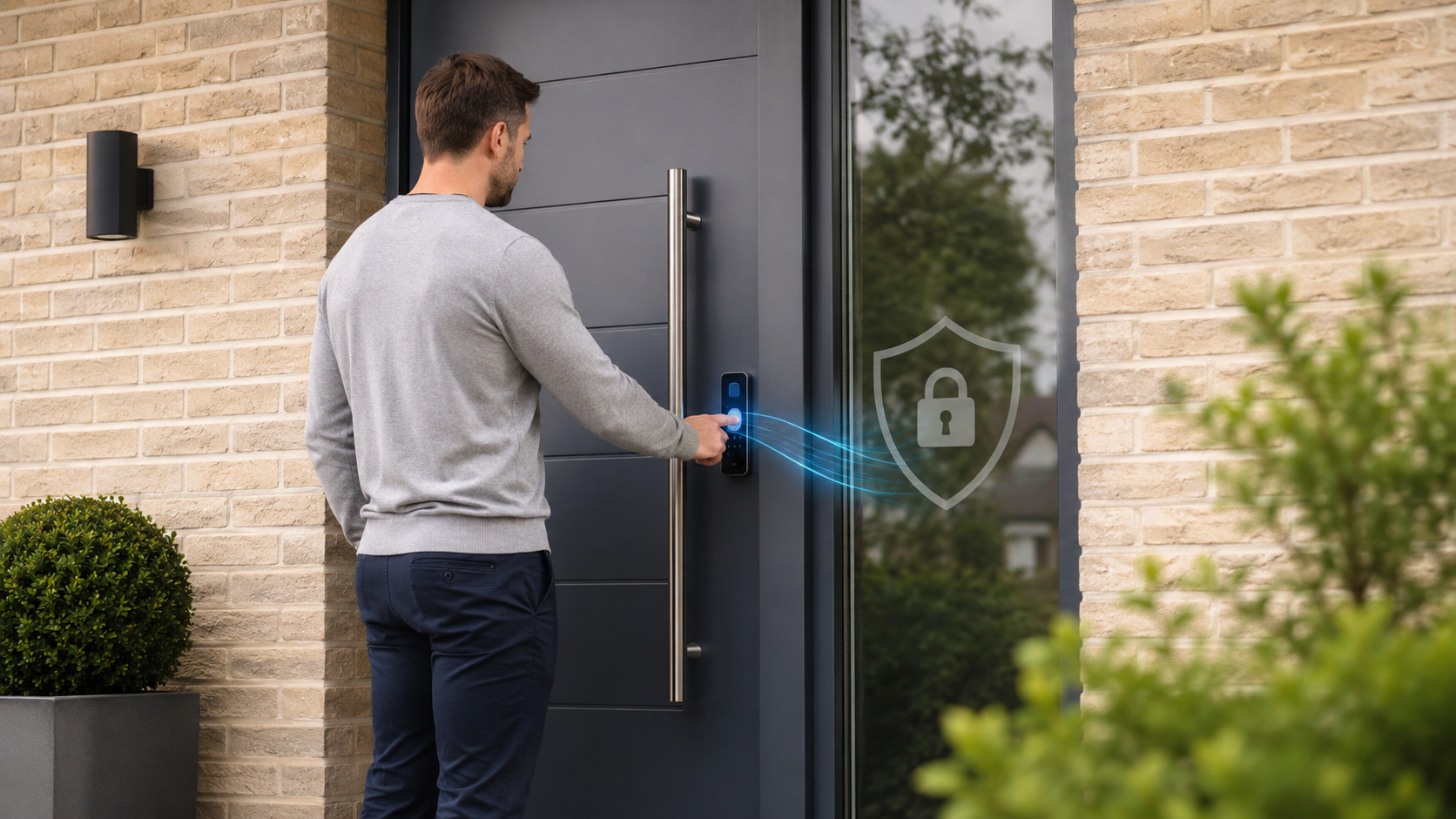
A premium fingerprint aluminium door is not just a front door with technology added. It is a complete entrance system involving aluminium construction, biometric access, smart locking, backup entry, installation quality, privacy, thermal performance, and aftercare.
If you are still learning the basics, start with our fingerprint aluminium door beginner guide before choosing a final specification.
Mistake 1: Choosing the Smart Lock Before the Door
One of the biggest smart entrance door mistakes is focusing on the smart lock before considering the door itself.
The access technology matters, but the physical door matters just as much.
A strong fingerprint scanner does not compensate for:
- Weak door construction
- Poor frame quality
- Basic locking hardware
- Bad installation
- Poor weather sealing
- Low thermal performance
The best smart entrance systems start with a high quality aluminium door. The biometric technology should be integrated into the door properly, not treated as an afterthought.
Mistake 2: Assuming All Fingerprint Systems Are Equal
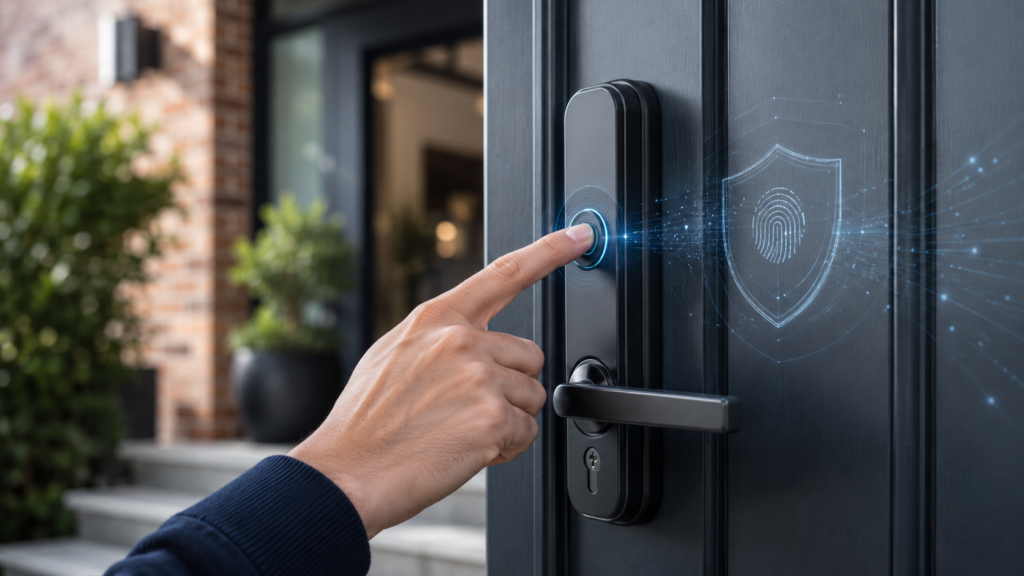
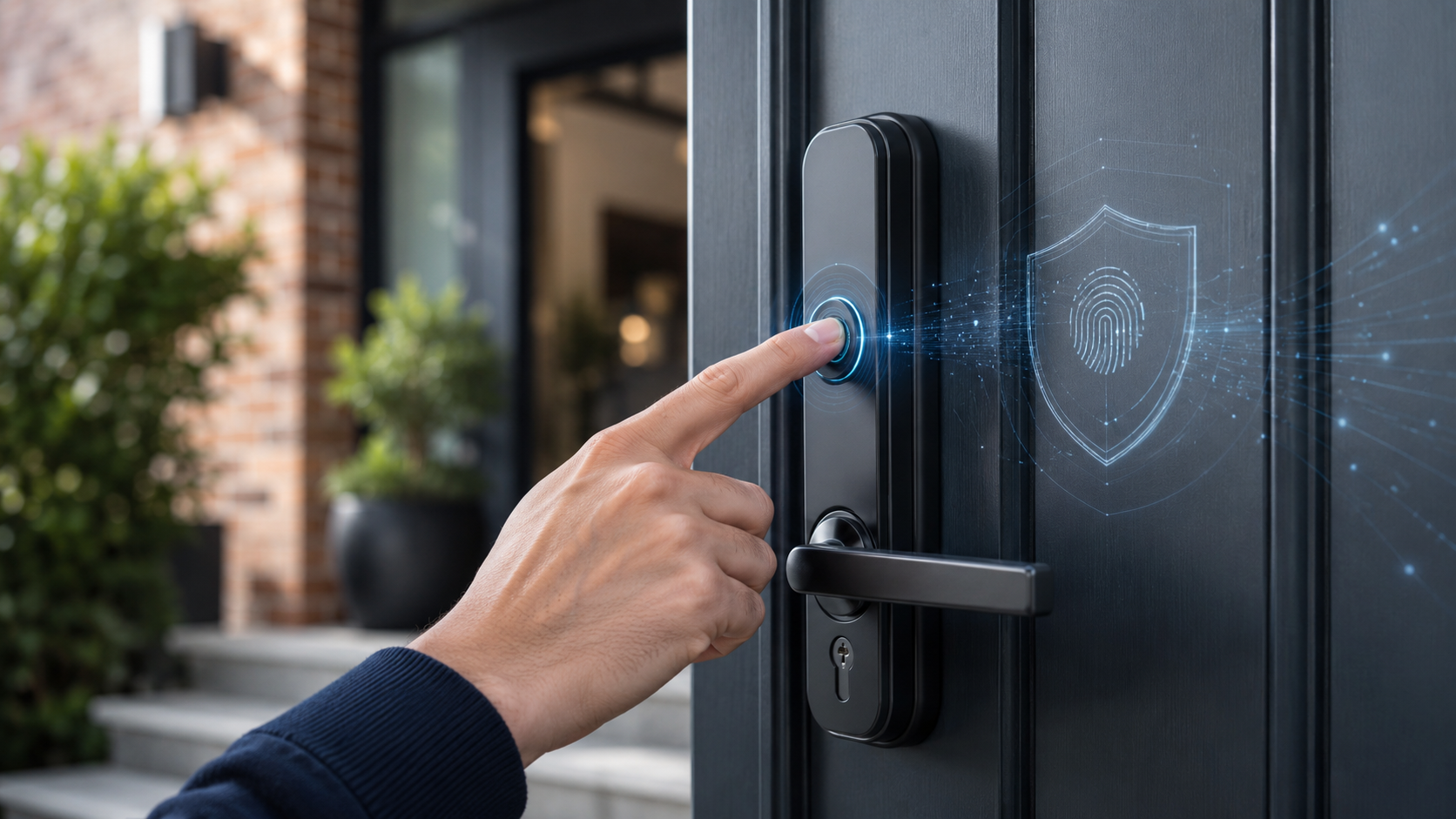
Not all fingerprint readers perform the same.
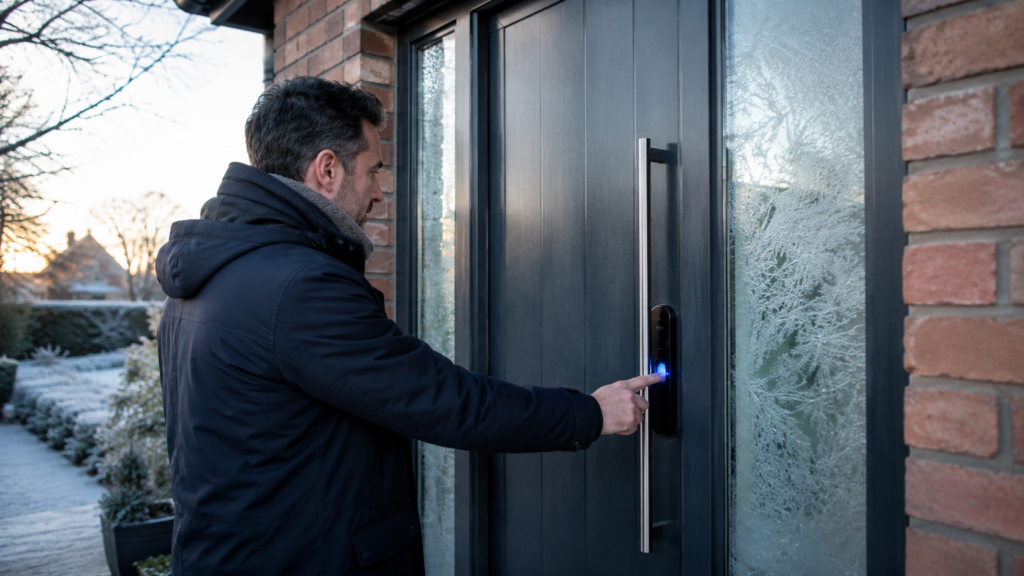
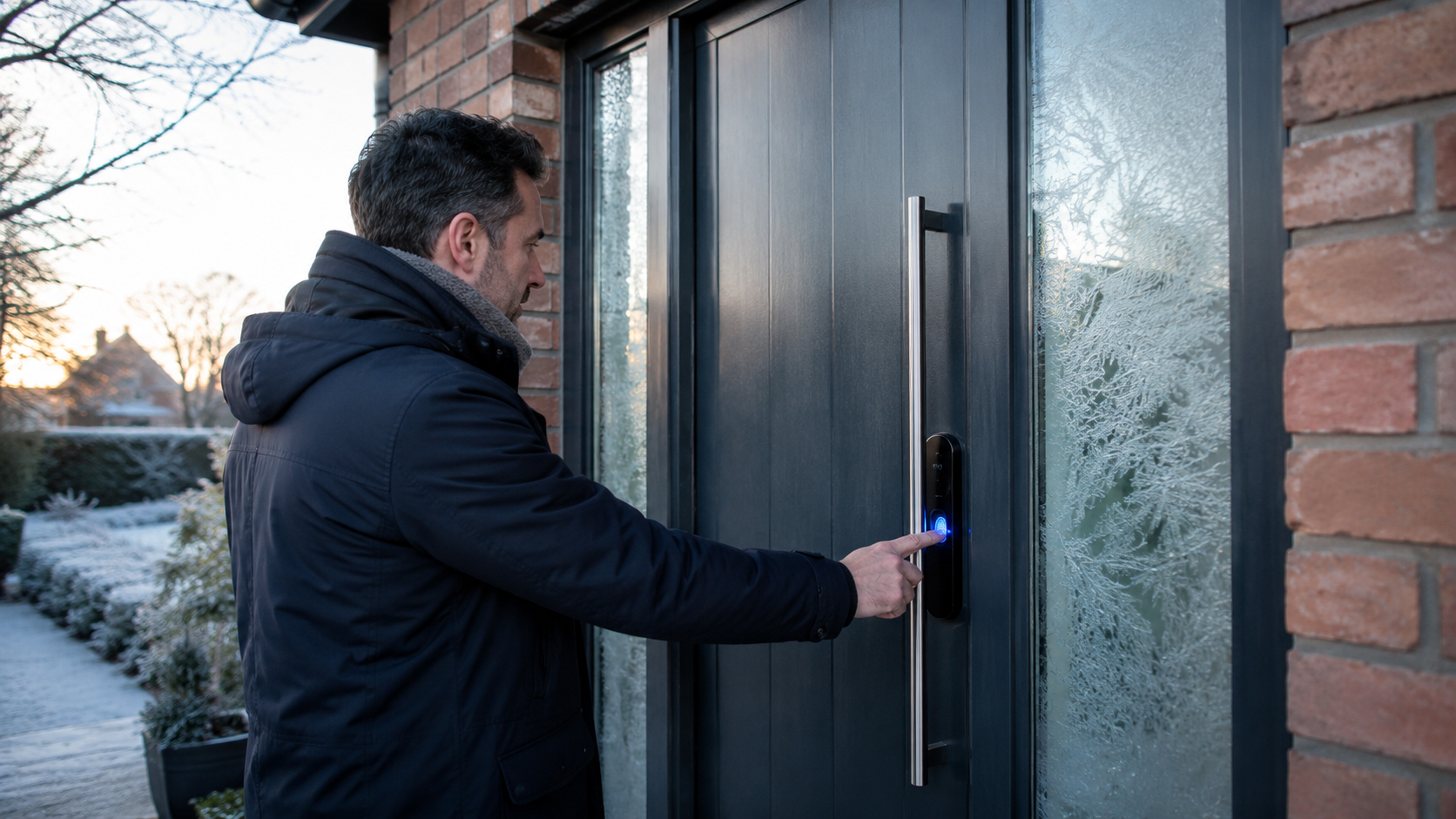
Some are fast, secure, and designed for outdoor use. Others may be slow, unreliable, or poorly protected against weather.
When comparing fingerprint systems, check:
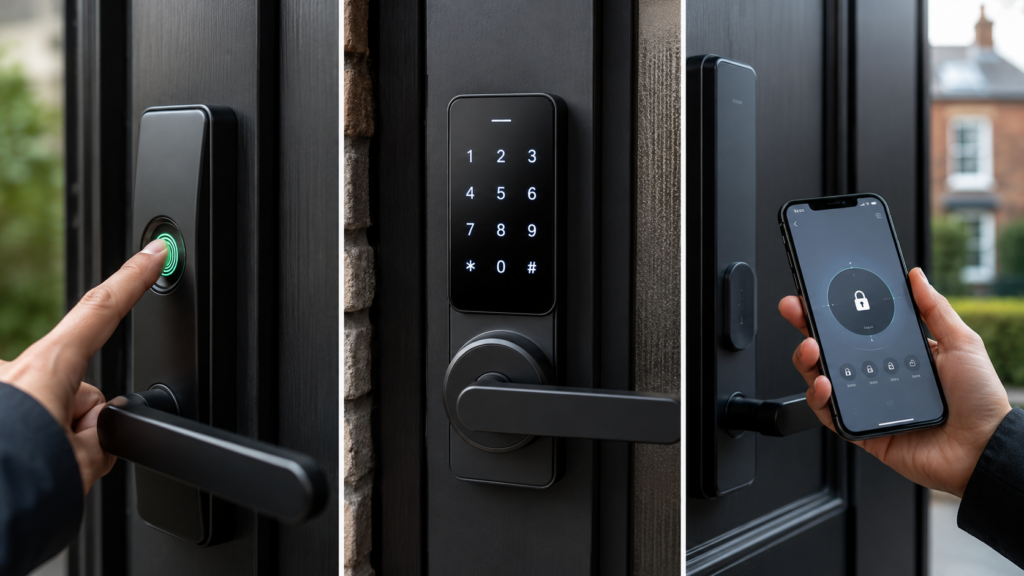
- Recognition speed
- Outdoor suitability
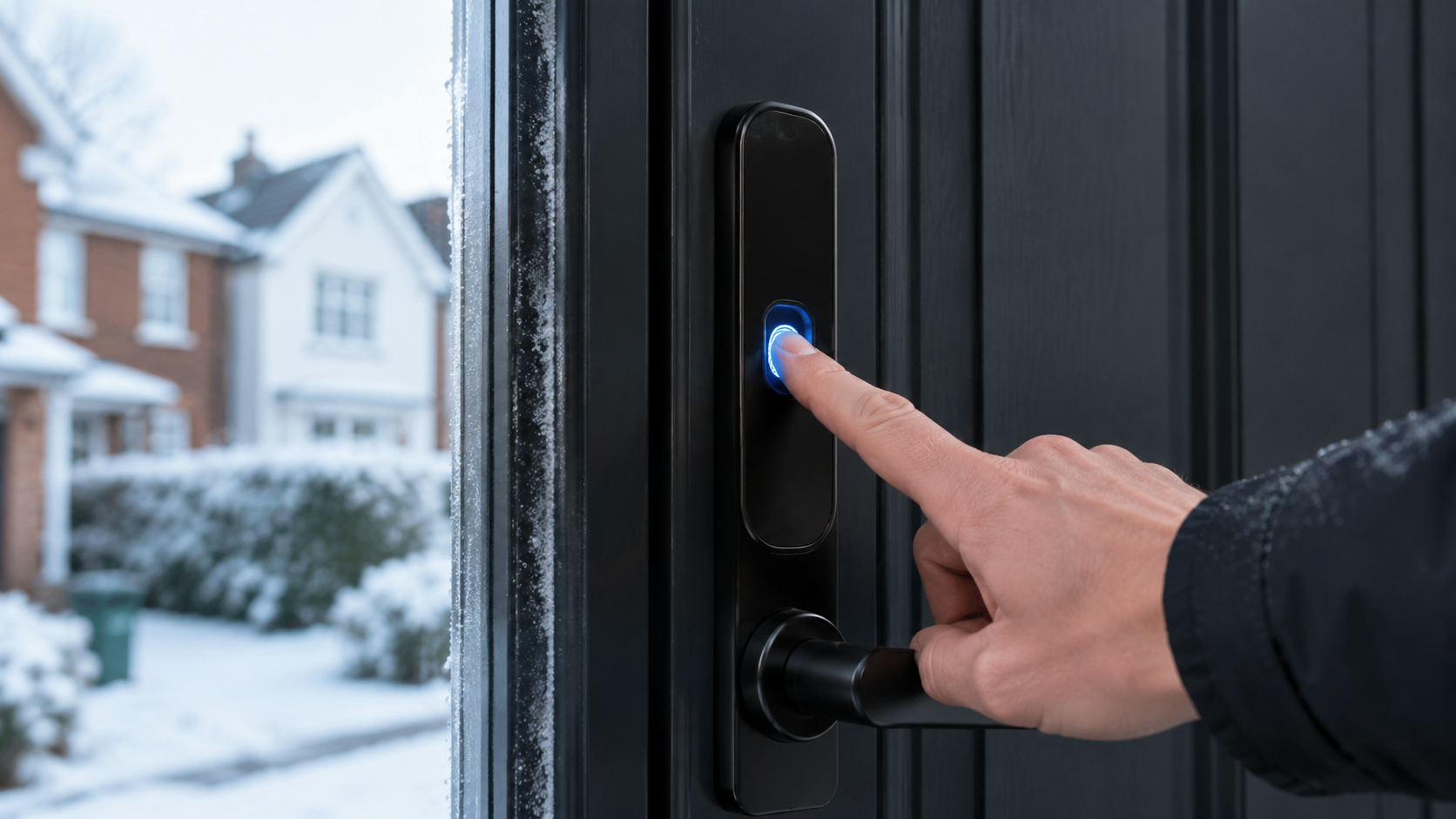
- Weather resistance
- Low light performance
- Anti spoofing features
- Multiple user profiles
- Encrypted fingerprint storage
- Backup access options
A low quality scanner can make the entire entrance system feel frustrating.
For more detail on biometric protection, read biometric door security and technology explained.
Mistake 3: Ignoring Backup Access
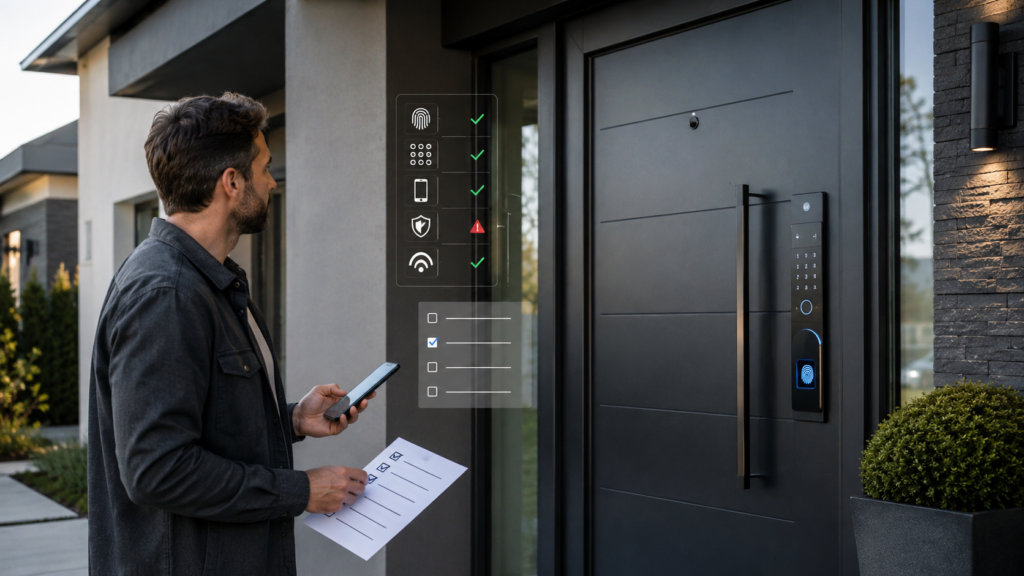
A smart entrance door should never rely on one access method only.
Backup access is essential because real life is unpredictable.
A homeowner may have:
- Wet hands
- A cut finger
- A dead phone
- A power cut
- A forgotten PIN
- A temporary scanner issue
Good systems often include:
- Battery backup
- Mechanical override key
- PIN keypad entry
- Smartphone access
- Multiple registered fingerprints
Without backup access, a smart door can become stressful rather than convenient.
Mistake 4: Forgetting About Power Cuts
Many buyers ask whether smart doors work during a power cut, but some only think about this after installation.
Premium systems should include battery backup and emergency access.
Before buying, ask:
- What happens if mains power fails?
- How long does backup power last?
- Are low battery warnings included?
- Can the door still unlock manually?
- Does fingerprint access work locally?
- What happens if Wi Fi is down?
A reliable smart entrance door should be designed for these situations from the start.
Mistake 5: Overlooking Installation Quality
Installation is one of the most important parts of the project.
Even a premium fingerprint aluminium door can underperform if installed badly.
Poor installation can cause:
- Lock alignment problems
- Sensor reliability issues
- Water ingress
- Draughts
- Reduced insulation
- Stiff operation
- Long term wear
- Poor security performance
Smart entrance doors require installers who understand aluminium systems, motorised locks, biometric access, frame alignment, and weather sealing.
Choosing the cheapest installer can create expensive problems later.
Mistake 6: Not Checking the Locking System
Some buyers focus heavily on access technology but forget to ask how the door actually locks.
A premium smart entrance door should usually include motorised multi point locking.
This means the door locks at several points around the frame, improving security and sealing.
Benefits include:
- Stronger forced entry resistance
- Better door compression
- More stable locking
- Smoother daily operation
- Better integration with fingerprint access
A smart access system should support strong physical security, not replace it.
Mistake 7: Ignoring Thermal Performance
A front door is part of the building envelope. It affects heat loss, comfort, and condensation risk.
Modern aluminium doors can offer strong thermal performance, but only when properly specified.
Check:
- Thermally broken aluminium frame
- Insulated door panel
- Quality seals
- Glazing specification
- Threshold design
- Installation accuracy
Older or cheaper aluminium systems may not perform at the same level.
A smart entrance door should be secure and convenient, but it should also support everyday comfort.
Mistake 8: Choosing Style Without Thinking About Architecture
Design matters, especially for premium homes.
But the door should suit the property, not just look attractive in isolation.
A modern fingerprint aluminium door may include:
- Flush panels
- Slim sightlines
- Hidden handles
- Side glazing
- Pivot configurations
- Large format designs
- Bespoke colours
- Integrated access modules
The best result comes when the door feels connected to the architecture of the home.
You can configure your fingerprint entrance door based on your property style, entrance layout, and security requirements.
Mistake 9: Not Thinking About Daily Users
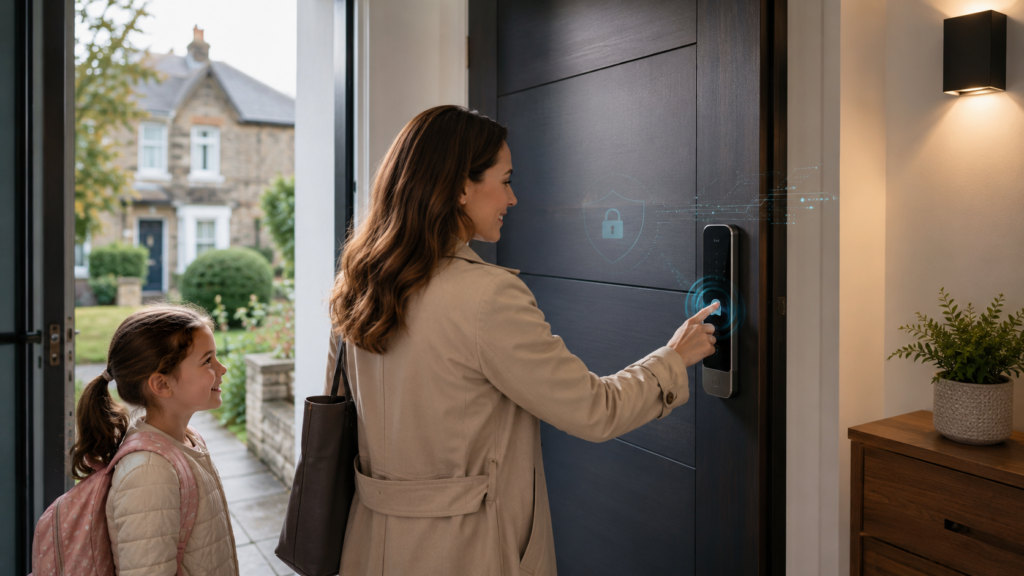
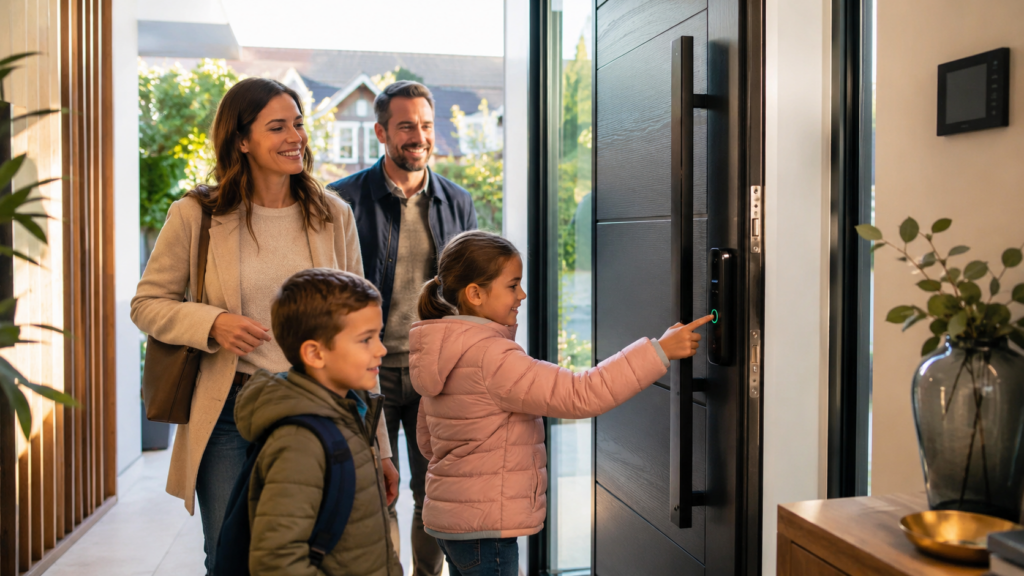
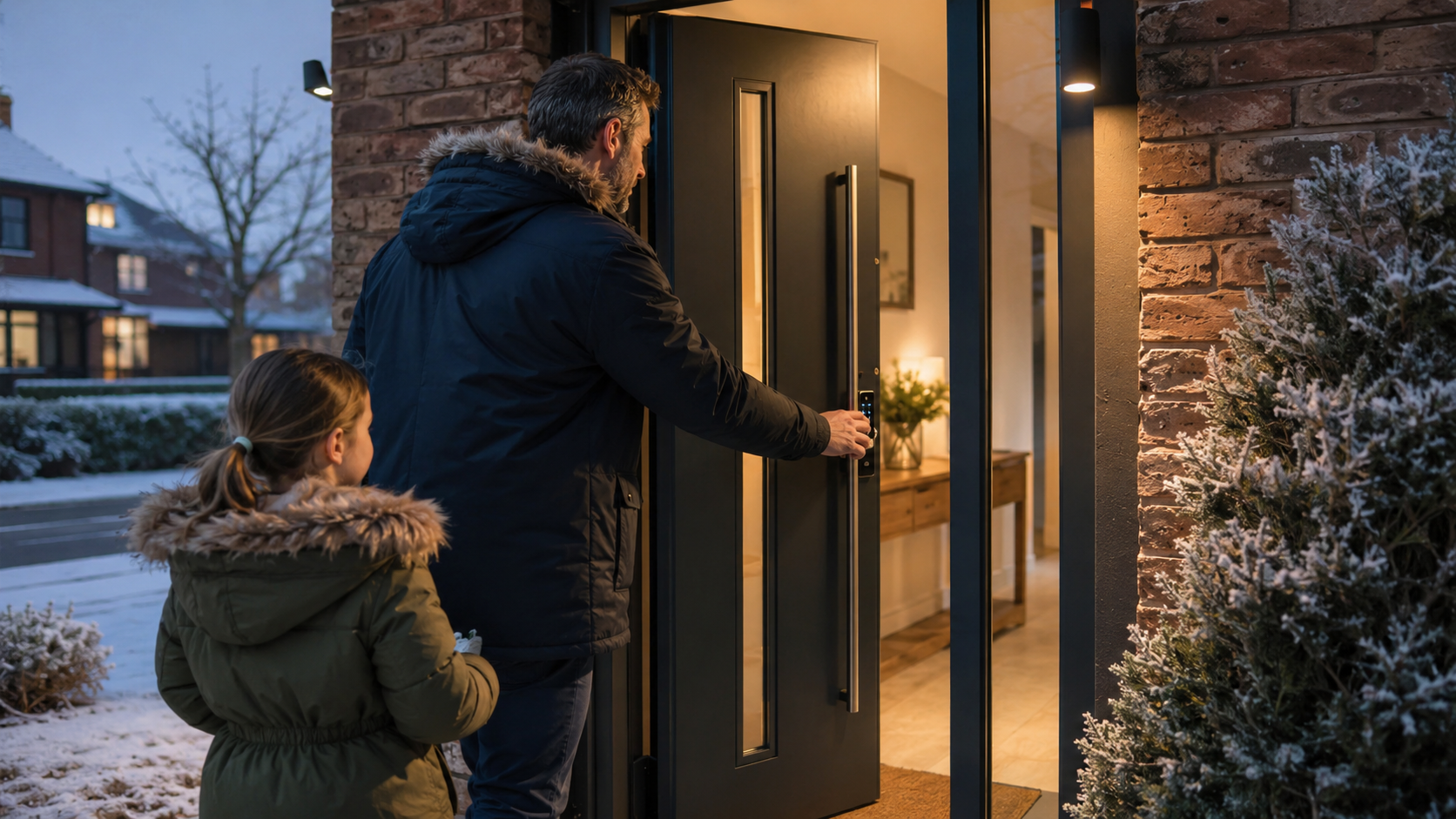
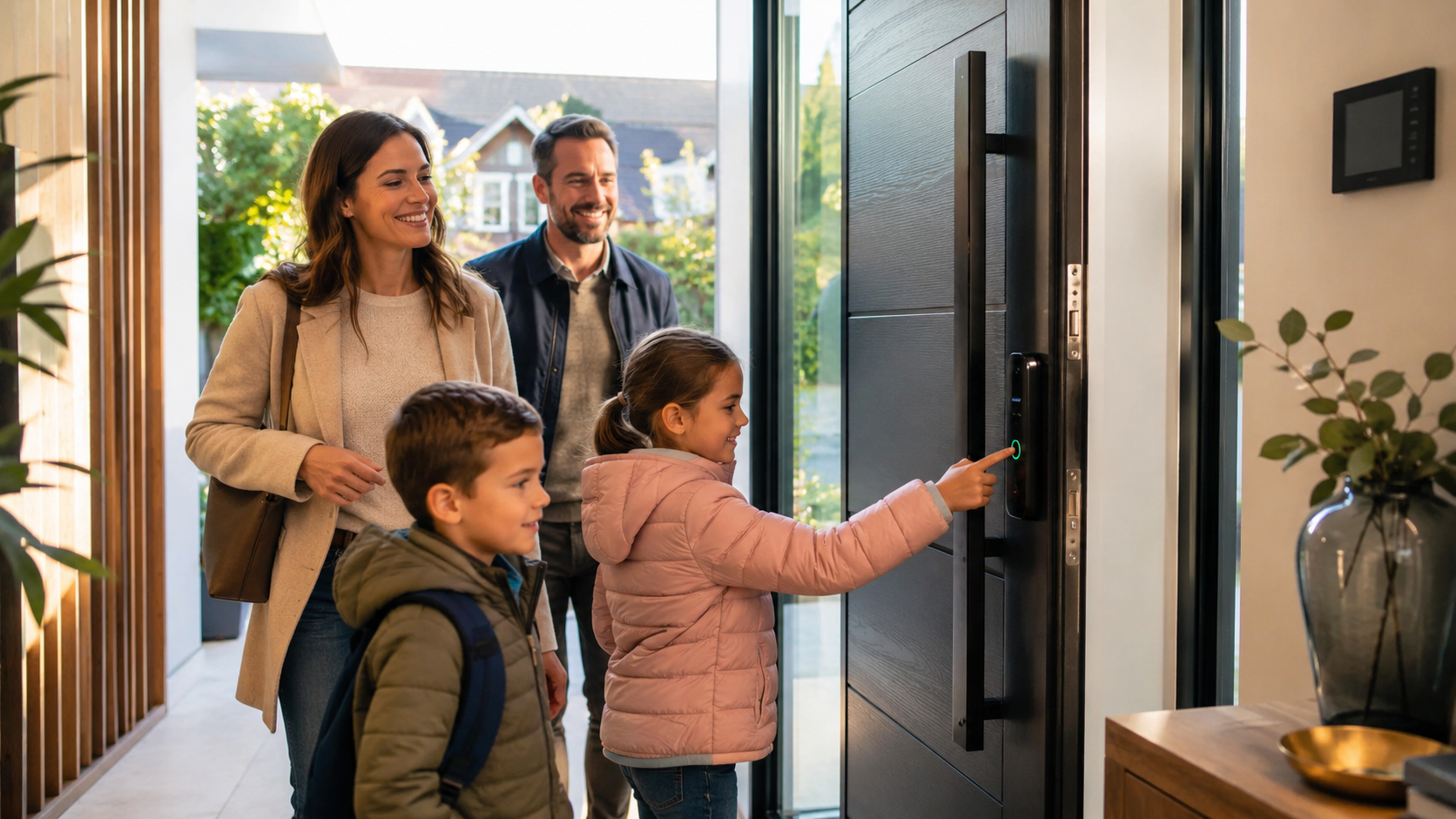
A smart entrance door should suit the people who use it every day.
Think about:
- Parents
- Children
- Older family members
- Guests
- Cleaners
- Tradespeople
- Staff
- Tenants
- Delivery access
Different users may prefer different access methods.
For example:
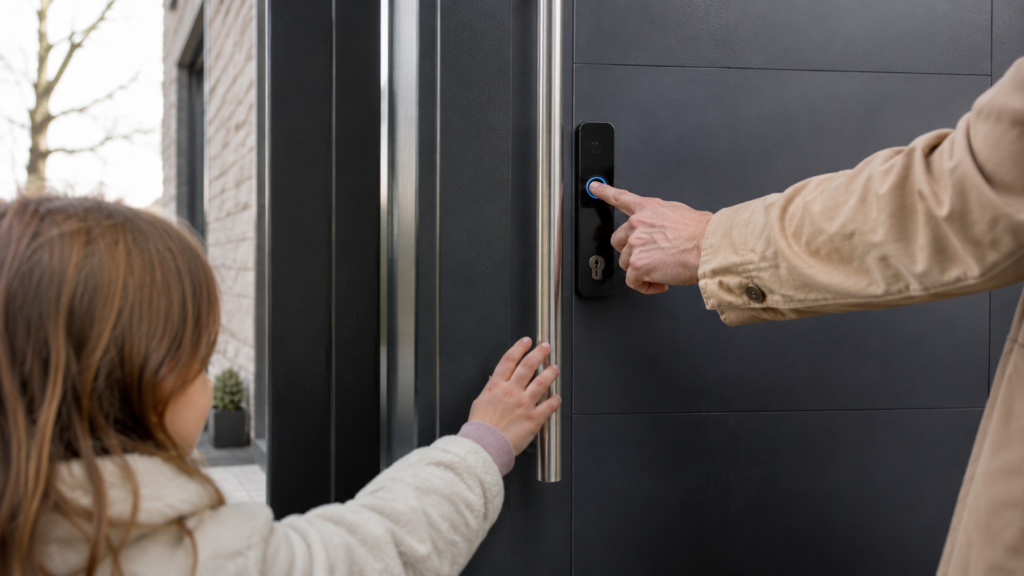
- Parents may use fingerprint and app access
- Children may use fingerprint access
- Older users may prefer PIN entry
- Temporary users may need time limited access
- Backup keys may be kept for emergencies
A good system should be flexible enough for real life use.
Mistake 10: Not Asking About Privacy
Fingerprint access involves biometric data, so privacy questions matter.
Before buying, ask:
- Does the system store actual fingerprint images?
- Are fingerprints stored as encrypted templates?
- Is data stored locally or in the cloud?
- Who can manage users?
- Can profiles be deleted?
- Are access logs available?
- Is app access secure?
A reputable supplier should explain these points clearly.
For homeowners who value both convenience and privacy, system quality is essential.
Mistake 11: Treating App Control as Automatically Secure
App control can be extremely useful, but it must be secure.
Smartphone access may allow:
- Remote unlocking
- Door status checks
- User management
- Notifications
- Temporary permissions
But app security depends on:
- Login protection
- Device management
- Strong passwords
- Software updates
- Permission settings
- Ability to remove lost devices
Do not assume every app controlled door lock is equally secure.
Mistake 12: Buying Based Only on Price
Price matters, but it should not be the only deciding factor.
A cheaper smart door may cost less upfront, but may compromise on:
- Aluminium quality
- Sensor reliability
- Locking hardware
- Weather sealing
- Backup access
- Thermal performance
- Installation support
- Aftercare
A premium fingerprint aluminium door is a long term investment. It should be judged on durability, security, convenience, design, and support.
Mistake 13: Forgetting Maintenance and Aftercare
Smart aluminium entrance doors are generally low maintenance, but they are not maintenance free.
Homeowners should understand:
- How to clean the sensor
- When backup batteries need replacement
- How to update users
- How to test backup access
- Who to contact for support
- What warranty applies
- What aftercare is included
A good supplier should provide clear guidance after installation.
Mistake 14: Not Seeing the System in Person
Online images can be useful, but they do not always show real quality.
A showroom visit can help you compare:
- Door finishes
- Handle options
- Fingerprint scanner position
- Lock operation
- Frame quality
- Glazing choices
- Colour samples
- Smart access features
Premium entrance systems are easier to understand when you can see and feel the difference.
Mistake 15: Choosing a Door That Cannot Adapt
Your access needs may change over time.
A good smart entrance system should allow:
- New users to be added
- Old users to be removed
- PINs to be changed
- App access to be updated
- Backup methods to remain available
- Smart home features to be adjusted
This flexibility is especially useful for growing families, rental properties, offices, and changing household routines.
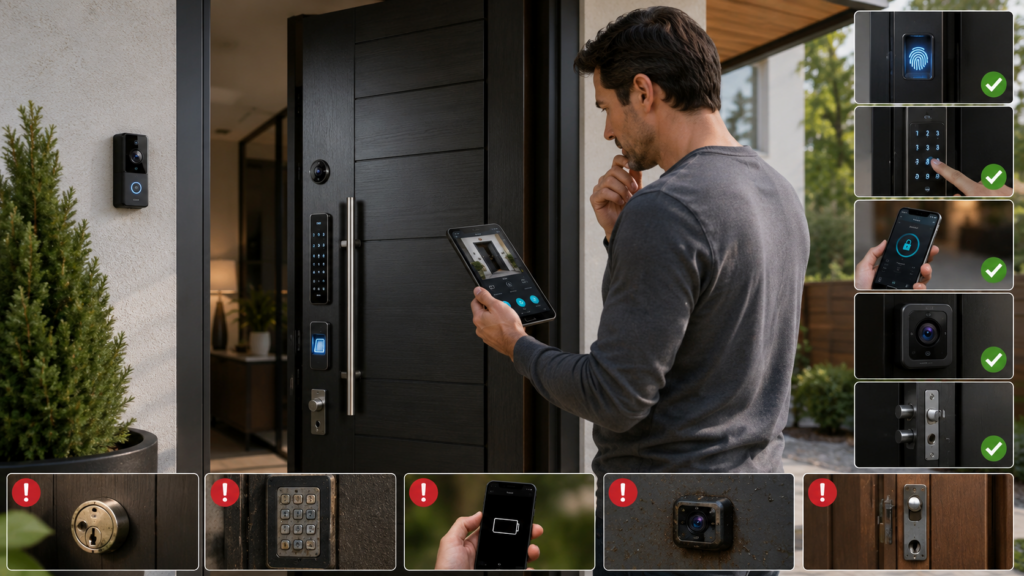
What to Check Before Buying a Smart Entrance Door
Before making a decision, use this checklist.
Security
- Does it include motorised multi point locking?
- Is the fingerprint system encrypted?
- Are backup access methods included?
- Is the door physically strong?
Reliability
- Is the sensor outdoor rated?
- Does it work in normal UK weather?
- Is battery backup included?
- Is there emergency access?
Design
- Does it suit the property?
- Are custom colours available?
- Can hardware be integrated discreetly?
- Are glazing options available?
Installation
- Is the installer experienced?
- Will alignment be tested?
- Is aftercare included?
- Are warranties clear?
Usability
- Can multiple users be added?
- Can old users be removed?
- Are PINs and app access manageable?
- Is the system easy for daily users?
Who Should Be Most Careful When Buying?
Smart entrance door mistakes are most costly for:
- Luxury homeowners
- Families
- Architects
- Developers
- Business owners
- Private clinics
- Gated properties
- Smart home projects
- High security residences
In these cases, the entrance door is not just a basic home improvement item. It is part of the property’s security, design, and daily function.
For detailed protection considerations, revisit biometric door security and technology explained.
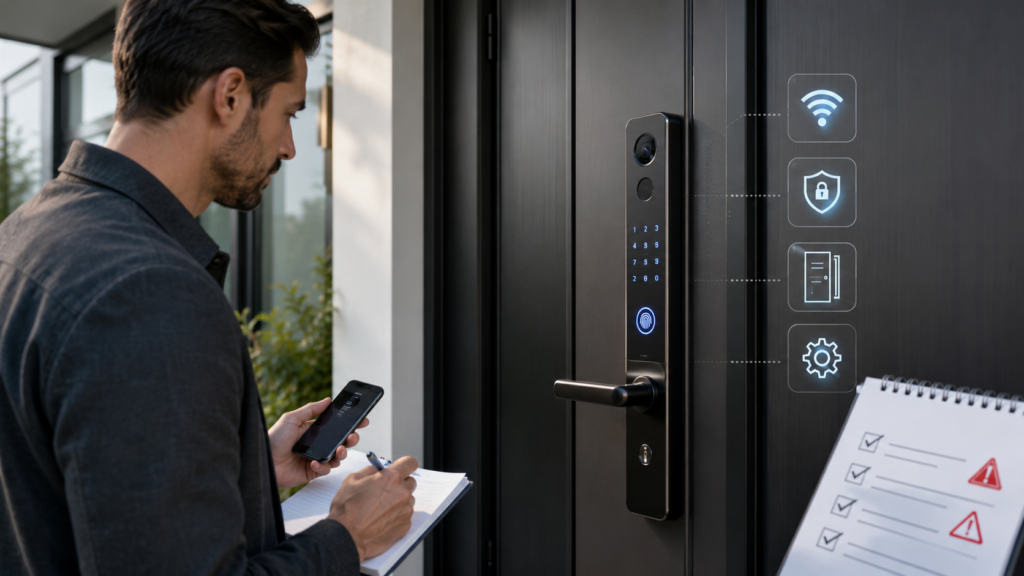
A modern entrance should feel convenient, but it also needs to match the security expectations of the home. Comparing high security entrance doors can help homeowners decide whether a stronger door system is the better long-term choice.
Final Thoughts: Avoiding Smart Entrance Door Mistakes
The most common smart entrance door mistakes happen when homeowners focus on one feature instead of the full system.
A fingerprint scanner is important, but it is only one part of the entrance. The best smart aluminium doors combine strong construction, secure biometric access, motorised multi point locking, backup entry, thermal performance, professional installation, privacy controls, and long term support.
Before choosing a final specification, compare the whole system carefully.
You can also configure your fingerprint entrance door to match your security goals, design preferences, and everyday access needs.
To see the differences in quality more clearly, request a sample or showroom visit before making a long term investment.
FAQ
What are the biggest smart entrance door mistakes?
The biggest mistakes include ignoring backup access, choosing poor installation, focusing only on the smart lock, and not checking door quality.
Are fingerprint aluminium doors worth it?
They can be worth it for homeowners who value security, convenience, modern design, and long term durability.
What should I check before buying a smart front door?
Check the locking system, fingerprint reader quality, backup access, aluminium construction, thermal performance, installation, and aftercare.
Do smart entrance doors work during power cuts?
Premium systems usually include battery backup and emergency access, but homeowners should confirm this before buying.
Is installation important for fingerprint aluminium doors?
Yes. Installation affects lock alignment, sensor reliability, weather sealing, thermal performance, and long term security.